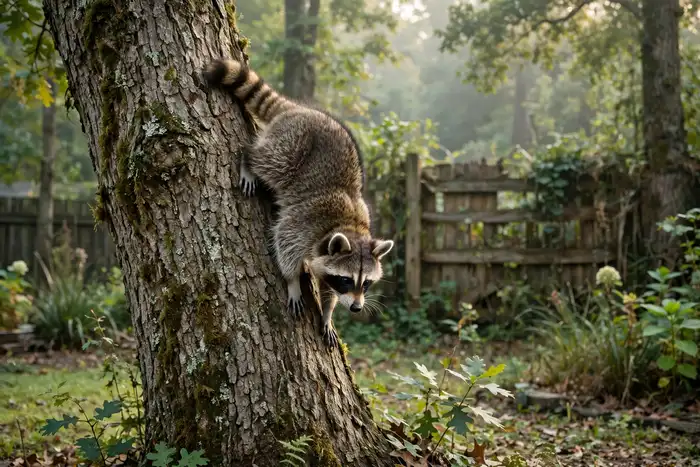
<p>Raccoons are Pennsylvania's most destructive attic animal, and they are statewide — from Philadelphia rowhouses and Pittsburgh hillside homes to farmhouses in Lancaster and cabins in the Poconos. The heaviest push comes in <strong>late winter and spring</strong>, when females tear into attics, chimneys, and soffits to raise litters, but calls continue through summer as juveniles disperse and again in fall as raccoons seek winter dens. Older Pennsylvania housing — uncapped masonry chimneys, aging soffits, and layered rooflines — gives them more ways in than in most states.</p>
Where Raccoons Are a Problem in Pennsylvania
In Philadelphia and the Delaware Valley suburbs, raccoons den in chimneys and parapet rooflines and work dumpsters and alleys from South Philadelphia to Norristown. In Pittsburgh and the west, hillside homes, wooded hollows, and Mon Valley mill towns give them denning and food in the same block. Across the farm counties — Lancaster, York, Chester, and the Cumberland Valley — raccoons raid feed rooms and den in barn lofts as readily as attics. In the Poconos and the northern tier, the standing problem is the empty house: vacation and camp properties that sit unchecked for weeks are classic raccoon targets.
Raccoon Behavior, Damage, and Health Risks in Pennsylvania
Raccoons are strong climbers with dexterous paws that pry soffits, lift shingles, and open uncapped chimneys. A denning female is the hard case: once pups are born in an attic or chimney chase, careless work can separate her from young that cannot move on their own, so our crew confirms whether a litter is present before anything is sealed. Inside, raccoons tear and foul insulation, chew ductwork, and build latrines whose droppings can carry raccoon roundworm, whose eggs stay infectious long after the animal is gone — cleanup and decontamination are part of a finished job. Pennsylvania also lists the raccoon first among its rabies-vector species, and raccoon-variant rabies is enzootic statewide, so a raccoon that is out in daylight, disoriented, or aggressive should never be approached.
Pennsylvania Rules for Raccoon Work
Be clear about what Pennsylvania law allows, because it is stricter than most homeowners expect. The raccoon is a codified rabies-vector species under 58 Pa. Code Section 147.301, and under Section 147.726(g) a captured rabies-vector animal is never released — relocation is not a lawful option, and no honest Pennsylvania operator will promise it. What works is removal by a permitted operator, followed by exclusion: sealing soffits, roof returns, and vents in steel and fitting a proper chimney cap so the next raccoon cannot use the same openings. Every operator we send holds a Pennsylvania Game Commission nuisance wildlife control operator permit.
What a Pennsylvania Raccoon Removal Job Includes
- Inspection — locating every entry point and checking for a denning female and pups before removal is planned.
- Removal — humane trapping and handling under 58 Pa. Code Chapter 147 by a PGC-permitted operator.
- Exclusion — sealing entries in galvanized steel and fitting a proper chimney cap.
- Decontamination — removing latrine waste and contaminated insulation, then sanitizing the attic or crawlspace.
- Repair — restoring damaged soffit, fascia, and insulation so the den is gone for good.
Every job ends the same way: the animals are out, the openings are closed, the mess is cleaned up, and you know exactly what we found and what we did.
Signs & the work
Raccoon signs to watch for
- Noises in attic at night
- Knocked over trash cans
- Torn soffit or fascia boards
- Droppings near entry points
- Footprints in mud or soft soil
How the Pennsylvania job runs
Field notes — Pennsylvania
Pennsylvania consistently ranks among the top states for bat-related rabies exposure, making bat colony removal and exclusion a critical public health service throughout the state. Groundhog (woodchuck) populations are exceptionally dense in rural Pennsylvania, and groundhog burrow damage to foundations and outbuildings is among the most common wildlife calls received.
Bat maternity season runs from May through August, and groundhog activity peaks in spring and early summer.
Local pages
Raccoon removal by town
RemoveWildlifeNow
Raccoon trouble in Pennsylvania?
(844) 544-3498
Call us and tell us what you're hearing, seeing or smelling — we'll take it from there. The animals come out, the entry points get sealed, and the mess gets cleaned up.
- Licensed & insured
- Same-day service
- Open 24/7
- Humane methods
Raccoon questions — Pennsylvania
Can you trap a raccoon and release it in a state park or the woods?
No. Pennsylvania lists the raccoon as a rabies-vector species at 58 Pa. Code Section 147.301, and Section 147.726(g) requires that captured rabies-vector wildlife be euthanized humanely rather than released. Relocation is not a lawful option for raccoons in Pennsylvania, and we will not promise it. What keeps raccoons out is exclusion — sealing the entries in steel after removal.
When do Pennsylvania raccoons get into attics?
Most often in late winter and spring, when females look for a warm, safe den to raise pups, and again in fall as raccoons seek winter shelter. A thumping attic in February or March should be checked for a litter before anything is sealed.
How much does raccoon removal cost in Pennsylvania?
It depends on the job — how many animals are present, how many entry points need sealing, and whether cleanup and decontamination are needed. We quote after we inspect your home, so you see exactly what we found before you decide.