Raccoon Removal — Find a Licensed Local Trapper
Raccoons cause serious attic and crawlspace damage and carry diseases including rabies and roundworm.
Raccoon Removal in the United States
Raccoons are one of the most-called residential nuisance species in North America. They cause significant attic and chimney damage, carry rabies (raccoons are the leading rabies vector in the eastern United States), and produce roundworm-contaminated waste that requires professional sanitation. The Northern raccoon (Procyon lotor) is the only raccoon species in the continental U.S., with adults typically weighing 10-25+ lbs. Suburban raccoons run heavier than rural raccoons because of year-round food subsidy. Female raccoons whelp in spring and routinely select attics, chimneys, and crawlspaces over natural den sites — making spring the peak intrusion window across most of the country.
Raccoon Removal — Find Your Local Contractor
Click your state below to find the licensed contractor in your county.
Or browse by state below to find a verified local contractor.
Raccoon Removal Services Available
Raccoons breed in attics and their feces carry dangerous roundworm spores. Fast removal is essential.
Warning Signs
Raccoons are active year-round but most commonly enter homes in late winter and spring when females seek nesting sites.
- Noises in attic at night
- Knocked over trash cans
- Torn soffit or fascia boards
- Droppings near entry points
- Footprints in mud or soft soil
What Professionals Do
Licensed contractors handle every aspect of raccoon removal — capture, exclusion, sanitation, repair.
- Live trapping and removal
- Attic cleanup and decontamination
- Entry point sealing
- Damage repair
- Preventative exclusion
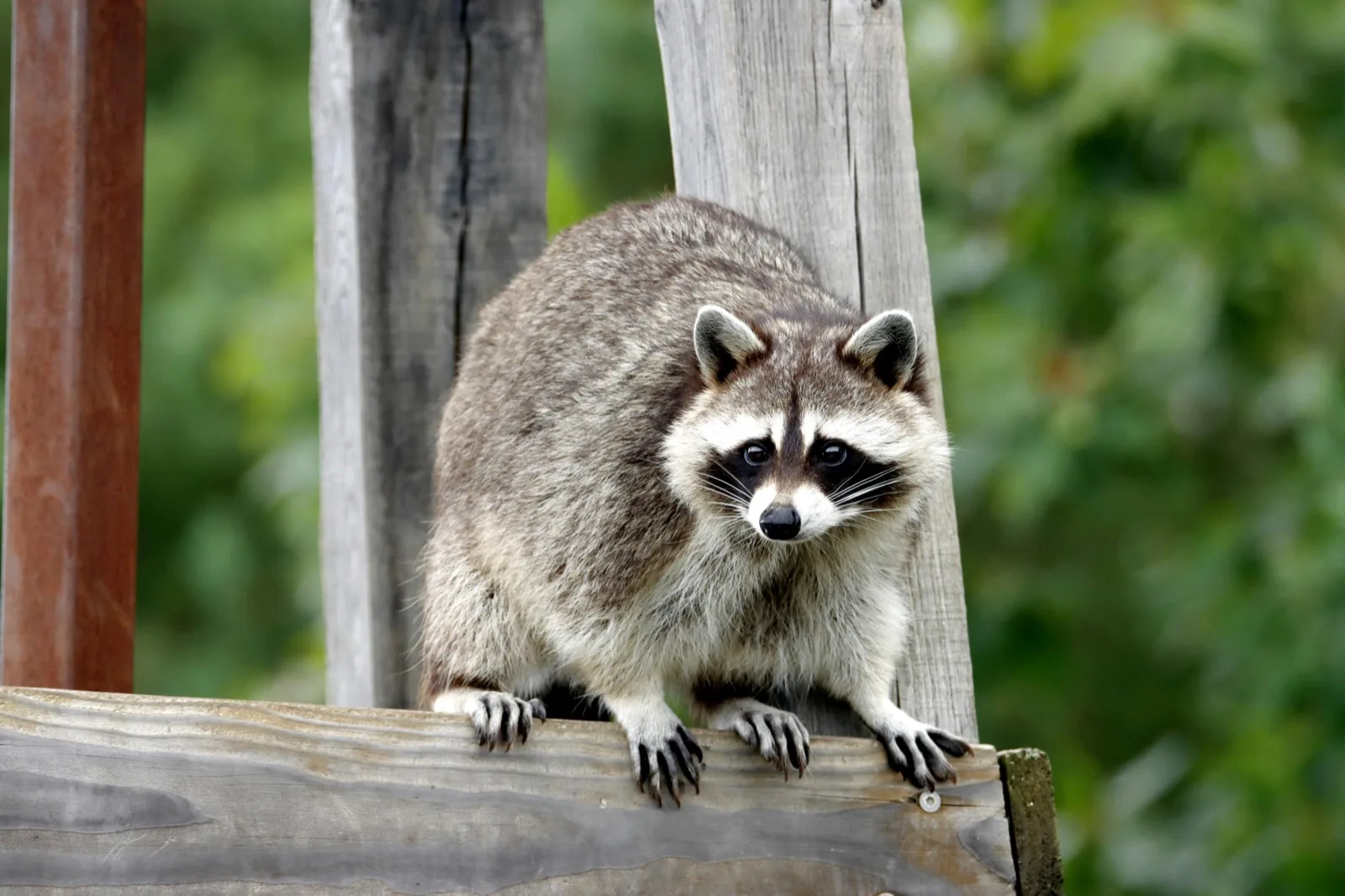
What Raccoons Look Like and Where They Live
Raccoons are medium-to-large mammals (10-25+ lbs adult) with distinctive black face masks, ringed tails, and dexterous front paws. They are highly intelligent — laboratory studies have shown raccoons can solve complex multi-step puzzles and remember solutions for up to three years. They are excellent climbers, swimmers, and problem-solvers, which is why standard residential exclusion often fails when done by amateurs.
Raccoons are present across the continental U.S., with population densities highest in suburban areas where year-round food subsidy from urban garbage, outdoor pet food, bird feeders, and gardens supports larger and heavier individuals than rural environments do. They are nocturnal but daytime sightings in suburban areas are not always indicative of rabies — denning females and dispersing juveniles are sometimes active during the day.
Signs You Have Raccoons
- Heavy thumping or chittering from the ceiling at night — homeowners often describe it as "someone walking up there" because raccoons are far heavier than squirrels or rats
- Damaged fascia or soffits with claw marks
- Tipped trash cans overnight, often repeatedly
- Droppings on the roof, in the yard near downspouts, or in the attic — raccoon droppings are similar in size to a small dog's
- Smell of urine penetrating ceiling drywall in established attic situations
- Entry holes typically 4-6 inches across — much larger than squirrel or rat openings
Health Risks From Raccoons
Rabies — raccoons are the leading rabies vector in the eastern United States. Any bite or scratch should be reported to local public health authorities immediately. Roundworm (Baylisascaris procyonis) is present in raccoon feces and is dangerous to humans and pets, particularly children who might come into contact with contaminated attic insulation. Leptospirosis is transmitted through urine. Canine distemper is fatal to unvaccinated dogs. On the property side, raccoons in attics typically destroy 20-40% of the affected insulation, gnaw HVAC ductwork, and chew electrical wiring — a documented residential fire risk.
Raccoon Removal Cost — National Ranges
Most full residential raccoon removal jobs in the U.S. run between $400 and $1,500+ depending on the number of entry points to seal, whether babies are present, and how much sanitation and insulation replacement is required. Single-entry trap-and-release work sits at the low end. Multi-entry historic-home jobs with full attic decontamination can exceed $2,500+. Pre-1940 housing with original masonry chimneys typically requires custom-fabricated stainless-steel chimney caps as part of the seal. Cost varies primarily by exclusion scope and remediation, not the trapping itself.
When to Call a Professional vs When You Can Wait
Call immediately: scratching or thumping in the attic at night, visible damage to fascia or soffits, audible kits (high-pitched chittering), urine smell penetrating ceiling drywall, or a raccoon spotted inside the structure or in a chimney. Schedule within a few days: visible raccoon on the roof or yard at night without confirmed structural intrusion. Inspection-only is appropriate before fall dispersal pressure (September-November) on properties that have had prior intrusions.
Why DIY Raccoon Removal Usually Fails
Box-store cage traps catch one or two animals but don't address kits inside the structure or the multiple other entry points the source raccoon found. Sealing the visible entry rarely solves the problem — most established raccoon properties have 2-5 viable entry points, more in pre-1940 historic housing. Removing one raccoon doesn't address the source population in the surrounding habitat; female raccoons specifically seek attic dens, so unsealed homes get re-entered within weeks. Sanitation requirements after a raccoon removal include attic decontamination for roundworm — a real public-health risk that DIY cleanup almost never addresses correctly.
How Professional Raccoon Removal Works
A typical residential raccoon job: initial inspection of the attic, chimney, crawlspace, and full exterior; identification of every viable entry point; live trapping or one-way exclusion doors when kits are present; sealing all entry points with galvanized steel mesh and code-appropriate flashing; sanitation of contaminated insulation, dropping zones, and travel paths; damage repair including insulation replacement and HVAC duct repair where needed. The process typically runs 5-14 days from first call to final exclusion, depending on whether kits are present and structural repair is required.
Raccoon Removal Cost
$200–$600+
Trapping and removal. Attic cleanup and exclusion additional ($800–$2,500+). Pricing varies by region, contractor, and severity. Each contractor in our directory provides free property-specific estimates.
Find a Licensed Raccoon Removal Contractor by State
Click your state to find the contractor serving your county.
- Alabama
- Alaska
- Arizona
- Arkansas
- California
- Colorado
- Connecticut
- Delaware
- District of Columbia
- Florida
- Georgia Raccoon Removal
- Hawaii
- Idaho
- Illinois
- Indiana
- Iowa
- Kansas
- Kentucky
- Louisiana
- Maine
- Maryland
- Massachusetts
- Michigan
- Minnesota
- Mississippi
- Missouri
- Montana
- Nebraska
- Nevada
- New Hampshire
- New Jersey
- New Mexico
- New York
- North Carolina
- North Dakota
- Ohio
- Oklahoma
- Oregon
- Pennsylvania
- Rhode Island
- South Carolina
- South Dakota
- Tennessee
- Texas
- Utah
- Vermont
- Virginia
- Washington
- West Virginia
- Wisconsin
- Wyoming