Bat Removal — Find a Licensed Local Trapper
Bat colonies in attics leave dangerous guano that carries histoplasmosis and attracts parasites. Removal requires licensed specialists.
Bat Removal in the United States
Bat removal is unlike every other residential wildlife issue because of three specific factors: state DNR/fish-and-wildlife regulations restrict bat exclusion during the maternity season (typically May through August) when non-flying pups would be trapped inside the structure, all bat exclusion must use one-way valves rather than trapping (which is essentially banned), and accumulated guano supports growth of Histoplasma capsulatum — a fungus that produces histoplasmosis when its spores are inhaled. Big brown bats (Eptesicus fuscus) dominate residential calls across most of the U.S.; long-established colonies in pre-1940 housing routinely span 30-60+ years of continuous occupation.
Bat Removal — Find Your Local Contractor
Click your state below to find the licensed contractor in your county.
Or browse by state below to find a verified local contractor.
Bat Removal Services Available
Bat guano grows a dangerous fungus (Histoplasma). State laws protect bats so exclusion must follow legal guidelines.
Warning Signs
Bat exclusion has seasonal restrictions — typically not permitted May through August when pups cannot fly. Contact us immediately to schedule.
- Bats flying near roofline at dusk
- Squeaking sounds in walls
- Guano piles near entry points
- Dark staining around gaps
- Strong ammonia smell in attic
What Professionals Do
Licensed contractors handle every aspect of bat removal — capture, exclusion, sanitation, repair.
- Colony exclusion (bat-safe methods)
- Guano removal and decontamination
- Attic restoration
- Entry point sealing after exclusion
- Rabies exposure assessment
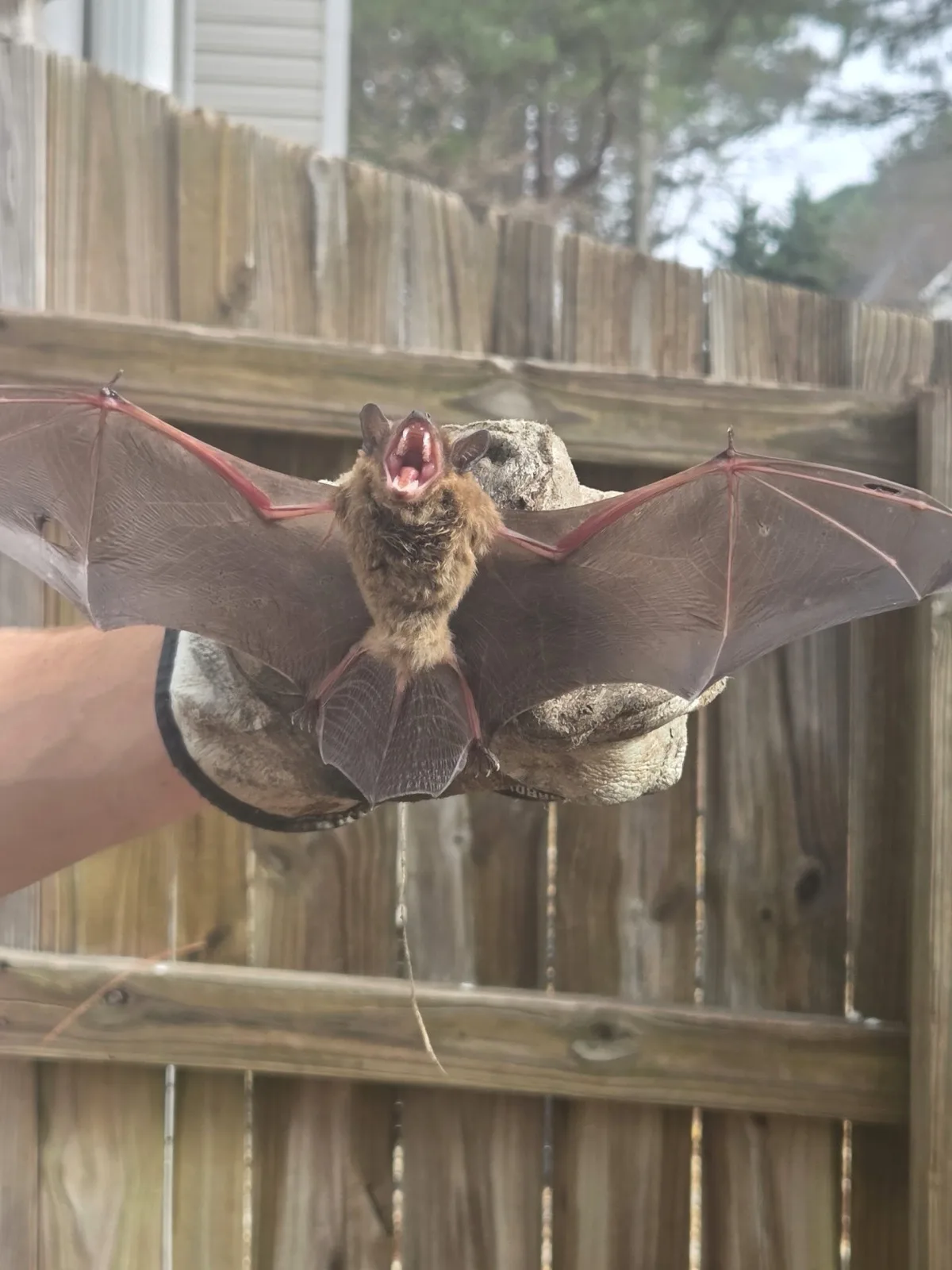
Bat Species You'll Find in U.S. Homes
The big brown bat (Eptesicus fuscus) is the dominant residential nuisance bat across most of the United States — adaptable to a wide range of housing eras, forms small to medium colonies (10-50 individuals) in attic spaces, masonry chimneys, and behind shutters. The little brown bat (Myotis lucifugus) was historically common across the eastern and midwestern U.S. but has been drastically reduced by white-nose syndrome since 2006. The evening bat (Nycticeius humeralis) appears in older housing across the southeastern U.S. The tricolored bat (Perimyotis subflavus) is federally proposed for listing under the Endangered Species Act and appears across the eastern half of the country with notable regularity along mature-canopy waterways.
Why Bat Removal Has a Legal Calendar
State DNR/fish-and-wildlife agencies across the United States restrict bat exclusion during the maternity season — typically May through August — because pups during those months are non-flying and would be trapped inside the structure to die if exclusion went forward. The protected status applies at both state and federal levels for several species, and the consequences of getting the timing wrong are serious: regulatory liability for the property owner and the contractor, plus a slow-decomposing colony of pups inside the wall cavity that produces months of smell-and-fly callbacks.
The two safe exclusion windows in most regions are April (before maternity-season activity ramps up) and September through mid-October (after pups have begun flying and the colony is dispersing toward winter hibernation habitat). Inspections, structural planning, and entry-point identification can happen any time of year — homeowners should not wait until the right window to schedule the inspection.
Signs You Have a Bat Colony
- Guano accumulation on siding below an entry point — typically a brown stain on siding or droppings on a porch or driveway under a roofline
- Bats flying near the roofline at dusk — characteristic exit pattern from established colonies
- Squeaking sounds in walls or attic, especially in the early evening as the colony begins exiting to forage
- Strong ammonia smell from accumulated guano, often intensifying in summer heat
- Single bat appearing in living space — almost always indicates a colony in the attic or wall cavity has found a path through ceiling drywall
- Dark staining around small gaps at flashing, soffits, or chimney chases — body-oil residue from repeated exit and entry
Histoplasmosis and Why Bat Guano Is Different
Bat guano is unlike any other wildlife waste because of the public-health risk it carries. Histoplasma capsulatum is a fungus that grows in bat guano (and bird droppings) and produces histoplasmosis when its spores are inhaled. Most cases are mild flu-like illness, but severe cases — especially in immunocompromised individuals — can produce serious lung and systemic disease. Disturbing established guano deposits releases spores into the air; DIY attic cleanup of bat guano is genuinely hazardous. Long-established colonies (30-60+ years in some pre-1940 housing) can produce inches of accumulated guano. Professional decontamination uses HEPA equipment and proper PPE.
Bat Removal Cost — National Ranges
Most residential bat removal jobs in the U.S. run between $700 and $2,500+ depending on colony size, structural complexity, and the amount of guano remediation required. Single-bat-in-house calls and small-colony exclusions on newer construction sit at the low end. Large established colonies in pre-1940 historic housing routinely run $2,500-$6,000+ once full guano remediation is included. Decontamination of insulation contaminated with guano (a histoplasmosis source) typically adds $1,500 to $5,000+ depending on attic square footage. The variable is colony size and remediation scope, not the trapping itself — trapping bats is essentially banned.
What to Do If a Bat Is in Your Living Space Tonight
If a bat is in living space and any person or pet was in the room while it was loose — particularly while sleeping, or with children, elderly residents, or pets that may not have a current rabies vaccination — the Centers for Disease Control treats this as potential rabies exposure and the bat must be captured and tested rather than released. Confine the bat to a single room (close interior doors), do not handle it without leather gloves, and call your county public-health department or your physician for exposure assessment. The contractor handles the bat capture and the structural assessment of how it got in. A bat in living space almost always means there's a colony in the attic that found a path through ceiling drywall or a wall cavity — the structural fix is the underlying problem.
Bat Removal Cost
$400–$1,500+
Exclusion work. Guano cleanup and attic decontamination adds $1,500–$8,000+ depending on colony size. Pricing varies by region, contractor, and severity. Each contractor in our directory provides free property-specific estimates.
Find a Licensed Bat Removal Contractor by State
Click your state to find the contractor serving your county.
- Alabama
- Alaska
- Arizona
- Arkansas
- California
- Colorado
- Connecticut
- Delaware
- District of Columbia
- Florida
- Georgia
- Hawaii
- Idaho
- Illinois
- Indiana
- Iowa
- Kansas
- Kentucky
- Louisiana
- Maine
- Maryland
- Massachusetts
- Michigan
- Minnesota
- Mississippi
- Missouri
- Montana
- Nebraska
- Nevada
- New Hampshire
- New Jersey
- New Mexico
- New York
- North Carolina
- North Dakota
- Ohio
- Oklahoma
- Oregon
- Pennsylvania
- Rhode Island
- South Carolina
- South Dakota
- Tennessee
- Texas
- Utah
- Vermont
- Virginia
- Washington
- West Virginia
- Wisconsin
- Wyoming