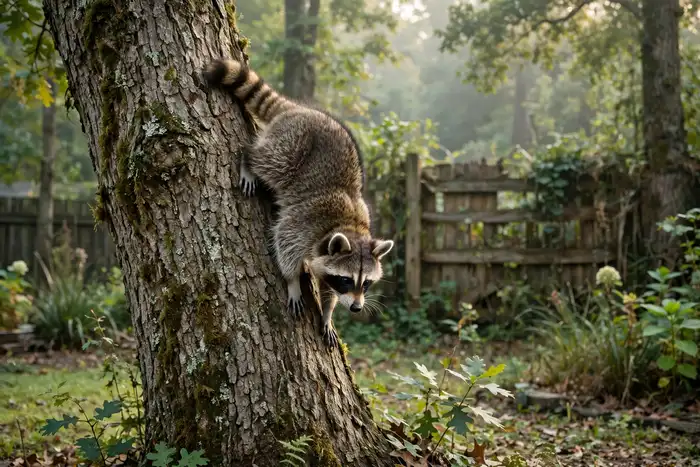
<p>Raccoons are North Carolina's headline rabies-vector animal — raccoon-variant rabies is the state's most common form — and the attic and chimney calls run statewide, heaviest in spring when females den to raise pups in Triangle, Charlotte, Triad, and mountain-town housing.</p>
North Carolina law prohibits relocating trapped raccoons: under 15A NCAC 10B .0106, a raccoon taken for depredation must be released on the same property or humanely euthanized by a licensed Wildlife Control Agent — we never promise to trap and relocate. Our crew works by exclusion and one-way exits first, keeps mothers with mobile young, seals soffits and chimneys in steel, and decontaminates latrine waste, which can carry raccoon roundworm.
Field notes — North Carolina
North Carolina's Piedmont and coastal plain regions experience intense wildlife pressure from raccoons, squirrels, and opossums, while mountain counties deal with additional species including black bears and flying squirrels. Copperheads are one of the most frequent snake removal calls throughout the Piedmont and western counties.
Spring denning season in March and April, and fall when animals seek winter shelter, are the peak intrusion periods.
RemoveWildlifeNow
Raccoon trouble in North Carolina?
(844) 544-3498
Call us and tell us what you're hearing, seeing or smelling — we'll take it from there. The animals come out, the entry points get sealed, and the mess gets cleaned up.
- Licensed & insured
- Same-day service
- Open 24/7
- Humane methods
Can you relocate a raccoon in North Carolina?
No. State rule 15A NCAC 10B .0106 prohibits relocating trapped raccoons and other Carnivora. The lawful outcomes are on-site release after exclusion or humane euthanasia by a licensed WCA — our crew will explain which fits your job on the first visit.
Is a raccoon in my attic a rabies risk?
Raccoons are North Carolina's primary rabies-vector species, so keep people and pets away, never handle the animal or a carcass, and call us or your county health department if anyone may have had contact.