Signs
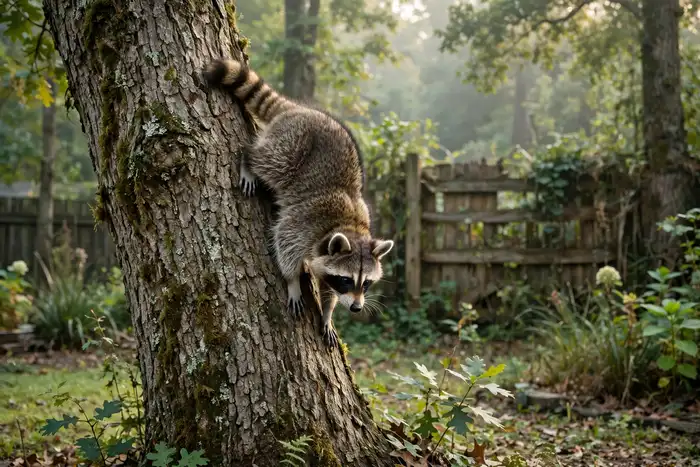
How you know it’s raccoons
If you are on the fence about whether anything is actually inside, start here. The signs below are what we confirm on site in Buncombe County homes every week, and together they tell us how long raccoons have been there.
- Torn soffit or fascia boards
- Droppings near entry points
- Footprints in mud or soft soil
- Noises in attic at night
- Knocked over trash cans
Take photos of anything you find and show us when we arrive in Biltmore Forest. Clear pictures of droppings, entry gaps and damage help us confirm the species and the scale of the job before we open anything up.
Southeastern raccoons are active year-round due to the mild climate, with the highest call volumes in late winter denning season and again in summer when juveniles disperse. Raccoon roundworm (Baylisascaris procyonis) is a documented public health concern in the region, making professional attic remediation after removal essential.
Field notes — Buncombe County
French Broad River, Blue Ridge Parkway, Pisgah National Forest edge shape the ground in Buncombe County, in southern Blue Ridge mountains around Asheville.
Mountain cabins, vacation rentals, and valley homes with stone foundations, woodpiles, and open eaves. Asheville holds the oldest stock, with newer growth spreading along the main corridors.
Raccoons and squirrels lead attic calls in Buncombe County, copperheads appear in leaf litter and ivy in season, and crawlspace raccoons, opossums, and skunks stay steady year-round. Call us at (844) 544-3498 and our crew will inspect first.
Around Biltmore Forest
Neighbourhoods we work: River side (properties dropping toward the French Broad) · North edge (streets toward Asheville and Biltmore Village) · Vanderbilt Road core (the town's original estate-era streets) · South Biltmore Forest (lots toward the estate grounds) · Hendersonville Road side (homes along the eastern edge)
Biltmore Forest is a small, affluent forest suburb of large older homes on big wooded lots, built from the 1920s onward under a deliberately preserved tree canopy.
French Broad River (western border), the Biltmore Estate's vast wooded grounds adjoining south, Hendersonville Road and the Blue Ridge Parkway edges
Biltmore Forest's estate-era homes sit inside a managed forest, so the work is refined but constant: bats in the big 1920s attics, raccoons in masonry chimneys, and squirrels traveling an unbroken canopy from lot to lot.
The estate grounds next door act as a wildlife reservoir, deer and bear pass through as Commission matters, and armadillos — established in this county — dig the soft lawn edges along the shaded streets.
Biltmore Forest sits in Buncombe County. Our crew covers the whole county — including Woodfin, Swannanoa, Asheville — so if the problem turns out to be at a second property nearby, one call still covers it.
The work
How we get raccoons out of a Biltmore Forest home
We work from the outside in on Biltmore Forest homes: entries mapped first, then removal timed to the animal's own movements. That sequencing is what lets most raccoons leave on their own through one-way exits instead of being chased around your attic.
- Damage repair
- Preventative exclusion
- Live trapping and removal
- Attic cleanup and decontamination
- Entry point sealing
Around Buncombe County, that usually means a yard sighting and an attic problem are connected, even when they seem weeks apart. raccoons pattern a property over time in Biltmore Forest, and showing us where you have seen them helps us find where they are getting in.
That final check is what keeps raccoons from simply moving to the next weak spot on the same Biltmore Forest roofline. When you are ready to start, call us, tell us what you have seen, and we will schedule a time that works for you.
Don’t wait on it
Why raccoons get more expensive
Fast removal is essential.
The attic environment itself works against waiting in North Carolina: summer heat drives odor through the whole house, and winter pushes raccoons deeper into wall voids and insulation, where every part of the job gets harder.
Waiting rarely makes a raccoon problem smaller in Biltmore Forest. Droppings and urine soak deeper into insulation, odors build through the house, and the scent left behind draws other raccoons to the same entry long after the first one is gone.
Cost
What raccoon removal runs in Biltmore Forest
Every raccoon job in Biltmore Forest breaks down the same way — inspection, removal, exclusion, and any cleanup — but the total moves with the house. Use these typical ranges to budget, and count on us to give you the exact figure before any work begins.
| Job | Typical range |
|---|
| Raccoon Removal — typical Biltmore Forest job | $200–$600+ |
General guidance from typical North Carolina work — not a quote. Your price is set after we inspect your home, before work starts. See our guides for how pricing breaks down.
RemoveWildlifeNow
Raccoon in Biltmore Forest — handled today
(844) 544-3498
Call us and tell us what you're hearing, seeing or smelling — we'll take it from there. The animals come out, the entry points get sealed, and the mess gets cleaned up.
- Licensed & insured
- Same-day service
- Open 24/7
- Humane methods
Raccoon questions from Biltmore Forest homeowners
What time of year are raccoons worst in North Carolina?
Raccoons are worst in North Carolina from December through March, when pregnant females actively seek attic entry points to give birth. A second wave of activity occurs in late summer as juveniles disperse and establish new territories. Biltmore Forest residents should inspect rooflines and soffits in fall — before denning season — to seal entry points before a raccoon moves in.
Can I remove raccoons myself in North Carolina?
Raccoon removal requires a state permit in North Carolina, which is issued through the North Carolina Wildlife Resources Commission. Handling raccoons without proper equipment and licensing carries serious legal and health risks. Licensed contractors in Biltmore Forest hold the required permits and carry the equipment needed to remove raccoons safely, handle them legally under the state's rabies-vector rules, and clean contaminated areas properly.
How much does raccoon removal cost in Biltmore Forest, North Carolina?
Raccoon removal in North Carolina typically costs $200–$600+ for trapping and removal. If raccoons have been living in your attic, full remediation including cleanup, decontamination, and entry point sealing generally runs $800–$2,500+ depending on colony size and insulation damage. Call for an estimate specific to your Biltmore Forest property.
Does homeowners insurance cover raccoon damage in North Carolina?
Some North Carolina homeowners insurance policies cover sudden, accidental raccoon damage — such as a torn soffit or damaged roof decking. Most policies do not cover gradual damage or the cost of removal itself. Review your policy or call your agent before assuming coverage. Your Biltmore Forest contractor can provide documentation of damage for insurance claims.
Other animals in Biltmore Forest