Raccoon Removal · Maine
Maine Raccoon Removal
Our crew removes raccoons from Maine attics, chimneys and camps, seals every entry in steel, and decontaminates the mess they leave behind — MDIFW-certified ADC agents, insured, and available 24/7.
Raccoon Removal · Maine
Our crew removes raccoons from Maine attics, chimneys and camps, seals every entry in steel, and decontaminates the mess they leave behind — MDIFW-certified ADC agents, insured, and available 24/7.
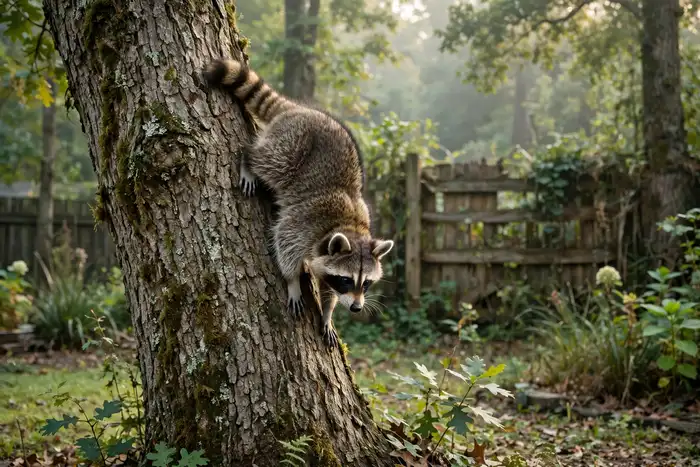
Maine raccoons work on a northern calendar. They stay active into the cold, den up through the worst of winter, and push hard into buildings twice: in <strong>fall</strong>, when they look for a warm attic or a closed-up camp to ride out the cold, and in <strong>spring</strong>, when females tear into soffits and chimneys to raise their litters somewhere safe. From the Portland metro's older housing to Lewiston-Auburn mill neighborhoods, Bangor's wooded streets and the seasonal camps Down East and on the midcoast lakes, a raccoon in Maine is usually a raccoon that found an unsealed opening before the snow flew — and once it is inside, it does not leave on its own.
Raccoon pressure follows people and water in Maine, and it looks different in each part of the state:
Maine raccoons do not truly hibernate. They sleep through the coldest stretches and come out on winter thaws, then feed heavily from late summer on — corn, berries, garbage and bird seed — to build the fat that carries them through. Breeding runs late winter, and females give birth in spring, usually April into May. That timing drives our work: a spring attic job often means a mother and a litter, and sealing her out while the young are still inside helps no one. We confirm whether pups are present, evict the family together, and only then close the building up. Fall is the second rush, as this year's young disperse and every raccoon in the neighborhood is shopping for a winter den — which is why we push exclusion work in September and October, before the snow makes roofs hard to work on.
The Maine CDC lists raccoons among the animals most commonly infected with rabies in Maine, alongside skunks, bats and foxes, so a raccoon that is out in daylight, disoriented or unusually bold should never be approached. Raccoon droppings also carry raccoon roundworm, whose eggs stay infectious in attic insulation and soil long after the animal is gone. That is why a proper Maine raccoon job is never just a trap by the door — it includes removing the latrine material and decontaminating the space the animals used.
Commercial nuisance work in Maine is done by Animal Damage Control agents certified by the Maine Department of Inland Fisheries and Wildlife (MDIFW) — it is a certification, and our crew works as MDIFW-certified ADC agents under MDIFW rules. Maine does not give anyone a general right to trap a raccoon and release it somewhere else: possession and transport of wildlife are permit-regulated, and relocation is restricted and often not an option at all. The realistic outcomes are exclusion with on-site release, or humane euthanasia by a certified ADC agent where the situation requires it. Trapping a raccoon yourself generally requires the same trapping credential a fur trapper holds, so the legal do-it-yourself route is sealing, chimney caps and removing food attractants — and calling us for the animal itself.
Signs & the work
Field notes — Maine
Maine's long, cold winters drive wildlife into structures from October through April, with squirrels and raccoons being the most common attic intruders. Porcupines cause significant damage to wood structures and vehicles in northern counties, and fisher cat populations have expanded throughout the state.
Fall intrusion season in Maine begins early, often in September, as animals prepare for winter shelter.
Local pages
RemoveWildlifeNow
Call us and tell us what you're hearing, seeing or smelling — we'll take it from there. The animals come out, the entry points get sealed, and the mess gets cleaned up.
Twice a year, mainly. In spring, females move into attics and chimneys to raise their litters, and in fall raccoons of all ages look for warm winter dens — including camps that have just been closed for the season. Owners of seasonal property often discover a winter-long tenant at spring opening.
Not as a promise, and often not at all. Maine regulates the possession and transport of wildlife by permit, and relocation is restricted under MDIFW rules. Our MDIFW-certified ADC agents rely on exclusion and on-site release where lawful, and humane euthanasia where the situation requires it — we will explain the options for your property before we start.
It depends on the job. A straightforward eviction and seal-up costs less than a camp or attic job with a litter to handle, latrine cleanup, decontamination and insulation work, and prices vary with how many animals are present and how much damage they have done. We quote after we inspect, so you see exactly what we found before you decide.