🐾 Opossum Removal in Thompson's Station
Local licensed expert serving Thompson's Station and all of Williamson County. Opossums nest in attics, crawlspaces, and under decks — causing odor problems, droppings contamination, and potential disease exposure.
Opossums in Thompson's Station, Tennessee
Virginia opossums (Didelphis virginiana) are alongside skunks the dominant under-deck and under-porch occupant in Thompson's Station, with additional attic and crawlspace presence in the older Tollgate Village and Canterbury subdivisions and the historic Columbia Pike housing stock. The Thompson's Station-distinct call type is the equestrian-property opossum: opossums in horse-farm feed rooms eating sweet feed and grain, in chicken coops along Critz Lane and Buckner Lane raiding eggs and occasionally killing chicks, and in detached barn rafters along the rural-residential corridor where the standard residential-trapping protocol has to be adapted to the larger structural footprint.
Opossum Removal — Thompson's Station, Tennessee
Licensed local expert. Same-day and emergency service in Thompson's Station.
Serving Thompson's Station and all of Williamson County, Tennessee
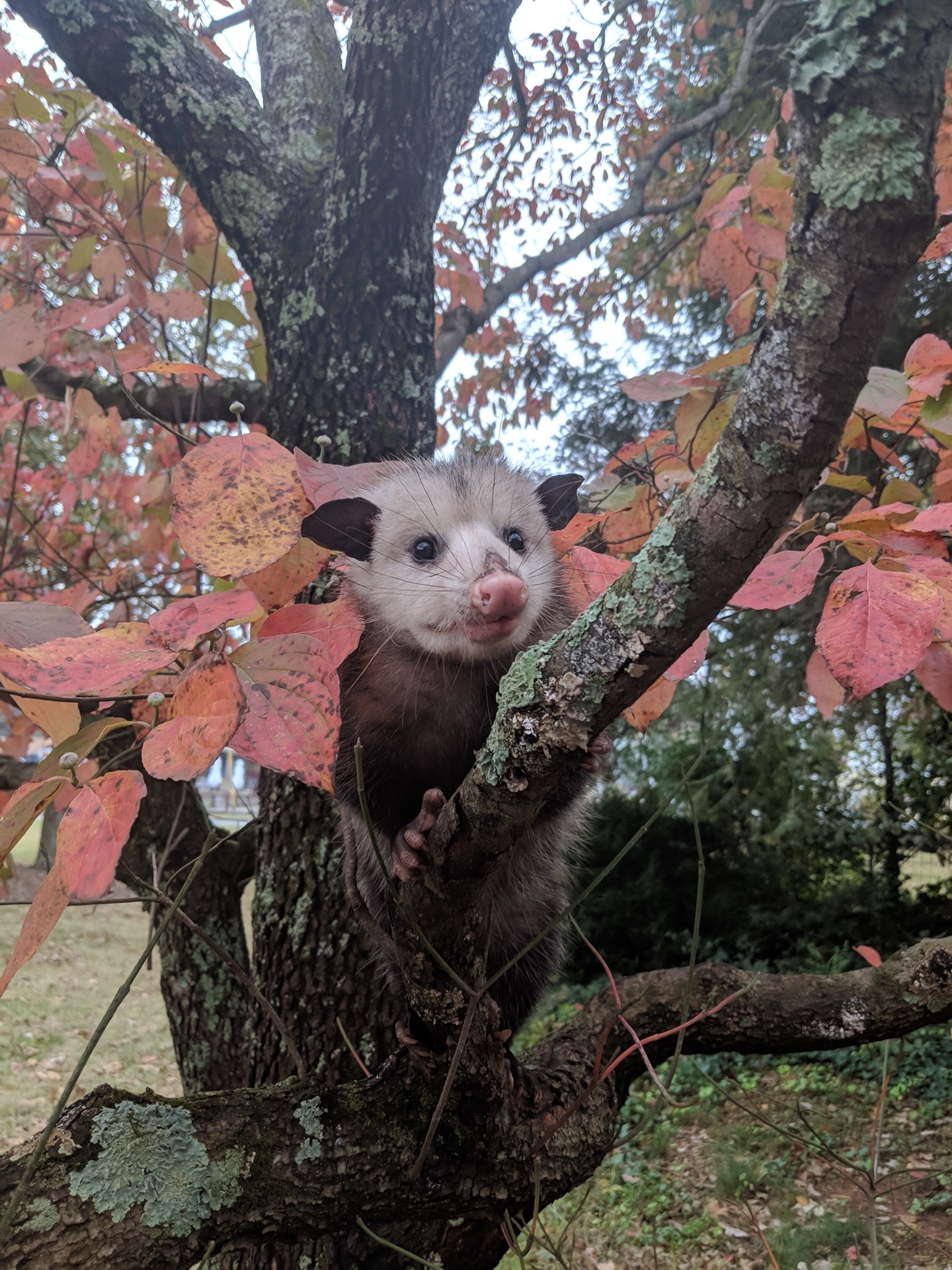
Opossum Removal in Thompson's Station — What to Expect
Opossums carry leptospirosis and other diseases. Their droppings contaminate insulation and require professional cleanup.
Signs You Have Opossums
Opossums are active year-round. They breed twice per year (January-February and June-August) and mothers with young need careful handling.
- Hissing sounds in attic or crawlspace
- Strong musky odor
- Droppings in attic or garage
- Tipped garbage cans
- Opossum sightings around home
Our Process in Thompson's Station
Our local Williamson County contractor serves all of Thompson's Station using the same proven, humane process for every job.
- Live trapping and relocation
- Attic and crawlspace cleanup
- Entry point sealing
- Odor treatment
- Deck and foundation exclusion
Subdivision Opossum Calls — Tollgate Through Belshire
The under-deck opossum call profile in Thompson's Station mirrors the skunk pattern on a different species. Opossums use the same elevated-deck crawlspaces, the same shed and pre-fab outbuilding cavities, and the same crawl-space-vent failures across the 1990s-2010s subdivisions and the 2015-present new construction. Diagnostic clues that point to opossum vs. skunk under the same deck: opossums hiss and chatter when disturbed (skunks stamp and spray); opossum droppings are larger and looser than skunk droppings, often with visible plant matter and small bone fragments; opossum tracks show an opposable rear hallux (very distinctive); and there is no musky den odor in the immediate yard, which is the dead giveaway against a skunk. Most subdivision opossum jobs resolve cleanly with a single cage-trap deployment plus structural exclusion of the den entrance.
Attic and crawlspace opossum work in the older Tollgate Village, Canterbury, and historic Columbia Pike homes follows the same scope as the raccoon attic protocol but on a smaller scale — opossums use existing entry points rather than creating new ones, so single-failure repairs are common. The diagnostic timing clue is that opossums are silent during the day and active overnight (vs. raccoons, which sometimes vocalize during daytime when kits are present), which is one reason opossum infestations often go undiagnosed for months.
Equestrian Feed-Room and Chicken-Coop Opossum Work — A Thompson's Station Specialty
The unique Thompson's Station opossum scope is the rural-residential / equestrian-property work along Critz Lane, Clayton Arnold Road, Carl Adams Road, and Buckner Lane. Opossums are aggressive feed-room raiders — sweet feed, alfalfa cubes, layer pellet, and any open grain bin draw nightly visits, and the resulting feed contamination and droppings problem requires the same Tennessee Department of Health-compliant removal-and-replacement protocol that other rodent contamination triggers. Backyard chicken coops are the second-largest equestrian-property opossum scope: opossums raid eggs, occasionally kill very young chicks, and contaminate roost areas — though contrary to common misconception, healthy adult chickens are usually too large for an opossum to kill, and poultry-loss reports often turn out to be raccoon, fox, or coyote work that the homeowner attributed to the more visible opossum.
Standard scope on equestrian opossum work: cage-trap at the active entry, exclude the entry with hardware-cloth at slab level and around utility penetrations, retrofit feed storage into galvanized lockable containers (the same retrofit recommended for rat work — and the rodent removal work and the opossum work usually go together because both species target the same feed source), and harden the chicken-coop perimeter with hardware-cloth at the run skirt and overhead-mesh on any open-roof areas. Tennessee opossums are rabies-resistant due to their low body temperature and are a low rabies-exposure risk — but the species can carry leptospirosis, salmonella, and the parasites that opossum droppings transmit, so the standard PPE and decontamination protocol still applies.
📅 Summer Activity
Opossums raise their second litter of the year through summer. Juvenile opossums dispersing from their mother are frequently found in unexpected places, including inside garages, under appliances, and in crawlspaces.
Opossum Removal Cost in Thompson's Station
$150–$400+
Trapping and relocation. Cleanup and entry point sealing are additional services. Call for an estimate — pricing varies by contractor and job complexity.
Frequently Asked Questions — Opossum Removal in Thompson's Station
Opossum Removal & Other Wildlife — Across Williamson County
Same licensed contractor, broader coverage.
More Wildlife Services in Thompson's Station
Your local contractor handles all wildlife removal needs