🐾 Opossum Removal in Spring Hill
Local licensed expert serving Spring Hill and all of Williamson County. Opossums nest in attics, crawlspaces, and under decks — causing odor problems, droppings contamination, and potential disease exposure.
Opossums in Spring Hill, Tennessee
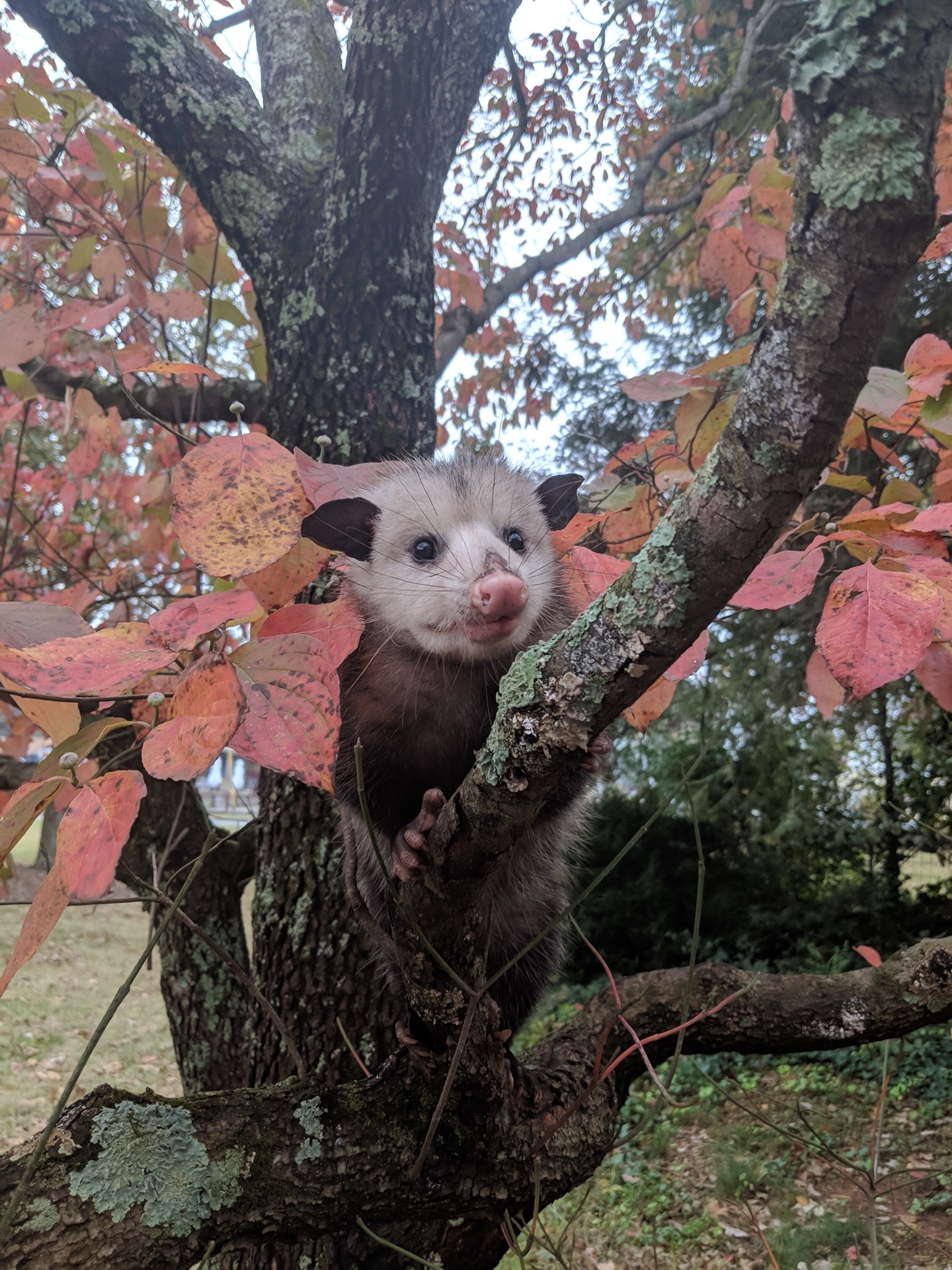
Virginia opossums (Didelphis virginiana) are alongside skunks the dominant under-deck and under-porch occupant in Spring Hill, with additional attic and crawl-space presence in the older Saturn-era subdivisions and the historic Main Street housing stock. Opossums are nocturnal, omnivorous, and remarkably tolerant of suburban environments — Spring Hill's combination of irrigated lawns, outdoor pet food, garbage access, and abundant under-deck cavity geometry sustains a high suburban population. Most opossum calls in Spring Hill resolve cleanly with cage trapping and structural exclusion of the den site.
Opossum Removal — Spring Hill, Tennessee
Licensed local expert. Same-day and emergency service in Spring Hill.
Serving Spring Hill and all of Williamson County, Tennessee
Opossum Removal in Spring Hill — What to Expect
Opossums carry leptospirosis and other diseases. Their droppings contaminate insulation and require professional cleanup.
Signs You Have Opossums
Opossums are active year-round. They breed twice per year (January-February and June-August) and mothers with young need careful handling.
- Hissing sounds in attic or crawlspace
- Strong musky odor
- Droppings in attic or garage
- Tipped garbage cans
- Opossum sightings around home
Our Process in Spring Hill
Our local Williamson County contractor serves all of Spring Hill using the same proven, humane process for every job.
- Live trapping and relocation
- Attic and crawlspace cleanup
- Entry point sealing
- Odor treatment
- Deck and foundation exclusion
Virginia Opossums in Spring Hill Subdivisions — Where They Hide and Why
Virginia opossums are North America's only marsupial and the most omnivorous mammal in middle Tennessee. Spring Hill's opossum population is high, established across every subdivision and the historic Main Street housing stock, and supported by year-round food access — outdoor pet food, unsecured trash, fallen fruit, the irrigated-lawn grub populations across the new subdivisions, road-killed wildlife along Saturn Parkway and US-31, and the small-rodent populations that suburban environments sustain. Adult Spring Hill opossums weigh 4-12 pounds and are exclusively nocturnal in residential settings — daytime activity, particularly in summer, is a behavioral red flag suggesting possible illness or injury and warrants professional handling rather than approach.
Den-site preference in Spring Hill follows three patterns:
- Under-deck and under-porch crawls in the 2000s and 2010s subdivisions — Belshire Village, TFK Farms, Burberry Glen, the McKay's Mill cul-de-sacs — exactly the same hollow grade-level space that attracts skunks. Opossums and skunks routinely occupy adjacent or sequential dens on the same property.
- Crawl-space and basement access in the older Main Street housing stock and the limited Spring Hill housing with crawl-space construction. Failed crawl-space access doors, foundation vents, and the gap at the foundation-rim joint are common entry routes.
- Attic intrusion in the Saturn-era subdivisions where soffit returns or attic-fan housings have aged into raccoon-class entry points — opossums use the same access. Less common than raccoon attic intrusion in Spring Hill but not rare.
Females produce 1-3 litters per year of 5-13 young, but most young don't survive to weaning, so populations are kept in rough balance by predation (coyote, great horned owl, large raptors) and vehicle mortality. The animals are short-lived — wild Spring Hill opossums rarely live more than 2-3 years.
Opossum vs Skunk Diagnosis on Spring Hill Properties
Under-deck den calls in Spring Hill are evenly split between opossums and skunks, and the diagnosis matters because the work is materially different. Diagnostic markers used by the licensed contractor on every Spring Hill den-call inspection:
- Odor profile. Skunk dens have an unmistakable musky-sulfur baseline odor even without active spray events; opossum dens are largely odorless until decomposition or bedding accumulation produces a milder mustiness.
- Tracks and scat. Skunk tracks show five toes with visible claw marks; opossum tracks show distinctive opposable thumbs on the hind feet. Opossum scat is segmented and dog-like; skunk scat is smaller and contains more insect-shell content.
- Activity pattern. Both are nocturnal but opossums move more frequently in the den area and produce more visible disturbance of bedding material.
- Damage signature. Opossums rarely damage structural elements but can tear insulation when nesting in attics or crawl spaces; skunks damage less but spray contamination is the larger concern.
- Health protocol. Opossums are not a documented rabies vector — the species' low body temperature is hostile to the rabies virus — while skunks are a primary rabies vector requiring different handling protocols for the contractor and any pet exposure incident.
Spring Hill opossum work is cage trap with appropriate bait (fish-based, fruit, dog food) at the den entrance, multi-night confirmation of full vacancy, then structural exclusion with hardware cloth at every grade-level access. Off-property relocation is restricted under TWRA rules. The licensed contractor handles trapping, disposition under TWRA rules, and exclusion end-to-end.
📅 Summer Activity
Opossums raise their second litter of the year through summer. Juvenile opossums dispersing from their mother are frequently found in unexpected places, including inside garages, under appliances, and in crawlspaces.
Opossum Removal Cost in Spring Hill
$150–$400+
Trapping and relocation. Cleanup and entry point sealing are additional services. Call for an estimate — pricing varies by contractor and job complexity.
Frequently Asked Questions — Opossum Removal in Spring Hill
Opossum Removal & Other Wildlife — Across Williamson County
Same licensed contractor, broader coverage.
More Wildlife Services in Spring Hill
Your local contractor handles all wildlife removal needs