🐾 Opossum Removal in Franklin
Local licensed expert serving Franklin and all of Williamson County. Opossums nest in attics, crawlspaces, and under decks — causing odor problems, droppings contamination, and potential disease exposure.
Opossums in Franklin, Tennessee
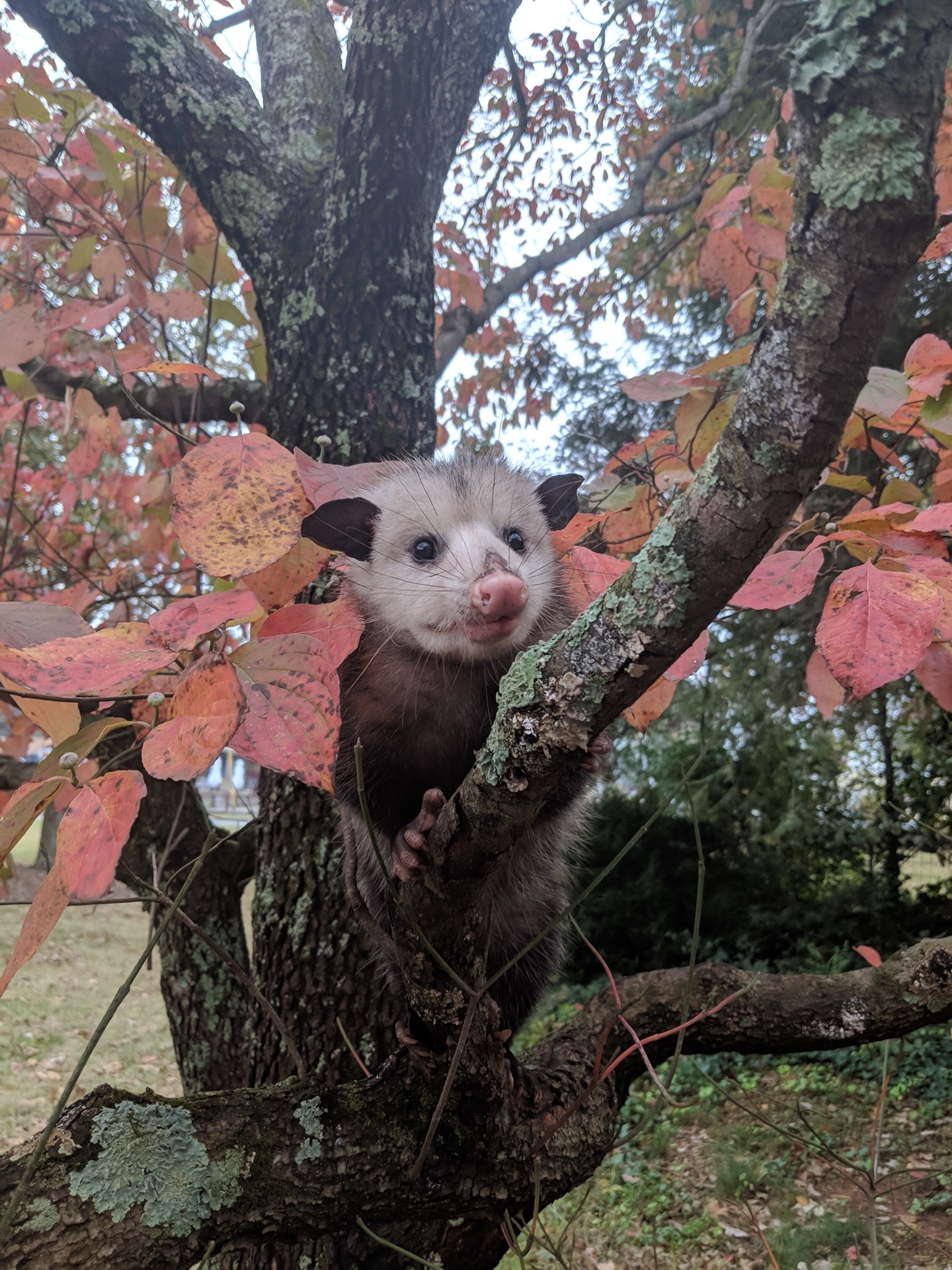
The Virginia opossum (Didelphis virginiana) is North America's only marsupial and a steady fixture in Franklin's urban wildlife mix — typically lower-pressure than raccoons or skunks, but consistent year-round across every neighborhood from the historic core through the newest Berry Farms infill. Opossums den under decks and porches, in crawlspaces, in detached garages and storage sheds, occasionally in attics (much less common than raccoons), and routinely in pool-equipment enclosures and HVAC pad cavities. Pet-door intrusions are a common Franklin call — opossums learn cat doors quickly and will move into a garage or laundry room overnight to access pet food bowls. They are slow, defensive rather than aggressive, and unusually rabies-resistant due to their low body temperature.
Opossum Removal — Franklin, Tennessee
Licensed local expert. Same-day and emergency service in Franklin.
Serving Franklin and all of Williamson County, Tennessee
Opossum Removal in Franklin — What to Expect
Opossums carry leptospirosis and other diseases. Their droppings contaminate insulation and require professional cleanup.
Signs You Have Opossums
Opossums are active year-round. They breed twice per year (January-February and June-August) and mothers with young need careful handling.
- Hissing sounds in attic or crawlspace
- Strong musky odor
- Droppings in attic or garage
- Tipped garbage cans
- Opossum sightings around home
Our Process in Franklin
Our local Williamson County contractor serves all of Franklin using the same proven, humane process for every job.
- Live trapping and relocation
- Attic and crawlspace cleanup
- Entry point sealing
- Odor treatment
- Deck and foundation exclusion
The Franklin Opossum Profile
Adult Virginia opossums in Franklin run 4-13 lb with a body length of 15-20 inches plus an equally long prehensile tail. They are nocturnal, slow-moving, dietary generalists (carrion, insects, fruit, pet food, garbage, the occasional small rodent or ground-nesting bird egg), and despite their somewhat alarming dental display, almost never aggressive — the famous 'playing possum' tonic immobility is the fallback defense, and opossum bites in middle Tennessee are vanishingly rare even on direct-handling encounters. Critically for public health context, opossums maintain a low body temperature (94-97°F) that is hostile to the rabies virus, and confirmed opossum rabies cases in Tennessee are extraordinarily rare — they are not on the TWRA rabies-vector list alongside skunks, raccoons, foxes, and bats.
Where Opossums Den on Franklin Properties
- Under decks and porches across every era of Franklin home — this is the single most common opossum call site in the city. Deck-pier-and-skirting cavities, raised-foundation porch crawlspaces, and the area immediately under storage sheds all qualify. Opossums are not aggressive cavity excavators (unlike groundhogs or skunks) — they typically use existing voids rather than digging.
- Crawlspaces with failed access doors or vent screens — particularly common on the historic-core housing stock around Hincheyville and Boyd Mill, where original crawlspace vents have weathered for 80-150 years.
- Detached garages and storage sheds in Westhaven, Laurelbrooke, Fieldstone Farms, and Sullivan Farms — opossums slip under sectional garage doors with corner-seal failures, then den in stored boxes, lawn-equipment cavities, and water-heater compartments.
- Pool-equipment enclosures and HVAC pad cavities across the estate subdivisions — same dynamic as skunks but with lower spray-risk consequences.
- Pet-door incursions — Franklin opossums learn cat doors and small dog doors within days. The classic call is the homeowner who finds an opossum eating from the pet food bowl in the garage or laundry room at 3 AM. Door training and physical exclusion of the doorway is the durable fix.
Why Most Franklin Opossum Calls Are Lower-Cost Than Raccoon or Skunk
Three reasons. First, opossums are typically solitary or mother-with-young rather than colonial — a single Franklin den site usually contains one to four animals. Second, opossums are not aggressive cavity excavators, so structural undermining is rare and the exclusion scope is correspondingly smaller (sealing existing voids rather than reinforcing soil and concrete). Third, post-removal sanitation is typically straightforward: opossum droppings are smaller and less hazardous than raccoon or skunk droppings, and the disease load is lower (no Baylisascaris roundworm). The standard Franklin opossum job is one to two visits, total turnaround 24-72 hours, with L-trenched hardware-cloth exclusion along the structure to prevent recolonization.
The 'Playing Possum' Response and Capture Protocol
The tonic-immobility 'playing possum' response is involuntary — a fear-driven reflex that drops the animal into a near-catatonic state for minutes to hours. It looks alarming and convincing (open mouth, exposed teeth, partially closed eyes, slowed breathing) but the animal is not dead and revives once the perceived threat is gone. Capture using cage traps under TWRA NWCO rules is straightforward; the contractor never handles a Franklin opossum directly even when it appears 'dead,' both for the animal's welfare and to avoid any bite risk during recovery from the immobility response.
Are Opossums Beneficial? Yes — But Not in Your Crawlspace
Opossums are net-positive in any Franklin property's outdoor wildlife profile: they consume large quantities of ticks (including the lone star tick and black-legged tick that vector ehrlichiosis, anaplasmosis, alpha-gal, and Lyme disease in middle Tennessee), they predate rats and mice, they clear carrion and fallen fruit, and they are not the threat to small pets that residents sometimes imagine. The contractor's recommendation in most Franklin calls is removal from the structure plus exclusion, but not extermination — the opossum is released under TWRA-compliant protocol, the structure is excluded against re-entry, and the property's ecological benefits from the surrounding opossum population are preserved. Williamson County opossum coverage covers the regional pattern.
📅 Summer Activity
Opossums raise their second litter of the year through summer. Juvenile opossums dispersing from their mother are frequently found in unexpected places, including inside garages, under appliances, and in crawlspaces.
Opossum Removal Cost in Franklin
$150–$400+
Trapping and relocation. Cleanup and entry point sealing are additional services. Call for an estimate — pricing varies by contractor and job complexity.
Frequently Asked Questions — Opossum Removal in Franklin
Opossum Removal & Other Wildlife — Across Williamson County
Same licensed contractor, broader coverage.
More Wildlife Services in Franklin
Your local contractor handles all wildlife removal needs