🐾 Opossum Removal in Leiper's Fork
Local licensed expert serving Leiper's Fork and all of Williamson County. Opossums nest in attics, crawlspaces, and under decks — causing odor problems, droppings contamination, and potential disease exposure.
Opossums in Leiper's Fork, Tennessee
Virginia opossums (Didelphis virginiana) are a steady, year-round Leiper's Fork call type with a denning profile that favors the same multi-structure parcel layout that drives the local raccoon and skunk workload — but with a unique biosecurity dimension specific to equestrian properties. Opossums are the definitive host for Sarcocystis neurona, the protozoan parasite that causes equine protozoal myeloencephalitis (EPM) — one of the most significant neurologic diseases affecting middle-Tennessee horses. Opossum droppings in feed rooms, water troughs, hay storage, and pasture are the primary EPM transmission route, which makes opossum removal on a Leiper's Fork acreage parcel a horse-health intervention as much as a property-management one. Opossums den in hay lofts and tack/feed rooms, under porches and decks, in equipment sheds, beneath HVAC pads and outdoor enclosures, and inside old root cellars and springhouses. They contaminate stored feed, leave musky droppings in barn structures, hiss aggressively when cornered (which leads to bite-and-scratch incidents on pets and the occasional handler), and rotate between two or three sheltering sites on the same parcel — which means effective work in this community is multi-site inspection and coordinated exclusion rather than single-site removal.
Opossum Removal — Leiper's Fork, Tennessee
Licensed local expert. Same-day and emergency service in Leiper's Fork.
Serving Leiper's Fork and all of Williamson County, Tennessee
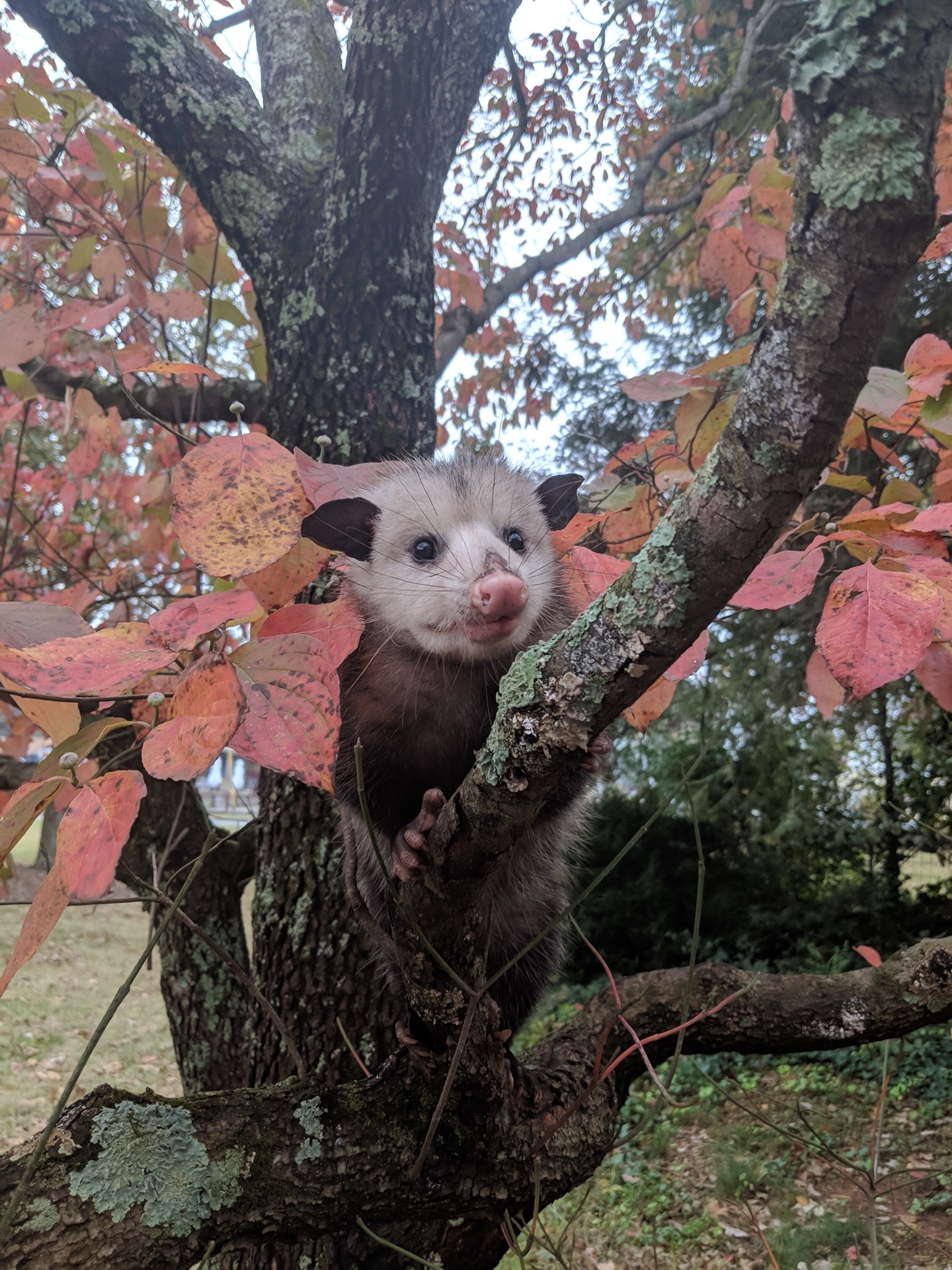
Opossum Removal in Leiper's Fork — What to Expect
Opossums carry leptospirosis and other diseases. Their droppings contaminate insulation and require professional cleanup.
Signs You Have Opossums
Opossums are active year-round. They breed twice per year (January-February and June-August) and mothers with young need careful handling.
- Hissing sounds in attic or crawlspace
- Strong musky odor
- Droppings in attic or garage
- Tipped garbage cans
- Opossum sightings around home
Our Process in Leiper's Fork
Our local Williamson County contractor serves all of Leiper's Fork using the same proven, humane process for every job.
- Live trapping and relocation
- Attic and crawlspace cleanup
- Entry point sealing
- Odor treatment
- Deck and foundation exclusion
The Leiper's Fork Opossum Profile
Opossums in Leiper's Fork are abundant for the same reasons raccoons and skunks are: continuous habitat mosaic, multiple shelter structures per parcel, and year-round food access from feed rooms, dropped grain in stalls, irrigated lawn grub populations, and outdoor pet bowls. They are nocturnal, solitary outside of the late-winter breeding season, and produce two litters per year (January-February and June-August) with 6-13 joeys per litter that ride in the mother's pouch for 60-70 days before transitioning to back-riding for an additional 1-2 months. Adult opossums weigh 4-12 pounds in this market and live typically 1-2 years in the wild. Because opossums are solitary except during breeding, a single denning site usually involves one adult animal — but a multi-structure parcel may have one opossum in the hay loft, another under the porch, and a third in the equipment shed simultaneously, with each animal rotating between 2-3 shelter sites within roughly 100-200 yards.
North America's only marsupial, opossums have unusual biological characteristics that affect both removal and disease-vector profile: the lower body temperature (roughly 94-97°F vs typical mammal 99-101°F) makes them highly resistant to rabies; the 50-tooth jaw count (more than any other North American mammal) produces aggressive hissing displays when cornered; and the famous 'playing possum' defensive response (involuntary tonic immobility) can fool homeowners into believing a removed animal is dead. Adult opossums in this market typically have visible scarring from coyote, fox, and dog encounters — they're frequently injured but persistent.
Where Leiper's Fork Opossums Den — Site Profile
Hay lofts
Same primary attractants as raccoons (food, warmth, bedding), and opossums frequently share lofts with raccoons in winter. Loft contamination produces musky droppings, urine staining on hay, and occasional hissing-and-aggression encounters when handlers climb the loft. Hay-loft droppings are particularly concerning for EPM transmission because horses consume contaminated hay directly. Visible signs include scattered scat (smaller than raccoon, with pointed-end shape and visible plant matter), urine staining on bales, and shredded hay used as nest material in loft corners.
Tack and feed rooms
Feed access drives consistent visitation, and a slightly-open feed-room door at night provides a near-perfect denning option. Contamination of grain and supplements with opossum droppings is the most common complaint and the highest EPM-transmission risk on a feed-storage scale. Visible signs: scat near grain spills, gnawed feed-bag corners (less aggressive than raccoon damage), urine staining on feed-room floor and shelving, occasional sightings during evening barn checks.
Under porches, decks, and lattice-skirted outdoor structures
Common on the antebellum farmhouses along Old Hillsboro Road and the restored 1920s-1950s farmsteads on Burwood and Bear Creek Roads. Den entry is typically through gaps in lattice skirting or where decking meets foundation. Visible signs: musky odor through deck floorboards (different from skunk smell — sweeter, less sulfurous), opossum sightings during evening yard activity, scratched lattice panels, scat at den entrances.
Equipment sheds and pole barns on slab
Slab-edge gaps where soil has eroded provide access to the under-structure cavity. Less common than full-barn dens but persistent. Visible signs: scat in equipment storage areas, occasional sighting during equipment-removal events, faint musky odor.
Old root cellars, springhouses, and partially-collapsed outbuildings
Natural denning cavities that opossums readily occupy. Restoration projects on the older Old Hillsboro Road and Southall Road farmsteads frequently encounter established opossum populations during structural assessment.
Attics
Less common than the under-structure sites but documented, particularly where mature canopy provides tree-to-roof access on the wooded estate homes along Pinewood Road, Bear Creek Road, and Carl Road. Visible signs: musky odor in attic spaces (lighter than raccoon scent), thumping sounds at night that are slower and lighter than raccoon footfalls, smaller scat than raccoon.
EPM Biosecurity — The Defining Health-Risk Component of Leiper's Fork Opossum Work
Equine protozoal myeloencephalitis (EPM) is a neurologic disease caused by infection with Sarcocystis neurona (or less commonly Neospora hughesi). EPM is one of the most-diagnosed neurologic conditions in middle-Tennessee horses, with seroprevalence (evidence of exposure) approaching 50-70% in adult horses across the region — though clinical EPM affects only a small percentage of exposed horses.
How EPM transmission works
Opossums are the definitive host for S. neurona. Infected opossums shed sporocysts in feces. Horses become infected by consuming contaminated feed, hay, water, or pasture. Sporocysts survive in environmental conditions for weeks to months. Once ingested, the parasite migrates through the horse's bloodstream and into the central nervous system, where it can cause progressive neurologic damage.
Clinical EPM
Symptoms include asymmetric muscle wasting, gait abnormalities, weakness, ataxia, head tilt, facial paralysis, difficulty swallowing, and progressive neurologic decline. Diagnosis requires veterinary evaluation including spinal tap and serologic testing. Treatment options exist (FDA-approved drugs include ponazuril, diclazuril, and sulfadiazine/pyrimethamine combinations) but require months of administration and outcomes are variable.
Biosecurity reduction
The licensed contractor's role in EPM prevention is opossum-population reduction and structural exclusion of feed-and-hay storage:
- Opossum removal from primary den sites on the parcel.
- Structural exclusion of tack and feed rooms (door-bottom seals, screened windows, sealed utility penetrations).
- Hay-storage exclusion (loft entry sealing, ridge-vent and gable-louver screening).
- Covered water troughs in pasture and around the barn.
- Prompt removal of any opossum droppings encountered (gloves, dispose in sealed bags, do not compost).
- Pasture management reducing opossum traffic through pasture areas.
Veterinary consultation on EPM testing for symptomatic horses is standard. Pre-purchase exams on horses moving onto a Leiper's Fork parcel may include EPM seroprevalence testing.
Other Disease and Bite-Risk Profile
Beyond EPM, opossums carry leptospirosis, salmonella, tularemia, spotted fever, toxoplasmosis, and various intestinal parasites. The opossum's resistance to rabies due to lower body temperature means rabies risk from a Leiper's Fork opossum is meaningfully lower than from a skunk, raccoon, fox, or bat — but rabies in opossums is documented at very low rates and any direct human contact warrants public-health consultation. Bite-and-scratch incidents typically occur when a cornered opossum is approached by a dog or handler — opossums hiss aggressively, bare their 50 sharp teeth, and bite if pressed; bite wounds can require medical evaluation. Most pet-opossum encounters end with the opossum 'playing possum' (involuntary tonic immobility lasting minutes to hours) — homeowners often assume the animal is dead, which it is not.
How to Identify Opossum Activity vs Other Wildlife
- Opossum: nocturnal, slow-moving, 4-12 lb adult; distinctive musky smell (sweeter than skunk, less sharp); pointed-end scat 1-3 inches with visible plant material; characteristic 'naked tail' visible in tracks and direct sightings; scratched lattice panels; opossum 'playing possum' if encountered by dog.
- Raccoon: heavy thumping (15-25 lb adults); larger scat with visible food matter (often blackberry seeds, persimmon, corn); 5-toed paw prints; aggressive food-tearing.
- Skunk: distinct sulfurous spray odor (different from opossum musky smell); cone-shaped lawn divots from grub feeding; smaller and slower-moving than raccoon.
- Norway rat: dramatically smaller (12-16 oz); capsule-shaped scat 1/2-3/4 inch; greasy rub-marks at 4-6 inch height; ground-level burrows.
- Cat or dog (sometimes mistaken): different scat shape and content; no musky wildlife odor; no nocturnal-only activity pattern.
Step-by-Step Leiper's Fork Opossum Removal Process
- Initial call (Day 0) — phone intake to characterize the situation: visible activity locations, structures involved, equestrian-property assessment for EPM relevance, suspected animal count. Same-day or next-day inspection scheduling.
- Multi-site parcel inspection (Day 1) — exterior walk of all structures (main house, horse barn, hay loft, tack/feed room, chicken coop, equipment shed, pump house, decks, porches, root cellars, springhouses); identification of all viable den sites; scat ID; estimated animal count by den-entrance traffic; written project scope.
- Phase 1 — TWRA-permitted live trapping (Day 2-21) — multiple cage traps placed across all identified den sites simultaneously (single-site trapping is rarely sufficient because opossums rotate between sites); daily monitoring during active window; trapping continues until the parcel is genuinely cleared.
- Confirmation of clearance (Day 14-28) — flour-dust monitoring at den entrances to confirm no remaining occupants.
- Phase 2 — site exclusion (Day 21-30) — hardware-cloth lattice reinforcement on porches and decks; slab-edge skirting on equipment sheds; HVAC-pad gap sealing; hay-loft entry sealing (gable louvers, hay-door tracks, ridge vents); tack/feed-room door-bottom seals plus utility-penetration sealing.
- EPM-relevant decontamination (Day 21-35) — feed-room cleaning and disposal of contaminated grain; hay-storage area decontamination; water-trough cleaning and replacement of any contaminated water; soil treatment at heavily-soiled den sites.
- Final walk and warranty (Day 30-45) — verification of exclusion integrity, monitoring period, written warranty.
Cost Breakdown by Scenario — Leiper's Fork Opossum Work
- Single-animal trap-and-removal ($200-$450): one opossum at one den site, no significant remediation.
- Multi-site parcel trapping ($500-$1,500): 2-3 active dens across the property, parcel-wide trap deployment, full trapping cycle.
- Multi-site exclusion across porches, decks, equipment sheds, hay lofts, tack/feed rooms ($500-$2,500): structural sealing scoped to parcel structures.
- EPM-relevant feed-room and hay-storage decontamination ($300-$1,200): cleaning, contaminated-grain disposal, water-trough replacement, surface decontamination.
- Full equestrian-property opossum control + biosecurity ($1,500-$4,500+): multi-animal trapping plus multi-site exclusion plus EPM-decontamination across the full parcel.
Year-Round Leiper's Fork Opossum Calendar
- January-February: First breeding season. Adult activity high. First-litter joeys born late January through February.
- March-May: First-litter joeys in pouch (60-70 days), then back-riding. Adult females highly site-faithful around primary dens. Heavy activity in barn and outbuilding spaces.
- June-August: Second breeding season. Second-litter joeys born. Continuous breeding-season activity through summer. Peak EPM-transmission risk because of high opossum activity in feed-and-hay storage areas.
- September-November: Juvenile dispersal. Young opossums leave natal den sites and establish on adjacent properties or new den sites on the same parcel. Heavy fresh activity.
- December: Pre-breeding pause. Lower call volume. Good window for off-season exclusion installation.
TWRA Regulations
Virginia opossums in Tennessee are managed by TWRA as nuisance species. Commercial opossum removal in Leiper's Fork requires a TWRA Nuisance Wildlife Control Operator (NWCO) certification. Property owners may handle nuisance opossums on their own property under specific conditions, but relocation off-property is restricted under TWRA disease-management rules. The community is unincorporated so there is no separate municipal-code overlay, but properties bordering the Natchez Trace Parkway are adjacent to a federally-administered National Park unit and any work crossing the parkway boundary requires NPS coordination.
Prevention Checklist — Keeping Opossums Off Your Leiper's Fork Property
- Replace plastic feed storage with metal cans or barrels with cam-lock or strap-secured lids — prevents the primary EPM-relevant contamination route.
- Seal door-bottom gaps on tack and feed rooms with metal door sweeps.
- Screen all windows, vents, and utility penetrations on feed-storage buildings.
- Cover water troughs in pasture and around the barn — both EPM-relevant and effective at reducing wildlife visitation generally.
- Skirt all decks and porches with hardware-cloth (not just lattice) to prevent under-structure denning.
- Address slab-edge erosion on equipment sheds and pole barns.
- Remove brush piles and accessible woodpiles from feed-room perimeters.
- Schedule annual property walk by a TWRA-licensed contractor on multi-structure equestrian parcels — opossum sites establish gradually and early intervention prevents EPM-relevant contamination.
- Promptly remove any opossum droppings encountered (gloves, sealed bag disposal, do not compost).
Why DIY Opossum Removal Often Fails (and Misses the EPM Risk)
Five common DIY failure modes. First, single-site trapping: catching the visible opossum at one den site while leaving the other 1-2 active sites on the parcel untreated. Second, 'playing possum' confusion: a captured opossum that goes into tonic immobility is often released or assumed dead, then escapes the trap. Third, no EPM decontamination: the opossum is removed but the contaminated feed, hay, and water sources remain — horses continue to be exposed. Fourth, incomplete structural exclusion: removing animals without sealing den sites produces re-establishment within weeks. Fifth, no biosecurity assessment: opossum work on an equestrian parcel without veterinary coordination on EPM testing for symptomatic horses misses the broader health framework. The licensed contractor handles all five end-to-end with EPM-relevant decontamination and biosecurity recommendations.
Rebound Prevention
Opossum-job rebound on a Leiper's Fork property typically traces to one of three causes: incomplete multi-site exclusion (opossums find an unsealed den site on the parcel); ongoing pressure from neighboring parcels (juveniles disperse seasonally and establish on adjacent properties); ongoing food access (uncontrolled feed-room contamination, accessible chicken-coop eggs, outdoor pet bowls). Annual inspection on multi-structure equestrian parcels catches re-establishment early. Williamson County opossum coverage covers the regional pattern in more depth.
📅 Summer Activity
Opossums raise their second litter of the year through summer. Juvenile opossums dispersing from their mother are frequently found in unexpected places, including inside garages, under appliances, and in crawlspaces.
Opossum Removal Cost in Leiper's Fork
$150–$400+
Trapping and relocation. Cleanup and entry point sealing are additional services. Call for an estimate — pricing varies by contractor and job complexity.
Frequently Asked Questions — Opossum Removal in Leiper's Fork
Opossum Removal & Other Wildlife — Across Williamson County
Same licensed contractor, broader coverage.
- Leiper's Fork raccoon removal (frequently shares attic/loft sites)
- Leiper's Fork skunk removal (frequently co-dens with opossums)
- Leiper's Fork rat removal (feed-room contamination + biosecurity)
- Leiper's Fork dead-animal removal
- Leiper's Fork groundhog removal (similar under-structure work)
- opossum removal in Franklin TN
- Williamson County opossum hub
- Leiper's Fork wildlife services
More Wildlife Services in Leiper's Fork
Your local contractor handles all wildlife removal needs