🐾 Opossum Removal in Arrington
Local licensed expert serving Arrington and all of Williamson County. Opossums nest in attics, crawlspaces, and under decks — causing odor problems, droppings contamination, and potential disease exposure.
Opossums in Arrington, Tennessee
Virginia opossums (Didelphis virginiana) are the second-most-called species across Arrington after raccoons, and the working-farm call mix differs substantially from the suburban under-deck-only profile that defines Brentwood and Franklin opossum work. In 37014, opossums hit feed rooms, tack rooms, hay storage, under-barn cavities, equipment outbuildings, antebellum farmhouse porches, and chicken coops with documented frequency. Opossums are North America's only native marsupial, are functionally immune to rabies due to low body temperature, are beneficial as tick predators, and pose lower disease risk than raccoons and skunks — but the structural damage, feed contamination, and barn-cat-conflict profile on Arrington working farms is significant.
Opossum Removal — Arrington, Tennessee
Licensed local expert. Same-day and emergency service in Arrington.
Serving Arrington and all of Williamson County, Tennessee
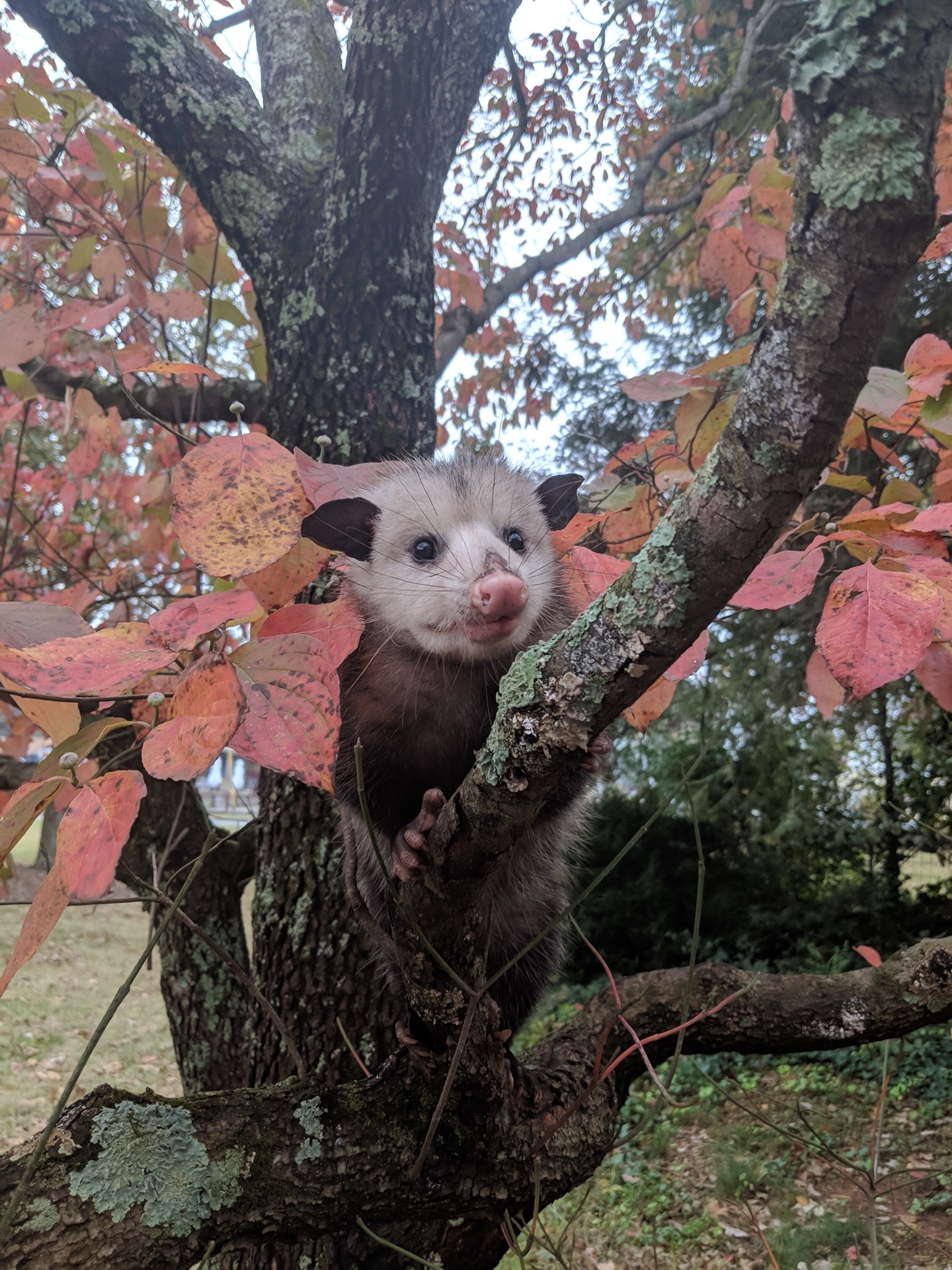
Opossum Removal in Arrington — What to Expect
Opossums carry leptospirosis and other diseases. Their droppings contaminate insulation and require professional cleanup.
Signs You Have Opossums
Opossums are active year-round. They breed twice per year (January-February and June-August) and mothers with young need careful handling.
- Hissing sounds in attic or crawlspace
- Strong musky odor
- Droppings in attic or garage
- Tipped garbage cans
- Opossum sightings around home
Our Process in Arrington
Our local Williamson County contractor serves all of Arrington using the same proven, humane process for every job.
- Live trapping and relocation
- Attic and crawlspace cleanup
- Entry point sealing
- Odor treatment
- Deck and foundation exclusion
The Arrington Opossum Profile: Multi-Structure, Multi-Litter, Persistent
Opossums in 37014 are smarter and more persistent than the popular reputation suggests. Adult body mass commonly runs 4-12 lb, with large mature individuals on Arrington feed-rich properties exceeding 14 lb. Opossums are nocturnal, opportunistic omnivores with excellent climbing ability, and they exploit Arrington's combination of accessible feed storage, under-structure denning, and abundant pasture-edge cover aggressively. Unlike raccoons (which are highly social and den communally), opossums are mostly solitary outside of breeding pairs and dependent young, so a single resident opossum is the norm per den site — but the same property can host four to eight individual opossums simultaneously across the residence, barn, hay storage, equipment sheds, and antebellum porch crawlspaces. Females whelp twice annually in middle Tennessee (January-February and June-August), and females carry dependent young in the pouch for 60-70 days followed by another 30-40 days riding on the mother's back — meaning kits are present for nearly half the year on most active dens.
Where Arrington Opossums Den and Forage
- Under-barn cavities, run-in shed footings, and equipment-shed slabs — slab-edge access and settled-soil cavities, the same denning profile that drives skunk denning. Opossums often co-occupy these cavities with skunks and raccoons in alternating tenure.
- Feed rooms and tack rooms — door bottom and latch-failure access, gnawed plastic feed containers, and contaminated open-bag feed. Sweet feed, supplement powders, and dropped grain are the primary attractants.
- Hay storage — bottom-bale concealment and rafter-line access for opossums that climb to ceiling beams. Opossums use hay storage as both denning and travel routes between feed rooms and the pasture edge.
- Antebellum farmhouse porch crawlspaces (Triune, Murfreesboro Road) — open-stone foundations and aged wood-skirt crawlspace access. Multi-litter nursery dens are common in these locations.
- Chicken coops and small-livestock pens — opossums take eggs (and occasionally chicks) and the species is documented as a sustained low-level poultry-management problem on small free-range flocks across Allisona Road, Bear Creek Road, and the open-pasture corridors.
Why Opossums Aren't a Rabies Risk But Are Other Things
Opossums maintain a body temperature of approximately 94-97°F, which is too low to support rabies viral replication — the species is functionally immune. They are also voracious tick predators (a single adult opossum may eliminate 5,000+ ticks per season), which is a real ecological positive on Arrington working-farm properties where Lyme, Rocky Mountain spotted fever, and other tick-borne disease pressure is elevated. However: opossums carry leptospirosis (a real concern for horses, working dogs, and barn cats), Equine Protozoal Myeloencephalitis (EPM) — which is transmitted by opossum feces contaminating hay, feed, and pasture water sources and is a significant equine health concern in middle Tennessee — Salmonella, and Tularemia. EPM is the disease that drives most equine-property opossum exclusion work in 37014, because contamination of stored hay or pasture water with opossum feces produces clinical EPM exposure in resident horses.
Whelping and Kit Considerations on Arrington Properties
Opossums whelp twice annually in middle Tennessee (January-February and June-August). Females carry kits in the pouch for 60-70 days followed by another 30-40 days riding on the mother's back, which means dependent young are present for nearly half the year on most active dens. Standard kit-protocol applies: trap a female with kits and the kits cannot survive separated from the mother in most circumstances, so trapping handling has to account for kit presence. The contractor uses thermal imaging and visual inspection to confirm kit status before any trap deployment that could separate a mother from dependent young.
The Arrington Opossum Removal Process
Standard scope: full property den-system mapping, kit-presence assessment, targeted live-trapping at all den entries and feed-room access points under TWRA rules, hardware-cloth exclusion keyed below grade at under-structure cavities, feed-storage hardening, EPM-protocol decontamination of hay and feed-storage areas where opossum fecal contamination is documented, and pasture-edge management to reduce attractants. Multi-structure work in a single coordinated visit is the norm; follow-up monitoring runs 2-4 weeks to confirm successful exclusion.
📅 Summer Activity
Opossums raise their second litter of the year through summer. Juvenile opossums dispersing from their mother are frequently found in unexpected places, including inside garages, under appliances, and in crawlspaces.
Opossum Removal Cost in Arrington
$150–$400+
Trapping and relocation. Cleanup and entry point sealing are additional services. Call for an estimate — pricing varies by contractor and job complexity.
Frequently Asked Questions — Opossum Removal in Arrington
Opossum Removal & Other Wildlife — Across Williamson County
Same licensed contractor, broader coverage.
- Brentwood opossum removal in foothill subdivisions
- Franklin TN opossum removal under decks and porches
- Williamson County opossum removal hub
- Arrington skunk removal — co-occupied under-barn dens
- Arrington raccoon removal in feed rooms and tack rooms
- Arrington bird removal — chicken coop and poultry exclusion
More Wildlife Services in Arrington
Your local contractor handles all wildlife removal needs