🐾 Opossum Removal in Davidson County
Opossums nest in attics, crawlspaces, and under decks — causing odor problems, droppings contamination, and potential disease exposure.
Opossum Removal — Davidson County
Licensed local expert. Same-day and emergency service available.
Serving all of Davidson County, Tennessee
Opossum Removal in Davidson County, Tennessee
Virginia opossums (Didelphis virginiana) — Tennessee's only native marsupial — generate steady year-round call volume across Davidson County's residential housing stock. The dominant call profile is under-deck, crawlspace, and shed denning across the pre-1950s East Nashville, Germantown, Inglewood, and Donelson housing — much of the same structural substrate that drives Davidson skunk and raccoon work. Opossums also produce a meaningfully higher dead-animal call rate than other Davidson species because of their relatively short lifespan (most adults die within 18-24 months) and their tendency to den in concealed under-house cavities where natural deaths produce immediate odor problems for occupants.
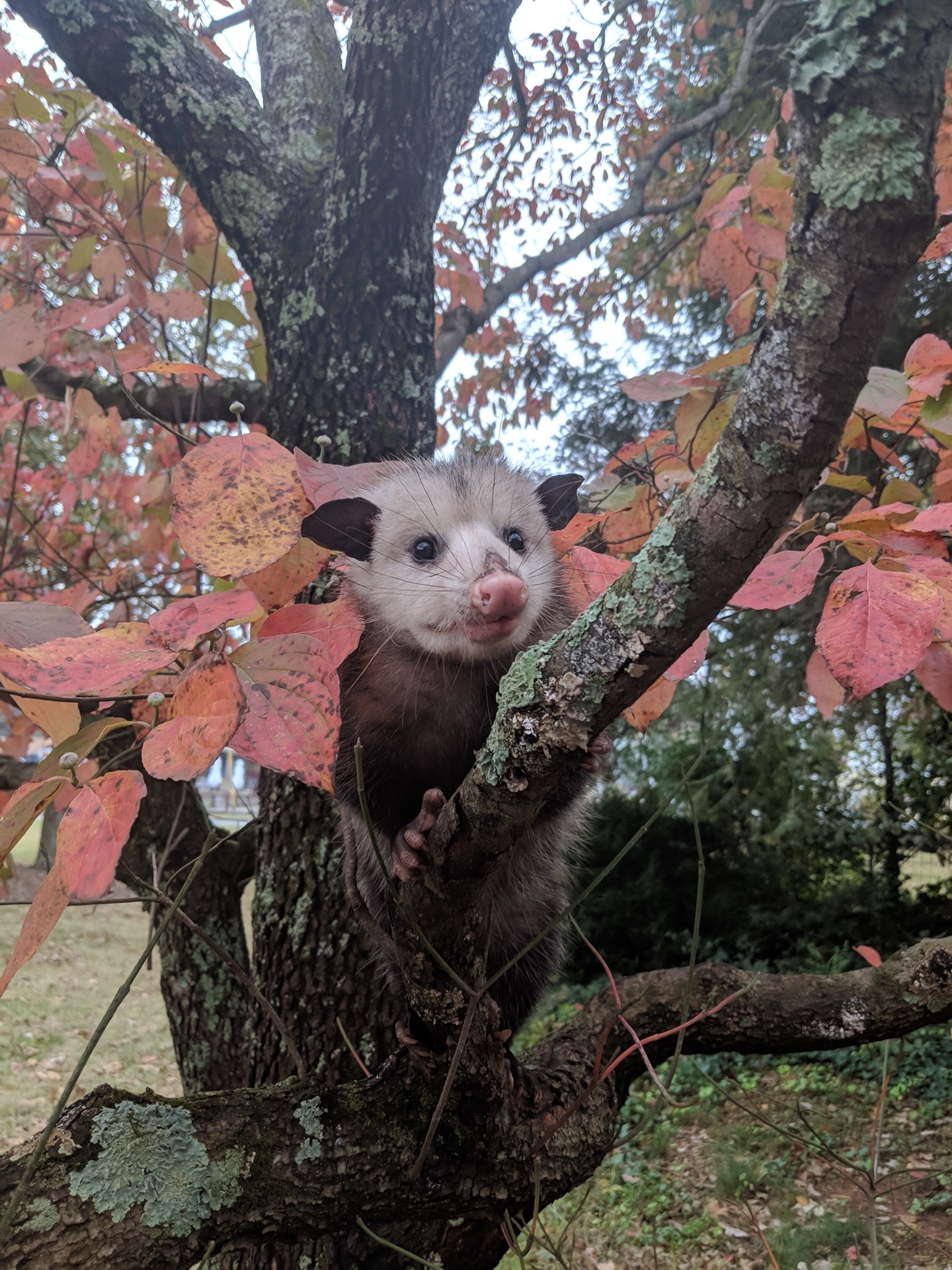
Opossum Removal Services in Davidson County
Opossums carry leptospirosis and other diseases. Their droppings contaminate insulation and require professional cleanup.
Warning Signs
Opossums are active year-round. They breed twice per year (January-February and June-August) and mothers with young need careful handling.
- Hissing sounds in attic or crawlspace
- Strong musky odor
- Droppings in attic or garage
- Tipped garbage cans
- Opossum sightings around home
Our Opossum Removal Process
Our Davidson County contractor uses proven, humane methods to remove opossums and keep them from coming back.
- Live trapping and relocation
- Attic and crawlspace cleanup
- Entry point sealing
- Odor treatment
- Deck and foundation exclusion
What Makes Opossums a Davidson County Concern
Virginia opossums are the only native marsupial in North America and the only marsupial Davidson homeowners encounter. Adults run 6-14 lbs and have the distinctive ratlike tail, opposable rear toes, and pointed snout that distinguish them from any other Tennessee mammal. They are highly adaptable urban-edge generalists — opossums den in crawlspaces, under decks and porches, in sheds and outbuildings, in garages, and occasionally in attics where ground-to-roof access is available. Three things drive the Davidson call volume: opossums den in nearly any concealed cavity, they reproduce twice a year (typical litter of 8-13 joeys), and they have a short lifespan that means natural-death dead-animal calls under residential structures are routine.
Opossums are also genuinely beneficial in many contexts — they consume large numbers of ticks, snakes, slugs, and other yard pests, they scavenge dead animals, and they have an unusually low rabies-carrier rate (their body temperature is too low to support active rabies replication efficiently). Many wildlife rehabilitators and ecologists advocate for opossum tolerance rather than removal where the animal is not creating direct property-damage or health problems. That said, an opossum denning under your living-room floor is rarely something a homeowner wants to tolerate, and the odor consequences of an opossum that dies in place under the structure are substantial.
Davidson County Opossum Hotspots
East Nashville (Edgefield, Lockeland Springs, Inglewood, Riverside)
Pre-1920s shotgun and four-square housing with open crawlspace access, original wood porches and decks built directly over grade, and the kind of foundation-skirting gaps that produce ideal under-structure denning cavities. Heaviest opossum call density in the county. Opossum-and-skunk combined denning is common here.
Germantown and downtown-adjacent residential
Pre-1900s housing with the same crawlspace profile as East Nashville. Opossums also access the older commercial-structure foundations along Jefferson Street and the Germantown commercial blocks.
Inglewood, Madison, Donelson, and the Gallatin Pike mid-century ring
1950s-1970s ranch and split-level housing with detached garages, storage sheds, and low-deck construction that produces under-structure denning cavities. Opossum call volume here is steady year-round.
Hermitage, Antioch, and the Percy Priest-Mill Creek corridor
Subdivisions backing onto the Percy Priest greenbelt and the Mill Creek riparian corridor see persistent opossum pressure. Under-deck and shed denning is the dominant call profile here.
Goodlettsville, Whites Creek, and the rural northern Davidson edge
Rural and rural-residential properties with outbuilding and barn dens, plus occasional henhouse-and-feed-room incidents.
Bellevue and Bells Bend
Equestrian and rural-residential properties with under-barn and feed-shed denning. Opossums occasionally take eggs from backyard chicken operations here.
Opossum Behavior and Why DIY Often Backfires
Opossums display the famous "playing possum" defensive response — when threatened, they enter an involuntary catatonic state that mimics death, complete with a slack jaw, glazed eyes, and a strong-smelling fluid discharge from the anal glands. Homeowners who encounter an opossum in this state often assume the animal is dead and try to dispose of it — only to have the animal recover and become active again hours later, sometimes inside a trash bag, vehicle, or storage container. The recovery period typically runs 40 minutes to 4 hours. A second common DIY failure mode is sealing an opossum mother out of an under-structure den while joeys remain in the pouch (or older joeys in the den itself) — this produces multiple dependent young that die under the structure and create a substantial odor remediation problem. A licensed Davidson contractor confirms whether young are present before any active removal and uses one-way exclusion devices when the situation requires kit-aware handling.
Health and Property Damage Risks From Davidson Opossums
Opossums carry a lower direct disease load than raccoons or skunks. Rabies is rare (their body temperature is too low for efficient rabies replication), and opossums are not significant vectors for the major Tennessee zoonoses. They do carry leptospirosis, salmonella, and tuberculosis at meaningful rates, and their feces in crawlspace and attic environments can produce indoor-air-quality concerns. The main practical risks in Davidson are: structural odor when an opossum dies in place under the home (their relatively short lifespan means this happens frequently); chicken-coop predation on rural-edge properties in Bellevue, Bells Bend, Joelton, and Whites Creek; pet-conflict incidents when a vehicle-cornered opossum scratches or bites a curious dog; and the dead-animal remediation work that follows the natural deaths of opossums in concealed under-house cavities.
Tennessee Wildlife Regulations on Opossum Removal
Opossums in Tennessee fall under TWRA jurisdiction as a furbearer and nuisance species. Property owners may take action against nuisance opossums on their own property under TWRA rules, and commercial removal requires a TWRA Nuisance Wildlife Control Operator (NWCO) certification. Davidson falls under TWRA Region II. Live-trapped opossums can be relocated under TWRA rules in some configurations, though disposition decisions typically default to release on the same property after exclusion is complete (which is often the most ecologically sound outcome given opossums' beneficial role in tick control). The Metropolitan Government of Nashville and Davidson County maintains additional municipal codes affecting trapping inside the consolidated city limits. Federal protections do not apply to opossums.
Our Davidson County Opossum Removal Process
A typical Davidson opossum job runs as follows: assessment of the den site and any structural-damage profile; joey-presence verification (opossums breed twice a year and joeys may be present in the den or in the mother's pouch); placement of TWRA-compliant traps or installation of one-way exclusion devices when joey-aware handling is required; removal per TWRA rules; structural exclusion of the den site using hardware cloth and code-appropriate footing protection; full odor remediation if an opossum has died in place under the structure (HEPA-equipped vacuum, contaminated-material removal, oxidizing neutralizer treatment); and follow-up monitoring. Most opossum jobs resolve in a single visit unless a dead-animal remediation is also needed. See our full Davidson County wildlife removal coverage for the broader service area context.
Opossum Removal in Davidson County — Service Area Map
Our licensed contractor handles opossum removal across the full Davidson County footprint. Tap the map to open directions in Google Maps.
Opossum Removal by City in Davidson County
Find opossum removal help in your specific city
Opossum Removal Across Davidson County
Same licensed contractor — varied anchor coverage across the county.
📅 Summer Activity
Opossums raise their second litter of the year through summer. Juvenile opossums dispersing from their mother are frequently found in unexpected places, including inside garages, under appliances, and in crawlspaces.
Opossum Removal Cost in Tennessee
$150–$400+
Trapping and relocation. Cleanup and entry point sealing are additional services. Pricing varies by contractor, location, and severity. Call for an estimate specific to your situation.
Frequently Asked Questions — Opossum Removal in Davidson County
More Wildlife Services in Davidson County
We handle all wildlife removal needs in Davidson County
Opossum Removal in Neighboring Counties
Need opossum removal in a county next to Davidson County? We cover those too.