Bat Removal in Bartlett
Local licensed expert serving Bartlett and all of Shelby County. Bat colonies in attics leave dangerous guano that carries histoplasmosis and attracts parasites. Removal requires licensed specialists.
📞 Call (844) 544-3498Bats in Bartlett, Tennessee
Big brown bats (Eptesicus fuscus) form the residential maternity colonies the contractor encounters across Bartlett, with the heaviest pressure on the 1960s-80s housing of Bartlett Station, Ellendale, Stage Hills, and the older Davies Plantation blocks where 40-60 years of soffit, fascia, and gable-vent-screen weathering have produced a robust roost-access inventory at 3/8-inch openings. Long-tenured colonies on the older Bartlett Station and Ellendale 1960s-70s housing routinely run 15-30+ years of continuous occupancy on individual structures. Federally proposed tricolored bats (Perimyotis subflavus) are documented across the Loosahatchie River bottomland on Bartlett's north side — the verification protocol differs from the Wolf River verification used at Germantown and Collierville in scope and zone geometry.
Bat Removal — Bartlett, Tennessee
Licensed local expert. Same-day and emergency service in Bartlett.
Serving Bartlett and all of Shelby County, Tennessee
Bat Removal in Bartlett — What to Expect
Bat guano grows a dangerous fungus (Histoplasma). State laws protect bats so exclusion must follow legal guidelines.
Signs You Have Bats
Bat exclusion has seasonal restrictions — typically not permitted May through August when pups cannot fly. Contact us immediately to schedule.
- Bats flying near roofline at dusk
- Squeaking sounds in walls
- Guano piles near entry points
- Dark staining around gaps
- Strong ammonia smell in attic
Our Process in Bartlett
Our local Shelby County contractor serves all of Bartlett using the same proven, humane process for every job.
- Colony exclusion (bat-safe methods)
- Guano removal and decontamination
- Attic restoration
- Entry point sealing after exclusion
- Rabies exposure assessment
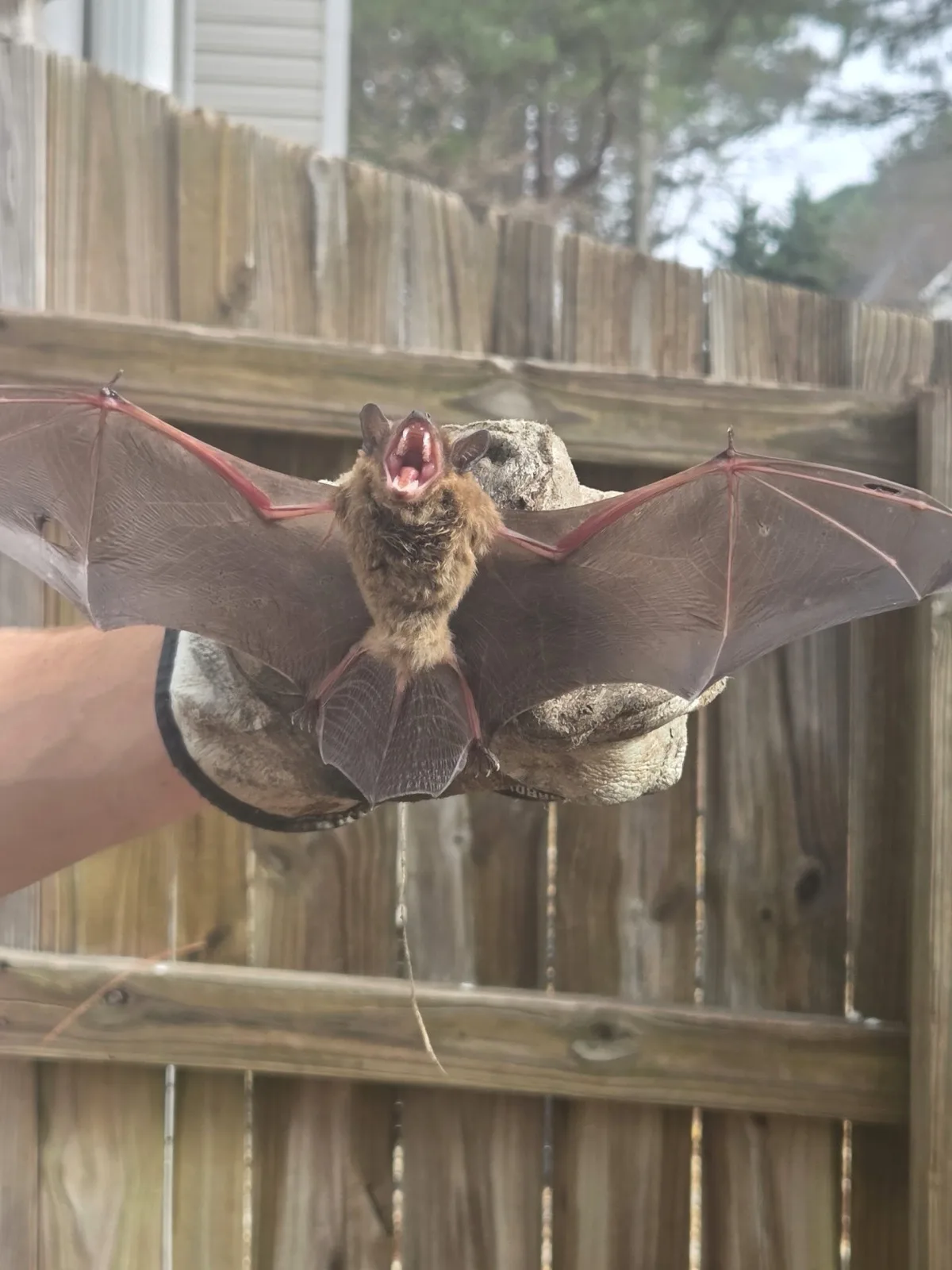
Three Bartlett-specific drivers put big brown bat colonies in residential structures across the city year after year. The aging 1960s-80s soffit-cavity roost-access inventory across Bartlett Station, Ellendale, the inner Stage Hills streets, and the older Davies Plantation blocks presents an unusually rich set of roost openings: aging soffit-corner gaps that admit at 3/8-inch and produce deep cavity-void access into the soffit and fascia framing, deteriorated original gable-vent louver screening that admits bats into the gable-cavity void behind the decorative element, original attic-fan housings with seal failures at the housing-to-roof interface that admit bats directly into the housing-cavity space, original chimney chases on uncapped 1960s-70s brick chimneys that provide deep-cavity multi-decade roost potential, and brick-veneer weep-hole cavities that admit bats into the wall-cavity void on slab-foundation construction. Long-tenured colonies on the older Bartlett Station and Ellendale 1960s-70s housing routinely run 15-30+ years of continuous occupancy on individual structures, with cubic-foot-scale guano accumulations behind the soffit panels, inside the gable-vent cavity voids, and in the attic-fan housings. The Loosahatchie River corridor on Bartlett's north side adds a federal regulatory layer: federally proposed tricolored bats are documented across the river bottomland forest, and any bat work on north-Bartlett properties (the upper Bartlett Boulevard frontage, the Yale Road north-side residential edges, the Davies Plantation properties backing onto the river floodplain) requires species verification before active exclusion. Mexican free-tailed bat colonies (Tadarida brasiliensis) — the larger commercial-structure species the contractor encounters at Memphis-proper scale in the Pyramid, the Medical Center, and the South Memphis warehouse blocks — are not typical of Bartlett's residential housing stock. Bartlett bat work is dominantly big brown bat residential.
Big brown bat colonies in Bartlett residential structures typically run 15-60 individuals through the maternity season, almost all adult females and their pups. Colonies are highly site-faithful — the same colony returns to the same Bartlett Station soffit cavity or Ellendale gable-vent void every May for years or decades. The aging-stock housing produces longer typical colony tenure than newer-construction subdivisions because the deeper cavity geometry and multiple secondary access paths make the structure more attractive to returning females and easier for a colony to expand within. Per-property roost-access points commonly run 3-6 viable openings on Bartlett's older housing — meaningfully higher than the 1-3 typical of newer construction — and a colony often uses 2-3 of those openings simultaneously rather than a single emergence point.
Tricolored Bat Verification on Loosahatchie Corridor Properties — and How It Differs from the Wolf River Verification Used at Germantown and Collierville
The Loosahatchie River bottomland on Bartlett's north side carries a federal regulatory consideration that differs from the Wolf River verification protocol applied at Germantown and Collierville. Both protocols address the federally proposed tricolored bat (Perimyotis subflavus), and the species-identification criteria are identical (smaller body size at 3-4 grams adult vs 14-21 grams for big brown, distinctive yellowish coat with reddish accents, smaller aggregations than big brown maternity colonies). The differences are in scope and zone geometry. The Loosahatchie verification zone is more compact than the Wolf River zone. The Loosahatchie at Bartlett carries a narrower bottomland-forest band than the Wolf River at Germantown — the corridor's documented tricolored bat habitat extends into a shorter perpendicular distance from the river before fading out at the residential interface. Verification applies to specifically the upper Bartlett Boulevard frontage, the Yale Road north-side residential edges, the Stage Road north-side blocks, and the Davies Plantation properties backing onto the river floodplain — north-Bartlett properties within roughly the first 1,500-2,500 feet south of the river. Properties on the southern half of Bartlett (Bartlett Station inner core, the southern Stage Hills, Ellendale center, and the southern Davies Plantation blocks) are functionally outside the Loosahatchie verification zone, and standard big brown bat exclusion proceeds without the species-verification step. The Wolf River verification zone at Germantown and Collierville is broader and more variable because the Wolf River carries broader bottomland and a Wolf River Greenway buffer that extends documented tricolored bat habitat further into the residential interior. A Loosahatchie verification visit on a north-Bartlett property is a more focused single-visit scope than the Wolf River verification at Germantown's Forest Hill-Irene or Collierville's Bray Station, where the broader habitat zone sometimes requires multiple-property assessment. Where tricolored bats are confirmed on either corridor, the contractor coordinates with the U.S. Fish & Wildlife Service Tennessee Field Office before active exclusion is scoped.
Aging-Stock Soffit-Cavity Guano Accumulation: Why Bartlett Bat Colonies Produce Different Remediation Scope Than Newer-Construction Colonies
The single most important remediation-scope differentiator between Bartlett bat work and newer-construction subdivision bat work is the soffit-cavity geometry of 1960s-80s aging-stock housing. Older Bartlett housing has deeper soffit cavities than newer construction (greater fascia-to-house-wall distance produced by the era's framing standards), more weathering-driven gaps along the fascia-to-soffit junction, and continuous structural connection from the soffit cavity into adjacent wall-cavity voids through aging fascia-edge gaps. Multi-decade colony tenure on this geometry produces guano accumulations that distribute across three connected cavity zones rather than concentrating in a single attic-cavity footprint: the soffit-cavity void itself accumulates the heaviest guano load directly under emergence points, the gable-cavity voids behind decorative gable-vent louvers accumulate secondary loads, and the wall-cavity voids connected through fascia-edge gaps accumulate slow-migration guano contamination over decades.
Remediation scope on a long-tenured aging-stock Bartlett bat job runs substantially above newer-construction subdivision work because of this multi-cavity distribution. Soffit-cavity remediation requires partial soffit-panel removal — the contractor cannot simply HEPA-vacuum from inside the attic because the soffit-cavity void is structurally separate from the attic-cavity proper on this construction profile. Aging soffit panels (40-60 year old wood) are removed using carpentry-trade-coordinated methods, the cavity-void wood framing is HEPA-extracted and surface-disinfected, contaminated insulation is removed where guano has migrated into the wall-cavity void via fascia-edge gaps, and replacement soffit panels are installed using period-appropriate materials matched to the home's existing weathering tone. The carpentry-trade scope adds time and cost relative to newer construction where the soffit-and-fascia profile is integrated into a single tighter envelope and remediation can proceed from the attic side. Bartlett aging-stock bat guano remediation runs $2,200-$6,000+ on long-tenured colonies — comparable to Germantown's full-remediation scope but for fundamentally different structural reasons (Germantown's premium reflects cedar-shake apex panel removal; Bartlett's reflects soffit-cavity carpentry coordination).
The TWRA Maternity Ban and Bartlett Timing
TWRA rules prohibit bat exclusion during the maternity period — generally May through August — because exclusion separates flightless pups from adult females and traps the pups inside the structure to die. Out-of-season exclusion on Bartlett aging-stock housing produces particularly difficult dead-pup recovery because the soffit-cavity geometry that hosts the colony also hosts the trapped pups: recovery requires partial soffit-panel removal followed by cavity-void remediation, which runs $1,500-$3,500 on a typical Bartlett aging-stock structure — between the Collierville subdivision dead-pup recovery scope ($1,200-$3,500) and the Collierville historic-downtown masonry-cavity recovery scope ($3,000-$8,000+). Both Bartlett scopes sit on top of the original exclusion job that still has to be performed once recovery is complete. The protocol on a Bartlett maternity-season call is inspection and scheduling only — the contractor maps every roost-access point on the property, confirms species (including tricolored bat verification on north-Bartlett Loosahatchie-corridor properties), documents colony size, and schedules the active exclusion for late August through October post-ban-lift.
Multi-Structure Bat Inspection Scope on Bartlett Properties
The multi-structure scope that defines Germantown bat work applies to Bartlett at smaller scale because Bartlett's lots are smaller (typical 0.25-0.5 acres rather than Germantown's 0.5-2 acres) and the detached-outbuilding inventory is correspondingly lighter. Detached garages with gable-vent louver inventory and aging soffit details matching the main residence occasionally host satellite roosts — the contractor's inspection covers the detached garage on every property where one exists. Workshops and pole barns on the larger Stage Hills outer blocks and Davies Plantation lots present their own roost-access profile and are inspected when present. Garden sheds are rarely primary bat roosts but occasionally host transient day-roost individuals. Pool houses are uncommon on Bartlett's mid-upper-income tier and are typically inspected only on the larger Davies Plantation outer properties where they exist. The contractor's Bartlett bat inspection scope is meaningfully smaller than the typical Germantown scope but covers more than a Memphis Midtown single-structure inspection.
What to Expect on a Bartlett Bat Job
The standard sequence runs roughly: Day 1 — full inspection (interior attic walk, exterior roof walk identifying every aging-soffit-corner, deteriorated gable-vent louver, attic-fan-housing seal failure, and chimney-chase access signature on the main residence and any detached structures); roost-access point identification across all structures; species verification (big brown vs tricolored on north-Bartlett Loosahatchie-corridor properties); colony size documentation; written scope and pricing. Maternity-season scheduling (May through August) — exclusion deferred until late August through October post-ban-lift. Days 1-3 post-ban-lift — one-way exclusion-device installation at every roost-access point; bats exit during evening forage and cannot re-enter; daily observation to verify colony has fully evacuated. Days 3-10 — structural sealing of every roost-access point: gable-vent louver replacement using galvanized steel mesh, aging soffit-corner sealing or partial soffit-panel replacement where 40-60 years of weathering require board work, attic-fan-housing seal restoration, original chimney cap installation. Days 10-21+ — guano remediation on long-tenured colonies (containment, HEPA-filtered vacuum extraction across the soffit-cavity void, gable-cavity void, and wall-cavity void where applicable, surface disinfection of weathered soffit-and-fascia framing, contaminated insulation removal where guano has migrated, air-quality testing post-remediation, replacement soffit-panel installation using period-appropriate materials). Day 21+ — final inspection plus aging-stock follow-up monitoring at 30 and 60 days because aging-housing-stock structural conditions carry higher re-roosting risk over the first post-exclusion year. Most Bartlett bat exclusions on fresh first-year residential colonies complete in two to three weeks of total elapsed time post-maternity-ban-lift; long-tenured aging-stock colonies with full multi-cavity guano remediation and partnered carpentry-trade soffit restoration run four to seven weeks. North-Bartlett properties requiring tricolored bat species verification and U.S. Fish & Wildlife Service coordination add 1-2 weeks to the project timeline.
⚠️ Exclusion Season Open
The maternity season has ended in most states and bat exclusion can now proceed. This is the optimal window — pups are fully flying, colonies are intact, and weather is favorable for sealing work.
Bat Removal Cost in Bartlett
$400–$1,500+
Exclusion work. Guano cleanup and attic decontamination adds $1,500–$8,000+ depending on colony size. Call for an estimate — pricing varies by contractor and job complexity.
Frequently Asked Questions — Bat Removal in Bartlett
More Wildlife Services in Bartlett
Your local contractor handles all wildlife removal needs