🐾 Opossum Removal in Chatham County
Opossums nest in attics, crawlspaces, and under decks — causing odor problems, droppings contamination, and potential disease exposure.
Opossum Removal — Chatham County
Licensed local expert. Same-day and emergency service available.
Serving all of Chatham County, Georgia
Opossum Removal in Chatham County, Georgia
If you've been searching 'opossum under my deck', 'possum in my garage', 'possum in my trash', or 'is a possum dangerous' anywhere in Savannah, Pooler, Tybee Island, or the rest of Chatham County, you're dealing with North America's only native marsupial — the Virginia opossum (Didelphis virginiana). Coastal Chatham's mild climate, year-round food supply, and dense suburban housing produce some of the highest opossum densities in Georgia. They take up residence under decks, sheds, porches, and garages, raid trash cans and pet food bowls, and occasionally end up in attics or crawl spaces. The good news: opossums are far less destructive and less dangerous than raccoons or skunks. The slightly less good news: they're persistent, they often arrive in family groups, and getting them out cleanly takes the same kind of professional approach as other species.
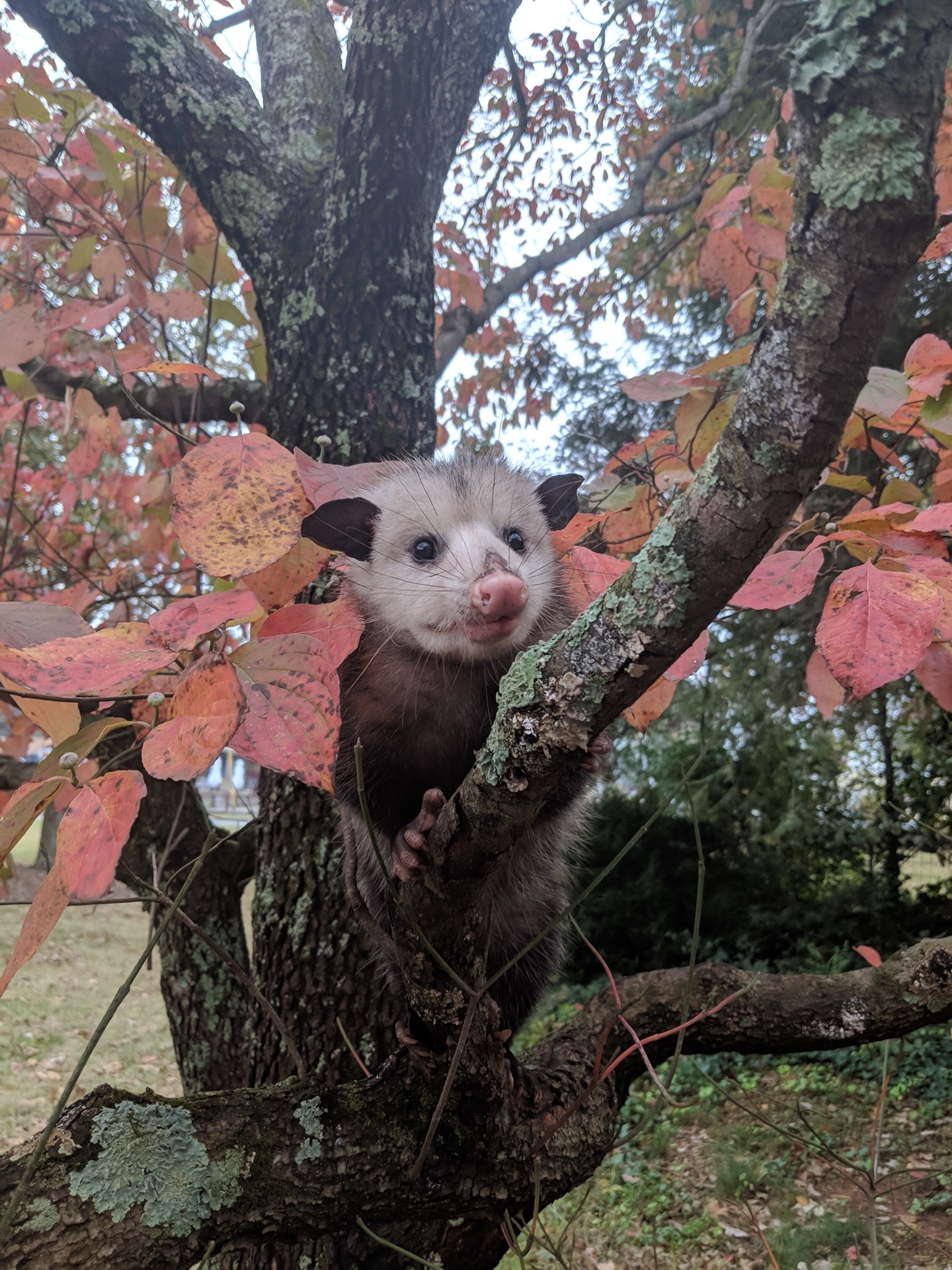
Opossum Removal Services in Chatham County
Opossums carry leptospirosis and other diseases. Their droppings contaminate insulation and require professional cleanup.
Warning Signs
Opossums are active year-round. They breed twice per year (January-February and June-August) and mothers with young need careful handling.
- Hissing sounds in attic or crawlspace
- Strong musky odor
- Droppings in attic or garage
- Tipped garbage cans
- Opossum sightings around home
Our Opossum Removal Process
Our Chatham County contractor uses proven, humane methods to remove opossums and keep them from coming back.
- Live trapping and relocation
- Attic and crawlspace cleanup
- Entry point sealing
- Odor treatment
- Deck and foundation exclusion
Opossum Under My Deck or in My Yard? What to Know Tonight
Most opossum encounters in Chatham County happen one of three ways: a homeowner spots an animal under the deck or porch at dusk; a possum is trapped in the garage after the door closed at night; or pet food, garbage, or compost has been raided overnight and the opossum is the suspect. Opossums are slow, generally non-aggressive, and almost never carry rabies (their body temperature is too low to support the rabies virus reliably). They're more nuisance than threat. Tonight's steps:
- Don't try to grab or chase the opossum. They have 50 sharp teeth (the most of any North American mammal) and will bite when cornered. They also play dead — which is involuntary, can last several hours, and isn't a sign the animal is genuinely dead.
- Possum in my garage — open the garage door wide, turn off interior lights, turn on exterior lights, and clear a path to outside. The opossum will usually leave within 1-2 hours. Don't trap it in a corner.
- Possum under my deck or porch — most are temporary residents. If they have access to food and shelter, they may stay for days or weeks. Restrict pet food and garbage access; if they don't leave, schedule a removal.
- Possum in my attic or crawl space — less common than raccoons but does happen, especially in older Historic District and Ardsley Park homes with accessible crawl-space vents and decayed soffits. This is a structural exclusion situation, not a yard problem.
- Possum playing dead in my yard or on my porch — leave it alone. The 'death' state can last 4-6 hours and is involuntary; if you bury or remove a 'dead' opossum, it may revive in your trash bag. Wait it out.
- Mother possum with babies in pouch or on back — separating an opossum mother from her young (especially the smaller pouch joeys) is a real welfare concern. Licensed contractors handle mother-and-young situations with appropriate care.
Signs You Have an Opossum on Your Property
- Knocked-over trash cans, raided compost, or stolen pet food — most common first sign. Opossums are nocturnal and opportunistic. Pet food bowls left outside overnight in coastal Chatham are essentially opossum bait.
- Hand-like tracks — opossum tracks have five fingers on front feet that look strikingly human-like, with a distinctive opposable thumb on hind feet. Often visible in mud, sand, or soft soil around water features.
- Possum poop — medium-sized droppings, often pointed at one end, sometimes with visible insect parts or fruit pits. Less concentrated than raccoon latrines.
- Dead chickens or duck eggs disturbed — opossums opportunistically take poultry and eggs in the rural western Chatham and Bloomingdale areas.
- Hissing sound from under a deck or shed at night — opossums hiss defensively when threatened. Distinct from cat or raccoon vocalizations.
- Dead opossum on the road or in your yard — high road-mortality rates mean dead possums are common in Chatham. A persistent presence of dead opossums in your area suggests an active local population.
- Greasy fur marks at low-clearance entry points — under deck steps, around foundation vents, at crawl-space access — opossums leave grease marks similar to rats but at a higher position.
Opossum vs Raccoon — How to Tell Them Apart
The distinction matters because opossums and raccoons need different removal approaches and carry different risks.
- Tail — opossum has a long, hairless, pink-gray prehensile tail. Raccoon has a fluffy, banded (black-and-tan ringed) tail. The clearest single visual tell.
- Face — opossum has a pointed pink snout, white face, and beady black eyes. Raccoon has the iconic black 'mask' across the eyes.
- Size — opossums typically run 4-12 lbs in coastal Georgia (smaller than raccoons, which run 18-30 lbs here).
- Body shape — opossum is slimmer, more weasel-like; raccoon is stockier and more bear-like.
- Behavior — opossums freeze, hiss, or play dead; raccoons hold ground, growl, and can be aggressive.
- Activity — both nocturnal, but opossums are slower and clumsier; raccoons are agile climbers and more dexterous.
- Damage — opossums cause far less property damage than raccoons. Raccoons tear gable vents, chew wiring, and destroy insulation; opossums mostly knock over trash and occasionally nest in crawl spaces.
Where Opossums Hide on Chatham County Properties
- Under decks, porches, and steps — the dominant residential opossum habitat in Chatham. Decks with poor skirting are particularly attractive.
- Under sheds, outbuildings, and pool houses — common in Skidaway Island and waterfront properties.
- In garages and carports — opossums walk into open garages and sometimes get stuck overnight when doors close.
- In crawl spaces — particularly in Tybee Island and eastside raised-foundation construction with damaged crawl-space vents.
- In attics — less common than raccoons or squirrels but does happen in older Historic District and Ardsley Park homes.
- In thick brush, woodpiles, and unmaintained yard borders — temporary day-shelter habitat.
- In dock storage, boat lifts, and marsh-edge vegetation — waterfront properties on Wilmington Island, Whitemarsh Island, and Isle of Hope.
Are Opossums Dangerous? Disease, Pets, and Coastal Risks
Opossums are much less dangerous than raccoons or skunks on most measures, but the risks aren't zero:
- Rabies — opossums are very rarely rabid because their body temperature is too low for the virus to thrive. They're generally NOT considered a significant rabies vector in Georgia.
- Other diseases — opossums can carry leptospirosis, salmonellosis, tularemia, and a variety of parasites (fleas, ticks, mites). Direct disease transmission to humans is uncommon but possible.
- Pet conflicts — dogs that catch and kill opossums can pick up fleas, ticks, and parasites. The opossum will usually 'play dead' rather than fight, but a defensive opossum will bite.
- EPM (equine protozoal myeloencephalitis) — opossums are the definitive host for Sarcocystis neurona, the parasite that causes EPM in horses. Properties with horses near established opossum populations have a documented disease risk.
- Property damage — minor compared to raccoons. Mostly limited to knocked-over trash, raided pet food, occasional chicken or egg loss, and occasional crawl-space nesting.
What 'Playing Dead' Actually Means (And Why You Shouldn't Bury One)
Opossums playing dead — formally known as 'thanatosis' — is an involuntary defensive response triggered by extreme stress. The animal collapses, becomes rigid, slows breathing, sometimes excretes a foul-smelling substance, and can remain in this state for 4-6 hours or longer. It's not a behavior the opossum chooses; it's a physiological reflex. Critically: an opossum playing dead is not actually dead, and many homeowners discover this the hard way after bagging or burying the animal. Steps if you find an apparently-dead opossum:
- Leave it alone for at least 6 hours.
- Don't poke, kick, or move it — disturbance prolongs the state.
- If after 24+ hours the animal hasn't moved and shows actual decomposition signs (smell, discoloration, fly activity), it's genuinely dead and should be handled as a dead-animal call.
- If the animal moves or appears to recover, give it space to walk away — it'll recover fully.
How to Keep Opossums Away From Your Home
- Eliminate the food sources — secure trash cans with tight-fitting lids, bring pet food bowls inside at night, secure compost bins, harvest fallen fruit promptly. This single change is the highest-impact intervention.
- Skirt your deck and shed properly — install hardware cloth (1/4-inch mesh) along the bottom of deck framing and shed perimeters, buried at least 6 inches into the ground.
- Seal crawl-space vents — particularly in Tybee Island and eastside raised-foundation construction. Use galvanized hardware cloth, not plastic mesh.
- Keep garage doors closed at night — straightforward but underestimated. Opossums walking into open garages is a common way they end up trapped inside.
- Trim back vegetation against the house — opossums use thick shrubs as travel cover.
- For properties with horses — control opossum populations specifically because of EPM risk; coordinate with a licensed wildlife operator and your veterinarian.
How Much Does Opossum Removal Cost in Savannah?
Most Chatham County opossum removal calls run between $200 and $500+ — typically less than raccoon work because opossums are easier to capture and less destructive. Variables: yard or under-deck removal (lower) vs in-structure removal (higher), single animal vs family group, structural sealing scope after removal, and whether crawl-space or attic remediation is required. Single-animal under-deck removal at the low end runs $200-$300+; structural opossum removal with crawl-space cleanup can run $500-$1,200+. Phone estimates are free.
How We Remove and Relocate Opossums
- Inspection (day 1). Identify the species (opossum vs raccoon vs skunk — not all 'something under my deck' calls turn out to be opossums), confirm the location, and check for young.
- Trap setup or one-way exclusion (day 1-2). Live trapping per Georgia DNR regulations, or one-way exclusion doors when an animal is sheltering under a structure and will leave on its own.
- Active removal (days 2-5). Opossums are typically captured within 1-3 nights of trap setup.
- Sealing (day 3-7). Permanent sealing of access points using galvanized hardware cloth and properly buried barriers.
- Sanitation (day 5-7). Cleanup of nest sites, droppings zones, and contaminated areas.
- Habitat advice. Food-source modifications, vegetation trimming, and structural recommendations to prevent reoccurrence.
Total timeline: 3-7 days for routine work. See our full Chatham County wildlife removal coverage for the broader service area.
Opossum Removal in Chatham County — Service Area Map
Our licensed contractor handles opossum removal across the full Chatham County footprint. Tap the map to open directions in Google Maps.
Opossum Removal by City in Chatham County
Find opossum removal help in your specific city
Opossum Removal Across Chatham County
Same licensed contractor — varied anchor coverage across the county.
📅 Summer Activity
Opossums raise their second litter of the year through summer. Juvenile opossums dispersing from their mother are frequently found in unexpected places, including inside garages, under appliances, and in crawlspaces.
Opossum Removal Cost in Georgia
$150–$400+
Trapping and relocation. Cleanup and entry point sealing are additional services. Pricing varies by contractor, location, and severity. Call for an estimate specific to your situation.
Frequently Asked Questions — Opossum Removal in Chatham County
More Wildlife Services in Chatham County
We handle all wildlife removal needs in Chatham County
Opossum Removal in Neighboring Counties
Need opossum removal in a county next to Chatham County? We cover those too.