Wildlife Removal in Chatham County, GA
Local licensed experts ready to remove, exclude, and remediate — fast.
Your Local Chatham County Expert
Licensed, insured & local. Available for same-day and emergency service.
Serving all of Chatham County, Georgia
Services Available in Chatham County
Our local contractor handles every aspect of wildlife removal — from capture to exclusion to cleanup.
Wildlife Removal
Trained experts safely remove animals from your home using high-capture-rate trapping and exclusion techniques.
- 24/7 Emergency Response
- High Capture Success Rate
- Raccoons, Squirrels, Bats & More
- Safe & Humane Methods
- Certified Technicians
 Core Service
Exclusion
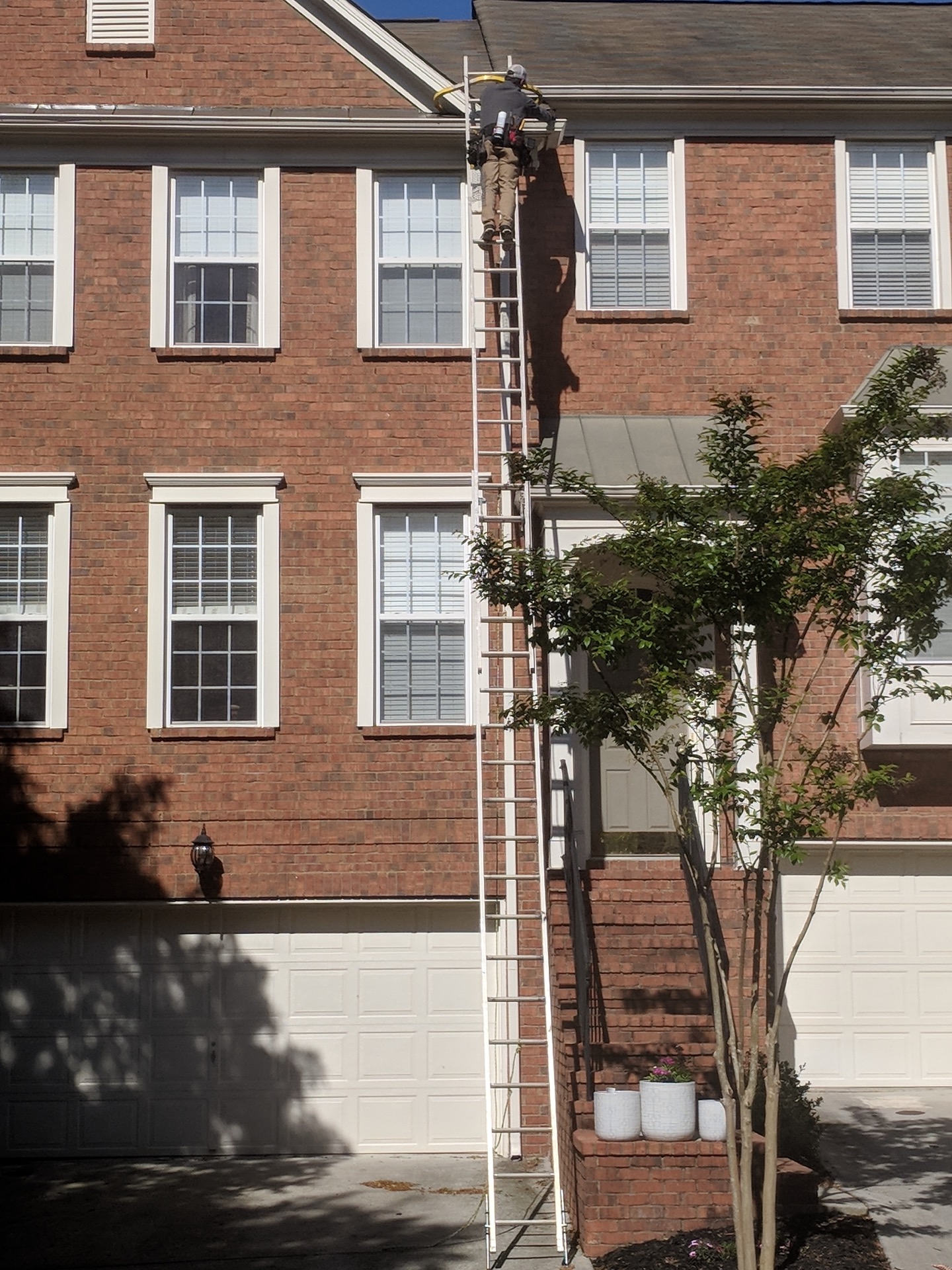
Ensuring your home is properly sealed is the most important service we offer. We use only the highest quality materials and industry-best methods.
- Galvanized Steel Sealing
- Industry-Best Methods
- 1-Year Guarantee
- Permanent Prevention
Remediation
Whatever animal you had, they likely left waste and caused damage. Our team will deodorize, sanitize, and repair damaged material.
- Complete Waste Removal
- Deodorize & Sanitize
- Repair Damaged Materials
- Restore Home Value
Wildlife Removal by Animal in Chatham County
Find specific removal services in Chatham County
Cities & Communities We Serve in Chatham County
Find wildlife removal in your specific city or neighborhood
About Chatham County, Georgia
Chatham County sits at the mouth of the Savannah River where Georgia meets the Atlantic Ocean, anchored by the historic city of Savannah — one of the oldest and most architecturally significant cities in the American South. With a population of 303,025, Chatham runs from the Savannah River along its northern boundary down through the Historic District, Ardsley Park, and the inner-city neighborhoods, out to the suburban developments of Pooler and Garden City near the airport, across the islands of Wilmington, Whitemarsh, Skidaway, and Tybee, and south to the Ogeechee River boundary. Established in 1777 as one of the original eight Georgia counties and named for William Pitt, 1st Earl of Chatham, the county combines the 1700s-1800s historic-district housing stock under Savannah's iconic live oak canopy with Atlantic coastal salt marsh, tidal creek systems, barrier-island maritime forest, and the suburban-industrial corridor along I-95.
Wildlife Common to Chatham County
Chatham's wildlife profile is unlike any inland Georgia county because of the coastal geography. American alligators are present in any standing water across the county — golf course ponds, retention basins, drainage ditches, tidal creek banks, and even residential pools after storm flooding. Roof rat pressure in the Savannah Historic District is among the highest in the Southeast, sustained by tourism-district food density and 1700s-1800s housing stock with extensive structural entry-point inventory. Big brown bat and Brazilian free-tailed bat maternity colonies are routine in the historic downtown's brick row houses, attic cupolas, and church steeples. Cottonmouths (water moccasins) drive a distinctive snake call profile in waterfront and tidal-edge properties — a regional risk that Atlanta-metro counties don't share. Fox squirrels, larger and more habitat-specialized than gray squirrels, persist on the barrier-island and longleaf-pine fragments. Eastern gray squirrel intrusions are constant across Savannah's Historic District and the older Ardsley Park / Chatham Crescent neighborhoods where mature live oaks touch rooflines, and Virginia opossums shelter under decks and porches across the older inner-city housing stock. Snake calls in Chatham are unlike anything inland Georgia counties handle — the salt marsh edge, tidal creek banks, and waterfront properties produce a steady volume of cottonmouth (water moccasin) encounters that Atlanta-metro counties never see, alongside the rat snake and copperhead calls common across the state. Striped skunks are persistent under sheds and crawl spaces in the suburban-edge subdivisions, and dead-animal calls run year-round given Chatham's near-continuous coastal wildlife activity. American alligators are abundant and protected — encounters of any animal over 4 feet should be referred to Georgia DNR rather than handled privately, white-tailed deer are common in the suburban edges and barrier islands, sea turtles nest on Tybee and Wassaw under federal Endangered Species Act protection, the Eastern diamondback rattlesnake (the largest venomous snake in North America) is present at lower density and is treated as a serious encounter, and feral hogs occur in the western rural portions of the county.
Chatham County's Coastal Geography Shapes Its Wildlife Activity
Chatham County is fundamentally a coastal county, and that single fact distinguishes its residential wildlife removal work from every Georgia county outside the Coastal Region. The county sits at the mouth of the Savannah River, with the river forming the northern boundary against South Carolina and the Ogeechee River defining the southern boundary. Between the two rivers, Chatham is laced with tidal creeks, salt marsh, and freshwater wetlands that sustain American alligator populations on virtually every property type — golf course ponds, residential retention basins, drainage ditches, and tidal creek banks. The Atlantic Ocean borders the county to the east across the Tybee Island, Wassaw Island, and Skidaway Island barrier system.
Within or directly bordering the county sit several major public conservation lands: the Savannah National Wildlife Refuge on the northern boundary, the Wassaw Island National Wildlife Refuge just offshore, Skidaway Island State Park, Fort Pulaski National Monument on Cockspur Island, and the Ossabaw Island Heritage Preserve directly south of the county line. The result is a coastal Georgia county where federally protected habitat sits directly against historic neighborhoods, beach communities, and the suburban-industrial corridor along I-95 — and that interface drives a wildlife-removal call profile that no inland county shares.
The Live Oak Canopy and the Salt Marsh Edge
Two ecological features dominate the residential wildlife pressure profile. First, the Savannah Historic District live oak canopy — a continuous maritime forest of 200- to 300-year-old live oaks draped in Spanish moss running through the city's iconic 22-square grid. That canopy gives gray squirrels, raccoons, and roof rats continuous arboreal travel routes between properties, and the 1700s-1800s housing stock underneath provides extensive structural entry-point inventory. Second, the salt marsh edge — every waterfront and tidal-edge property in the county sits against habitat that supports cottonmouths, alligators, raccoons foraging on shellfish, and otters. Chatham's job mix runs heavy on both submarkets simultaneously.
Wildlife Species Present in Chatham County
Chatham residents call about a wildlife mix that includes coastal-specific species not found inland:
- American alligator (Alligator mississippiensis) — present in any standing water across the county, including residential ponds, golf-course retention, and drainage infrastructure. Alligators over 4 feet are referred to Georgia DNR rather than removed by private operators
- Raccoons, Virginia opossums, Eastern gray squirrels, Eastern cottontail rabbits — the year-round residential backbone
- Fox squirrels — larger and more habitat-specialized than gray squirrels, persisting on the barrier-island and longleaf-pine fragments
- Roof rats (Rattus rattus) — dominant rodent in the Savannah Historic District; Norway rats (Rattus norvegicus) heavier in industrial-corridor and storm-sewer infestations
- Big brown bats, evening bats, and Brazilian free-tailed bats (Tadarida brasiliensis) — the Brazilian free-tailed bat is a coastal-specific addition to the bat call mix and forms larger colonies than the inland species
- Snakes — cottonmouths (Agkistrodon piscivorus) drive a distinctive call profile in waterfront and tidal-edge properties, alongside eastern rat snakes, copperheads, and the occasional eastern diamondback rattlesnake (the largest venomous snake in North America, present at lower density)
- White-tailed deer — common in suburban edges and barrier islands
- Striped skunks, armadillos (rapidly expanding), and feral hogs in the western rural portions
- Coastal protected species — sea turtles nesting on Tybee and Wassaw under federal ESA protection, bald eagles, wood storks, painted buntings, and migratory shorebirds
Common Wildlife Issues That Define the Chatham Job Mix
Several patterns in Chatham's call volume are distinctive enough to call out:
Alligator pressure across the county
American alligators are present in essentially every standing-water habitat in Chatham — residential ponds, golf-course retention basins, drainage ditches, retention ponds along I-95, and tidal creek banks. Encounters are routine; lethal control requires Georgia DNR coordination, and any alligator over 4 feet typically requires the DNR Coastal Region office to authorize removal. Most calls are referred for assessment rather than handled in the way an inland raccoon job is. A licensed contractor in this directory will triage the situation, advise on safe distance and avoidance, and coordinate with Georgia DNR when removal is required.
Historic District attic exclusion in 1700s-1800s housing
The Savannah Historic District is the highest-density historic residential zone in Georgia and one of the highest-density in the country. The 1700s-1800s housing stock — brick row houses, federal-style townhomes, antebellum mansions, and the Victorian-era Ardsley Park / Chatham Crescent expansion — produces entry-point profiles that look nothing like new construction. Most exclusion jobs in this submarket find 5+ entry points, structural repair beyond standard sealing is routine, and any work has to coordinate with the Historic Savannah Foundation and city historic-preservation review for visible structural changes.
Big brown and Brazilian free-tailed bat colonies in historic structures
Long-established bat colonies in the Historic District's brick row houses, attic cupolas, and church steeples are routine — many have been continuous in the same structure for 50-100+ years. Big brown bats are the dominant species, but Brazilian free-tailed bats form larger colonies (sometimes 100-500 individuals) than any inland Georgia bat species, and the guano accumulation in long-occupied historic-building roosts can be substantial. Georgia DNR restricts active exclusion during the maternity period (roughly May through August); the legal windows are April and September through mid-October.
Cottonmouth encounters along the salt marsh edge
Cottonmouths (water moccasins) are present at significant density along Chatham's tidal creeks, salt marsh edges, and freshwater wetlands. Waterfront and tidal-edge properties produce a steady volume of cottonmouth calls that Atlanta-metro counties never see. Any snake call on a Chatham waterfront property has to be approached as potentially venomous and identified before handling.
Roof rat colonies in the Historic District tourism corridor
Roof rats (Rattus rattus) drive the dominant rodent call volume in the Savannah Historic District, sustained by tourism-district food density (River Street, Bay Street, Broughton Street, Forsyth Park edge) and the 1700s-1800s structural entry-point inventory. Mixed-species infestations (roof rats above, Norway rats below in basements and crawl spaces) are routine in older properties.
Federally Protected Species in Chatham County
Chatham has more federally protected wildlife than any inland Georgia county. Sea turtles — loggerhead, green, leatherback, and Kemp's ridley — nest on Tybee Island, Wassaw Island, and other barrier islands under federal Endangered Species Act protection; nest disturbance is a federal offense. Wood storks are federally threatened and use the freshwater wetlands and rookeries countywide. Bald eagles are protected under the Bald and Golden Eagle Protection Act and the Migratory Bird Treaty Act. The tricolored bat (Perimyotis subflavus) is federally proposed for listing under the ESA and is documented in the coastal Georgia bat community. Piping plovers and other migratory shorebirds use the barrier-island beach habitat. American alligators are protected under state law and the federal Endangered Species Act's similarity-of-appearance provisions.
Local Authorities and Regulations
Chatham County Animal Services handles domestic-animal complaints — stray dogs, cat colonies, bite reports — but does not respond to most nuisance wildlife calls. Raccoons, squirrels, bats, snakes, alligators, and similar species are referred to private licensed wildlife control operators (and, for alligators over 4 feet, to Georgia DNR directly). The Coastal Health District (Chatham County Health Department) handles rabies-exposure investigations and coordinates with the Georgia Department of Public Health. State-level oversight comes from Georgia DNR Wildlife Resources Division Coastal Region (Brunswick office), which issues the Trapping License and Nuisance Wildlife Control Permit required of commercial operators. Federal protections apply to bats during maternity periods, all migratory birds, sea turtles, wood storks, and the federally proposed tricolored bat. Every contractor in this directory operating in Chatham County is required to hold the applicable state and federal credentials.
Service Coverage in Chatham County
Coverage spans all of Chatham County including Savannah, Pooler, Garden City, Port Wentworth, plus Tybee Island, Thunderbolt, Bloomingdale, and the unincorporated areas across Wilmington Island, Whitemarsh Island, Skidaway Island, and Isle of Hope. The county's combination of pre-Revolutionary historic housing, Atlantic coastal habitat, alligator-bearing standing water on virtually every property type, and tourism-district food density in the Historic District — combined with the year-round wildlife activity that defines coastal Georgia — means contractors here handle a continuous mix of historic-attic exclusion, alligator referral and removal, big bat colony work in cupolas and steeples, and emergency snake calls along the salt marsh edge.
Seasonal Activity Patterns
Wildlife intrusion in Chatham County follows Georgia's main pressure windows: February through April for raccoon and squirrel denning, May through August for bat maternity colonies in attics, and a sustained year-round pressure across the southern half of the state where mild winters keep wildlife active and breeding cycles overlap. Georgia's long, humid subtropical summers and mild winters allow many nuisance species — raccoons, squirrels, opossums, rats, and armadillos — to breed multiple times per year and remain active twelve months a year, producing call volume that never fully drops off the way it does in northern states.
Georgia Wildlife Regulations
All commercial wildlife removal in Georgia is regulated by the Georgia Department of Natural Resources, Wildlife Resources Division. Georgia DNR requires commercial wildlife trappers to hold a Trapping License and, for properties using lethal control, a Nuisance Wildlife Control Permit; bats and migratory birds carry additional federal handling restrictions, and large game species including white-tailed deer, black bears, alligators, and feral hogs fall under direct Georgia DNR Wildlife Resources Division management rather than the private wildlife removal industry. Every contractor in our network holds the applicable Georgia DNR licensing and operates within Wildlife Resources Division guidelines on species-specific handling and relocation.
What to Do Before the Contractor Arrives
- Note where you've seen or heard the animal — attic, crawlspace, chimney, or yard
- Don't attempt to handle or block animals yourself — this can be dangerous
- Keep pets and children away from the affected area
- Take photos of any damage or entry points you've spotted
Chatham County, Georgia — Service Area Map
Coverage spans the full Chatham County footprint. Tap the map to open directions in Google Maps.
Frequently Asked Questions: Wildlife Removal in Chatham County
What wildlife is most common in Chatham County, Georgia?
In residential calls across Chatham County, raccoons, eastern gray squirrels, Virginia opossums, roof rats, big brown bats, and snakes (rat snakes plus the regionally distinctive cottonmouth on waterfront properties) make up the bulk of attic and yard intrusions. American alligator calls are routine across the county on properties with standing water — golf courses, retention ponds, tidal creek banks. Brazilian free-tailed bat colonies are a coastal-specific call type in the Savannah Historic District. Larger species — sea turtles on the barrier islands, the occasional eastern diamondback rattlesnake, wood storks, and feral hogs in the rural west — fall under direct Georgia DNR or federal management rather than the private removal industry.
How are alligators handled in Chatham County?
American alligators are protected under Georgia state law and the federal Endangered Species Act's similarity-of-appearance provisions. Encounters of alligators under 4 feet may be handled by private licensed nuisance wildlife operators in some situations; <strong>any alligator over 4 feet typically requires Georgia DNR Coastal Region office coordination before removal</strong>. A licensed contractor in this directory will triage the situation, advise on safe distance and avoidance, and coordinate with Georgia DNR when removal is required. Self-attempts at handling or relocation are illegal and dangerous — alligators can move surprisingly quickly on land and are responsible for occasional fatal attacks in coastal Georgia.
How do I handle a bat in my Savannah Historic District home?
Don't try to handle a bat colony yourself. Bats in Georgia carry rabies risk, are protected by state and federal law during the maternity period, and require specialized exclusion technique to remove without sealing pups inside the structure. The Savannah Historic District's 1700s-1800s housing — brick row houses, federal-style townhomes, antebellum mansions with attic cupolas — is the classic substrate for big brown bat and Brazilian free-tailed bat colonies, many of which have been continuous in the same structure for 50-100+ years. Georgia DNR restricts active exclusion during the maternity period (May-August). A licensed contractor will typically schedule work for April or September through mid-October, install one-way exit devices, and seal the structure once the colony has left. Long-established colonies can produce substantial guano accumulation that requires HEPA-equipped decontamination after exclusion. Historic-district work also has to coordinate with city historic-preservation review for any visible structural changes.
What snakes should I be worried about in Chatham County?
Chatham residents should be aware of the venomous species the county supports. Cottonmouths (water moccasins) are present at significant density along tidal creeks, salt marsh edges, and freshwater wetlands — encounters are routine on waterfront properties. Copperheads occur in wooded suburban edges and historic district yards. The eastern diamondback rattlesnake — the largest venomous snake in North America — is present at lower density and is treated as a serious encounter when it occurs. The most common non-venomous species, the eastern rat snake, is frequently mistaken for a venomous species and accounts for many calls that turn out to be harmless. A licensed contractor will identify the species before handling and coordinate with the Coastal Health District for any envenomation risk.
Is wildlife removal regulated in Chatham County?
Yes. Wildlife removal in Chatham County operates under three layers of regulation. State-level oversight comes from the Georgia Department of Natural Resources, Wildlife Resources Division Coastal Region (Brunswick office), which issues the Trapping License and Nuisance Wildlife Control Permit required for commercial operators. Federal protections apply to bats, all migratory birds, sea turtles nesting on the barrier islands, wood storks, and the federally proposed tricolored bat. American alligator handling has additional state-coordinated protocols, and any alligator over 4 feet generally requires DNR coordination. Chatham County Animal Services handles domestic-animal calls but does not respond to most nuisance wildlife — those calls are referred to licensed private operators. The Coastal Health District handles rabies-exposure investigations.
How much does wildlife removal cost in Chatham County?
Pricing varies significantly with species and the scope of exclusion work. Historic District raccoon and squirrel work runs $500-$1,500+ because of the multi-entry-point profiles typical in 1700s-1800s housing. Long-established big brown and Brazilian free-tailed bat colonies in historic structures run $1,500-$4,000+ once full guano remediation is included; multi-decade colonies in church steeples or historic cupolas can run higher. Roof rat work in the Historic District tourism corridor runs $800-$2,500+. Alligator removal is priced separately and may be referred to Georgia DNR. Snake calls are typically a flat per-visit charge. Estimates are property-specific and free.
When is the best time to handle wildlife exclusion in Chatham?
For most species in coastal Georgia, the best window for exclusion work is late summer through early spring — roughly August through April. Bat exclusion in particular must be scheduled outside the maternity period (May through August); the two legal windows are April and September through mid-October. Sea turtle nesting season (May-October on Tybee and the barrier islands) restricts certain coastal work. Squirrel and raccoon exclusion is best handled outside their main denning seasons, though urgent intrusions can be addressed any time of year using one-way doors. Snake and alligator calls run year-round; alligator activity peaks in spring breeding season (April-June) and during summer warmth. Coastal Georgia's mild winters keep wildlife active twelve months a year.
Are there protected species in Chatham County I should be aware of?
Yes — more than any inland Georgia county. Sea turtles (loggerhead, green, leatherback, Kemp's ridley) nest on Tybee Island, Wassaw, and the other barrier islands under federal Endangered Species Act protection; nest disturbance is a federal offense. Wood storks are federally threatened. Bald eagles are protected under the Bald and Golden Eagle Protection Act and the Migratory Bird Treaty Act. The federally proposed tricolored bat is documented in the coastal Georgia bat community. Piping plovers and other migratory shorebirds use the barrier-island beach habitat. American alligators are protected under state law and federal ESA similarity-of-appearance provisions. All bats are protected by Georgia DNR regulations during maternity season. Migratory birds (Canada geese, owls, hawks, woodpeckers, herons, egrets) require federal Migratory Bird Treaty Act permits for any active take. Licensed contractors are required to know which species can be handled directly and which require specific federal or state permitting.
Neighboring Counties
Need wildlife removal in a county next to Chatham County? We cover those too.
- Wildlife removal in Effingham County — directly to the west
- Bryan County animal services — to the south, across the Ogeechee River
- Liberty County wildlife services — to the southwest, along the coastal corridor