Raccoon Removal in McDonough, GA
Local licensed expert serving McDonough and all of Henry County. Raccoons cause serious attic and crawlspace damage and carry diseases including rabies and roundworm.
📞 Call (404) 738-9764Raccoons in McDonough, Georgia
Raccoon in your McDonough attic, chimney, or trash right now? Same-day dispatch with 24/7 emergency response for live-animal-in-living-space and pet-exposure situations. Don't corner or handle a raccoon — rabies, roundworm, and leptospirosis exposure all start with direct contact.
Raccoons are the #1 attic-entry call in McDonough. The standard pattern is a female scouting for a natal den from February through April, followed by 3-5 kits born above the bedroom ceiling that vocalize at dusk and dawn for the next 6-10 weeks. Most McDonough property is 1990s-2020s subdivision construction, and the typical entry points are vinyl-soffit corner separations, lifted ridge-vent flashing, chewed chimney chase caps, and bent attic-fan housings — exactly the builder-grade failures that accumulate as construction ages 25-35 years past build. Trash-can raids, deck dens, and chimney falls round out the call mix.
Raccoon Removal — McDonough, Georgia
Central Georgia Wildlife Control LLC
Licensed local expert. Same-day and emergency service in McDonough.
Serving McDonough and all of Henry County, Georgia
Raccoon Removal in McDonough — What to Expect
Raccoons breed in attics and their feces carry dangerous roundworm spores. Fast removal is essential.
Signs You Have Raccoons
Raccoons are active year-round but most commonly enter homes in late winter and spring when females seek nesting sites.
- Noises in attic at night
- Knocked over trash cans
- Torn soffit or fascia boards
- Droppings near entry points
- Footprints in mud or soft soil
Our Process in McDonough
Our local Henry County contractor serves all of McDonough using the same proven, humane process for every job.
- Live trapping and removal
- Attic cleanup and decontamination
- Entry point sealing
- Damage repair
- Preventative exclusion
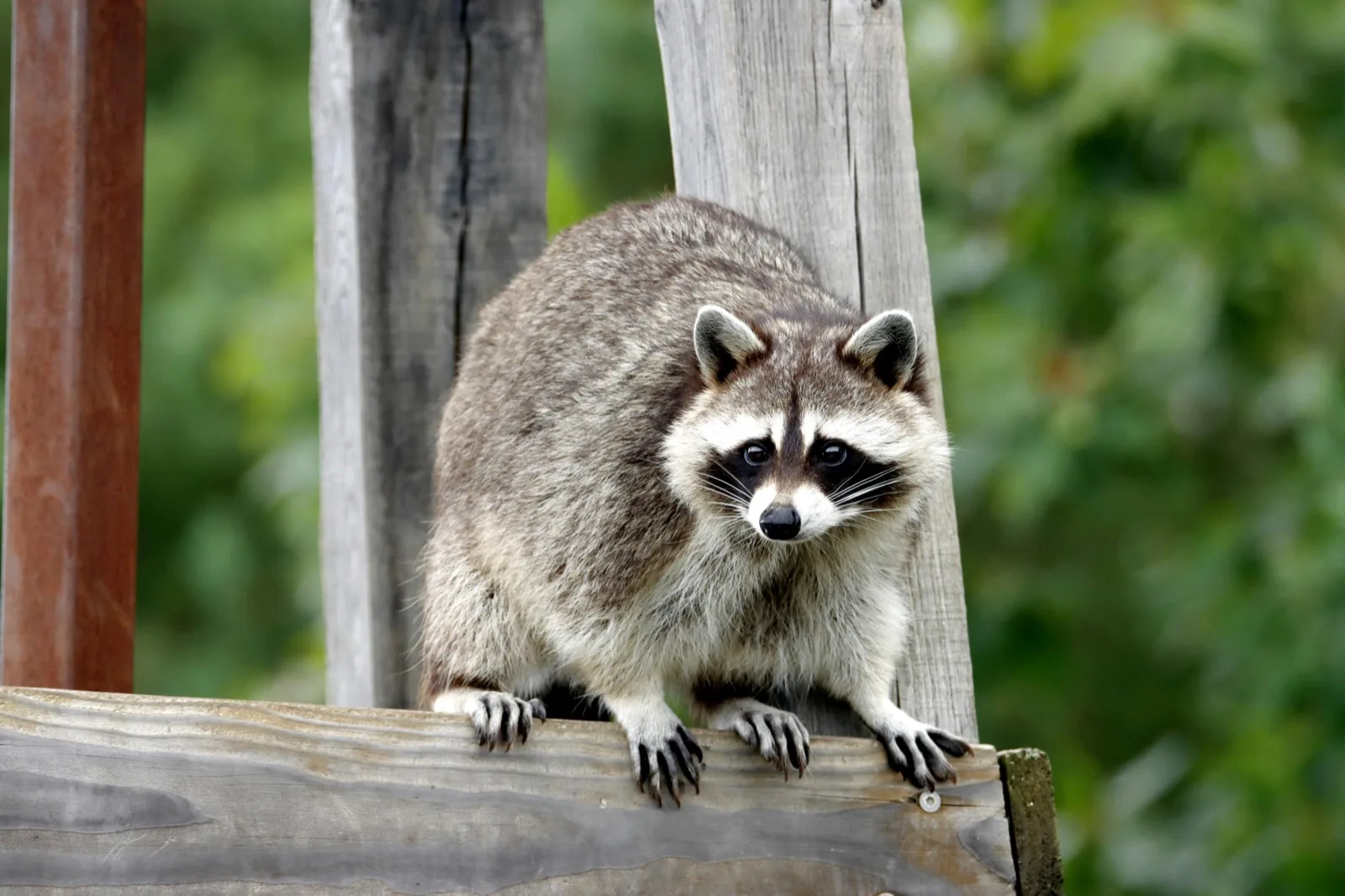
Signs You Have Raccoons in Your McDonough Home
- Heavy thumping or scratching in the attic at night — slow and heavy at dusk or dawn is the classic raccoon signature; faster, lighter movement is usually squirrels.
- Chittering or trilling vocalizations from above the ceiling — kits begin vocalizing at 2-3 weeks old and grow steadily louder through 8 weeks.
- Torn soffits, lifted shingles, bent attic-fan housings, pulled fascia, or pried ridge vents — raccoons are by far the strongest residential intruder and will physically lever entry points open.
- Large segmented droppings (around 3 inches, blunt-ended) in the attic or on the roofline — raccoon scat carries Baylisascaris procyonis (raccoon roundworm) eggs that remain infectious for years; do not disturb without PPE.
- Knocked-over garbage cans, overturned bird feeders, or koi-pond raids — McDonough subdivision-edge properties absorb constant food-driven foraging pressure.
- Daytime sightings of a raccoon acting disoriented, aggressive, or unsteady — possible rabies indicator. Don't approach, keep pets and kids indoors, and call for same-day removal.
Raccoon in Your House Right Now? What to Do
If a raccoon has made it into the living space — not just the attic — call for same-day McDonough dispatch first. While you wait:
- Confine the raccoon to one room. Close interior doors and block the gap at the bottom of the door with a rolled towel.
- If safe, open one exterior door or window in that room. An adult raccoon will usually leave on its own when given an obvious exit — turn interior lights off, leave exterior lights on, keep pets and people clear.
- Don't corner, swat at, or try to grab the raccoon. Any direct contact is treated as potential rabies exposure under Georgia DPH guidance — even with no visible bite.
- Keep pets out of the area entirely. Dogs in particular tangle with raccoons and lose, and the vet workup that follows is expensive and unpleasant.
- If your pet or a family member made contact, call Henry County Animal Control and your physician or vet immediately — rabies post-exposure prophylaxis is time-sensitive.
How Raccoons Get Into McDonough Homes
Most McDonough property is 1990s-2020s subdivision construction, and the entry-point profile follows builder-grade material aging:
- Vinyl-soffit corner separations at fascia-meet points — the most common 1990s-2010s subdivision entry; the panel pulls loose at a corner and a raccoon levers it open from there.
- Lifted ridge-vent flashing on aged shingled roofs — raccoons work loose flashing into a usable opening over a few nights.
- Chimney chase cap failures — builder-grade galvanized chase caps rust through at the seam by year 20-25 and become open chimney access. Female raccoons take advantage every spring.
- Bent attic-fan housings and gable-vent screens aged through — both are quick entries once the underlying material fatigues.
- Uncapped masonry chimneys in McDonough's small pre-1900 historic-downtown core around the Henry County Courthouse square — a small but real subset of jobs; these are classic raccoon maternity dens because the chimney box is dark, warm, and predator-free.
Raccoon Health Risks Around Your Family
Raccoons aren't aggressive by default, but they are a documented disease vector — and the risk is the reason raccoon removal and decontamination are professional-grade work, not a DIY job:
- Rabies. Raccoons are one of three primary terrestrial rabies reservoirs in Georgia (alongside foxes and skunks). Any direct contact — bite, scratch, or saliva on broken skin — triggers post-exposure prophylaxis decisions.
- Baylisascaris procyonis (raccoon roundworm). Eggs are shed in scat and stay infectious in attic insulation, soil, and on contaminated surfaces for years. Larval migration in humans can cause serious neurological damage. Attic remediation uses HEPA equipment and PPE for a reason.
- Leptospirosis. Transmitted through urine to people and (more commonly) to pets, particularly dogs. Worth flagging to your vet if your dog has had outdoor exposure during raccoon activity.
- Canine distemper. Not transmissible to people, but devastating to unvaccinated dogs. A raccoon visibly stumbling in daylight is more likely to have distemper than rabies, but the live-animal handling protocol is the same: don't approach, call for removal.
The McDonough Raccoon Removal Process
Durable resolution is exclusion-based, not trap-only:
- Free on-site inspection — every viable entry point mapped (most McDonough properties show 2-4), kit presence confirmed, and any structural damage scoped for repair. No charge if you don't authorize the job.
- Kit-aware eviction or humane trapping — during the February-April denning window, kits are located and removed by hand so the family stays intact; outside denning season, one-way exclusion doors let the adult leave on its own and prevent re-entry.
- Structural exclusion — every entry point sealed with galvanized steel mesh, hardware cloth, or material-matched repair. Soffit panels reseated, ridge-vent flashing replaced, custom-fabricated stainless-steel chimney caps installed where needed.
- Attic decontamination — HEPA-equipped removal of contaminated insulation, enzymatic sanitization, and a Baylisascaris roundworm protocol when scat load warrants. Documented for insurance claims.
- 1-year exclusion warranty on full-scope work — if a raccoon gets back in through a sealed entry point within 12 months, the rework is on the contractor.
Same-Day, Local Henry County Response
The contractor serving McDonough is local to Henry County — same-day arrival is the standard scope for McDonough addresses, with 24/7 emergency dispatch for live-raccoon-in-living-space, attic kits, chimney falls, and pet-exposure situations. Out-of-area companies dispatched from metro Atlanta routinely quote next-day or 2-3-day windows because the drive eats most of their billing window. All work is performed under Georgia DNR Wildlife Resources Division licensing; ask any operator to produce current credentials before authorizing the job.
⚠️ Peak Juvenile Dispersal — Highest Annual Call Volume
August through November is the absolute peak for raccoon attic, chimney, and outbuilding calls. Juveniles leaving natal dens seek their own territories, and any home with even small exclusion gaps sees new intrusions within days. Same-day inspection strongly recommended.
Raccoon Removal Cost in McDonough
$200–$600+
Trapping and removal. Attic cleanup and exclusion additional ($800–$2,500+). Call for an estimate — pricing varies by contractor and job complexity.
Frequently Asked Questions — Raccoon Removal in McDonough
More Wildlife Services in McDonough
Your local contractor handles all wildlife removal needs