Bat Removal in Lilburn, GA
Local licensed expert serving Lilburn and all of Gwinnett County. Bat colonies in attics leave dangerous guano that carries histoplasmosis and attracts parasites. Removal requires licensed specialists.
📞 Call (404) 471-3971Bats in Lilburn, Georgia
Bats in your Lilburn attic, chimney, or walls? The fix is humane exclusion — never extermination. Every bat species in Georgia is protected under state law, and killing or harming them is illegal. Licensed, Georgia DNR-compliant bat exclusion with guano cleanup and attic decontamination; same-day inspections available across Lilburn and Gwinnett County.
The bats that roost in Lilburn homes are primarily big brown bats and little brown bats — the two species that most commonly form colonies in Georgia structures. Brazilian free-tailed bats occur in Georgia but are not the dominant structural species here, and the state is home to 16 bat species in total. Big brown bats are the species you are most likely to find in a Lilburn attic in the dead of winter: they can hibernate inside a heated structure year-round. Little brown bats are more seasonal and migratory. Both squeeze through remarkably small gaps — anything larger than about 1/4 inch along a roofline, gable vent, chimney flashing, or fascia board is a potential entry point.
Georgia DNR recommends avoiding bat exclusion from April 1 through July 31, when flightless pups can be trapped inside and die. This is a DNR recommendation, not a flat statutory ban — if exclusion cannot wait, it must be performed by a licensed Nuisance Wildlife Control Operator. Outside that window, exclusion proceeds normally.
Bat Removal — Lilburn, Georgia
Local Wildlife Experts Of Gwinnett
Licensed local expert. Same-day and emergency service in Lilburn.
Serving Lilburn and all of Gwinnett County, Georgia
Bat Removal in Lilburn — What to Expect
Bat guano grows a dangerous fungus (Histoplasma). State laws protect bats so exclusion must follow legal guidelines.
Signs You Have Bats
Georgia DNR recommends avoiding bat exclusion from April 1 through July 31, when flightless pups can be trapped inside and die. Inspection and planning can happen any time — only the exclusion step is timed around that window.
- Bats flying near roofline at dusk
- Squeaking sounds in walls
- Guano piles near entry points
- Dark staining around gaps
- Strong ammonia smell in attic
Our Process in Lilburn
Our local Gwinnett County contractor serves all of Lilburn using the same proven, humane process for every job.
- Colony exclusion (bat-safe methods)
- Guano removal and decontamination
- Attic restoration
- Entry point sealing after exclusion
- Rabies exposure assessment
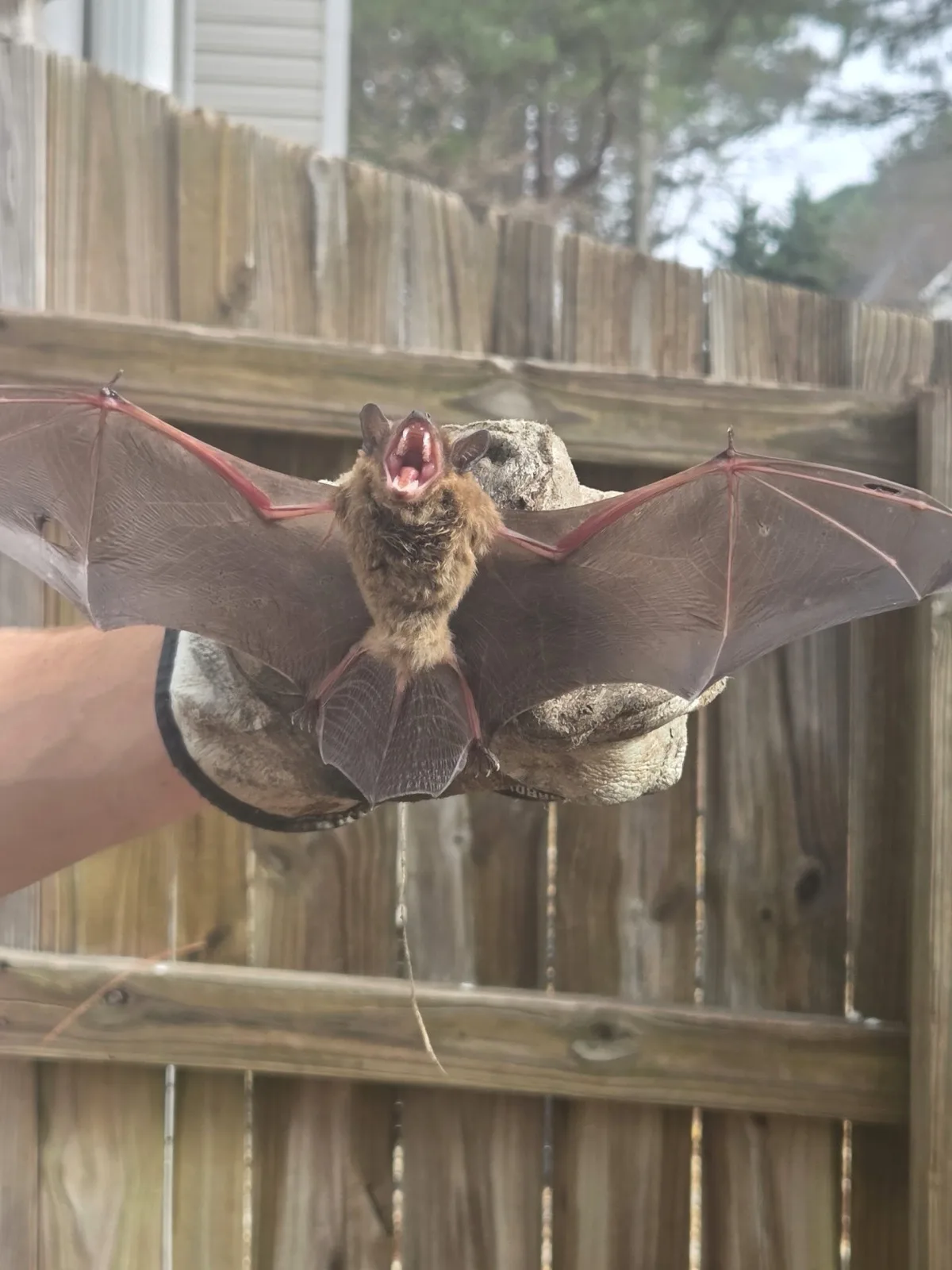
Signs of a Bat Problem in Your Lilburn Home
- Bats emerging at dusk near the roofline — stand outside 20-30 minutes before full dark and watch the gable ends, chimney, and fascia. A steady stream of bats leaving the same spot marks your primary entry point.
- Squeaking or scratching in walls or the attic — most audible at dusk and dawn as the colony leaves and returns, and louder on hot summer afternoons when the attic heats up and bats get restless.
- Guano (bat droppings) accumulating below an entry point — small, dark, crumbly pellets flecked with insect fragments, piling up on the ground, a deck, the attic floor, or inside a wall void directly below the gap.
- Dark, oily staining at a gap or seam — bats leave a brown-black grease mark from body oils and dirt at the exact spot they squeeze in and out.
- A sharp ammonia odor — accumulated guano and urine give off a strong ammonia smell that worsens in summer heat and humidity.
How Bat Exclusion Works
Bat removal in Georgia is exclusion, not extermination — the colony is evicted alive and permanently locked out, never trapped or killed. The process:
- Full inspection. Every gap larger than about 1/4 inch is located — the primary exit plus secondary gaps along the roofline, gable vents, ridge, chimney flashing, soffits, and fascia. Missing one gap defeats the whole job.
- One-way exclusion devices installed. Specialized one-way devices (tubes or netting) go over the active entry points. Bats leave to feed at dusk and cannot get back in.
- Bats exit over roughly 3-7 nights. The colony clears itself out naturally over several evenings — no trapping and no handling of the animals.
- Devices removed and all gaps permanently sealed. Once the structure is confirmed empty, the devices come off and every entry point and secondary gap is sealed for good so bats cannot re-enter.
- Guano cleanup and decontamination. Accumulated guano is removed and the affected area is decontaminated.
Timing matters: Georgia DNR recommends avoiding exclusion from April 1 through July 31, when flightless pups would be trapped inside. Inspection and planning can happen any time of year; the one-way-device step is scheduled outside that window unless a licensed Nuisance Wildlife Control Operator handles an unavoidable in-season job.
Bat Guano Cleanup & Health Risk
Bat guano is not just a mess — it is a documented health hazard. Accumulated guano can grow Histoplasma capsulatum, the fungus that causes histoplasmosis, a respiratory infection contracted by inhaling airborne spores.
- Do not sweep or vacuum guano yourself. Dry sweeping and ordinary vacuuming aerosolize the spores — turning a contained pile into an airborne hazard you then breathe in.
- Professional decontamination uses PPE — respirators rated for fine spores, disposable suits, and careful containment — plus HEPA-filtered equipment and enzymatic treatment to neutralize odor and contamination.
- Contaminated insulation is removed and replaced where guano has saturated it, and the affected cavity is sanitized.
Local, Georgia DNR-Compliant Service
All Georgia bats are protected, and the contractor serving Lilburn works within Georgia DNR rules: humane exclusion only, no killing or harming, correct one-way-device technique, and the April 1–July 31 maternity-avoidance window respected. Same-day inspection is available for Lilburn and all of Gwinnett County; in-season work, when unavoidable, is handled by a licensed Nuisance Wildlife Control Operator.
⚠️ Exclusion Window Open
The April 1–July 31 maternity-avoidance window has closed. Pups are flying and the colony can be excluded with one-way devices, then every gap sealed. This is the optimal window before bats begin searching for winter roosts.
Bat Removal Cost in Lilburn
$400–$1,500+
Exclusion work. Guano cleanup and attic decontamination adds $1,500–$8,000+ depending on colony size. Call for an estimate — pricing varies by contractor and job complexity.
Frequently Asked Questions — Bat Removal in Lilburn
More Wildlife Services in Lilburn
Your local contractor handles all wildlife removal needs