Bat Removal in Cartersville, GA
Local licensed expert serving Cartersville and all of Bartow County. Bat colonies in attics leave dangerous guano that carries histoplasmosis and attracts parasites. Removal requires licensed specialists.
📞 Call (404) 531-7780Bats in Cartersville, Georgia
Cartersville's bat-call profile is dominated by the city's pre-1940 mill housing and the historic downtown around the Bartow County Courthouse. The original textile-mill worker housing, the older blocks along Tennessee Street, and the historic-downtown commercial buildings all provide ideal big-brown-bat (Eptesicus fuscus) maternity habitat — and many Cartersville colonies have been continuously occupied for 30-50+ years. The Etowah River corridor running south of downtown reinforces the regional source-population pressure.
Bat Removal — Cartersville, Georgia
Pro X Services
Licensed local expert. Same-day and emergency service in Cartersville.
Serving Cartersville and all of Bartow County, Georgia
Bat Removal in Cartersville — What to Expect
Bat guano grows a dangerous fungus (Histoplasma). State laws protect bats so exclusion must follow legal guidelines.
Signs You Have Bats
Bats are protected in Georgia and are removed by humane exclusion, not trapping. Georgia DNR recommends avoiding exclusion from April 1 through July 31, when flightless pups are present; a licensed Nuisance Wildlife Control Operator may perform a necessary exclusion during that window when one is truly needed, but most Cartersville colonies are sealed out after July 31. Inspection and planning can happen any time of year — call to get on the schedule.
- Bats flying near roofline at dusk
- Squeaking sounds in walls
- Guano piles near entry points
- Dark staining around gaps
- Strong ammonia smell in attic
Our Process in Cartersville
Our local Bartow County contractor serves all of Cartersville using the same proven, humane process for every job.
- Colony exclusion (bat-safe methods)
- Guano removal and decontamination
- Attic restoration
- Entry point sealing after exclusion
- Rabies exposure assessment
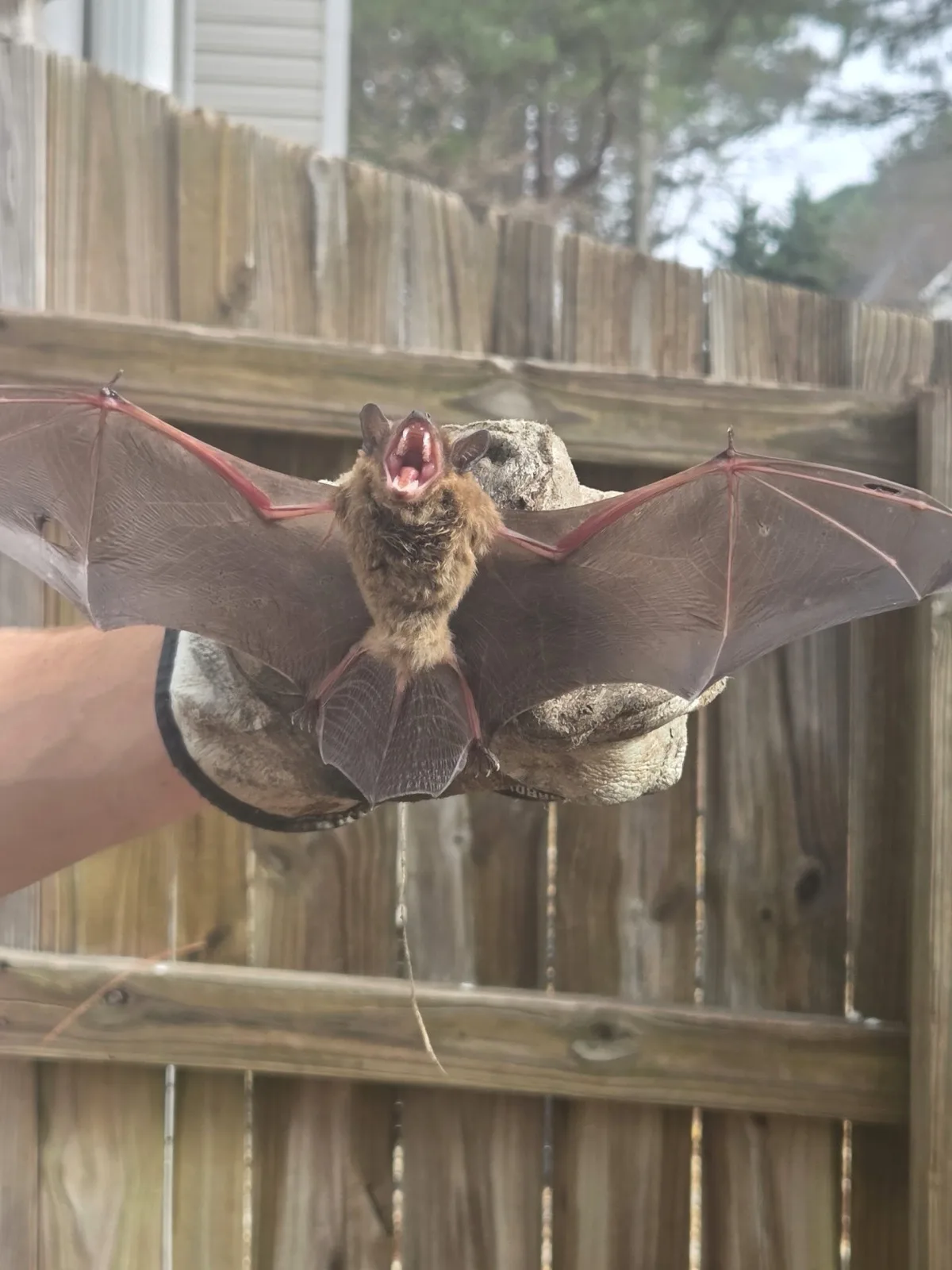
Pre-1940 Cartersville Mill Housing Bat Colonies
Cartersville's pre-1940 housing stock — the worker housing around the original textile-mill sites, the historic downtown blocks, the older homes along Tennessee Street and Cherokee Avenue — has structural features that have supported continuous big-brown-bat colony occupation for decades. Original masonry chimneys without modern caps are the single most-used bat entry route; chimneys built before modern liner standards have smoke-chamber and chase voids ideal for maternity roosting.
The pre-WWII Cartersville housing pattern routinely produces 4-5+ viable bat entry points per property: chimney access, original wood soffit corner gaps, pre-modern gable louvers without screen backing, deteriorated fascia, and original lath-and-plaster wall framing voids. Once established, Cartersville colonies persist multigenerationally — daughters return to natal roosts to whelp, and Cartersville historic chimney colonies frequently span 30-50+ years of continuous occupation. The first sign of a Cartersville bat issue is usually guano accumulation outside an entry point or a single bat appearing in living space.
Cartersville Historic District Guano Remediation
Guano remediation in Cartersville historic homes is more involved than in newer construction:
- Original lath-and-plaster ceilings. Urine saturation can damage original plaster from above; remediation has to address structural integrity.
- Older insulation types. Original cellulose, blown vermiculite (potential asbestos concerns in pre-1980 construction), and aged fiberglass with degraded vapor barriers — all absorb urine quickly and require full removal.
- Multiple roost-site contamination. Long-established colonies use multiple roost spots within the attic; guano deposits aren't always concentrated in one area.
- HVAC-duct contamination. Older Cartersville homes with attic-mounted HVAC components see histoplasmosis-spore contamination spread through ducts.
Professional decontamination uses HEPA equipment and proper PPE. Histoplasmosis from Histoplasma capsulatum is the public-health concern; DIY cleanup of established Cartersville guano deposits is genuinely hazardous. Public-health authority runs through the Bartow County Health Department.
📅 Exclusion Window Open
The April 1 through July 31 maternity window has closed and pups are flying. This is the optimal time for one-way-valve exclusion and permanent sealing of Cartersville bat colonies, followed by guano remediation before winter.
Bat Removal Cost in Cartersville
$400–$1,500+
Exclusion work. Guano cleanup and attic decontamination adds $1,500–$8,000+ depending on colony size. Call for an estimate — pricing varies by contractor and job complexity.
Frequently Asked Questions — Bat Removal in Cartersville
More Wildlife Services in Cartersville
Your local contractor handles all wildlife removal needs