Wildlife Removal in Bibb County, GA
Local licensed experts ready to remove, exclude, and remediate — fast.
Your Local Bibb County Expert
Licensed, insured & local. Available for same-day and emergency service.
Serving all of Bibb County, Georgia
Services Available in Bibb County
Our local contractor handles every aspect of wildlife removal — from capture to exclusion to cleanup.
Wildlife Removal
Trained experts safely remove animals from your home using high-capture-rate trapping and exclusion techniques.
- 24/7 Emergency Response
- High Capture Success Rate
- Raccoons, Squirrels, Bats & More
- Safe & Humane Methods
- Certified Technicians
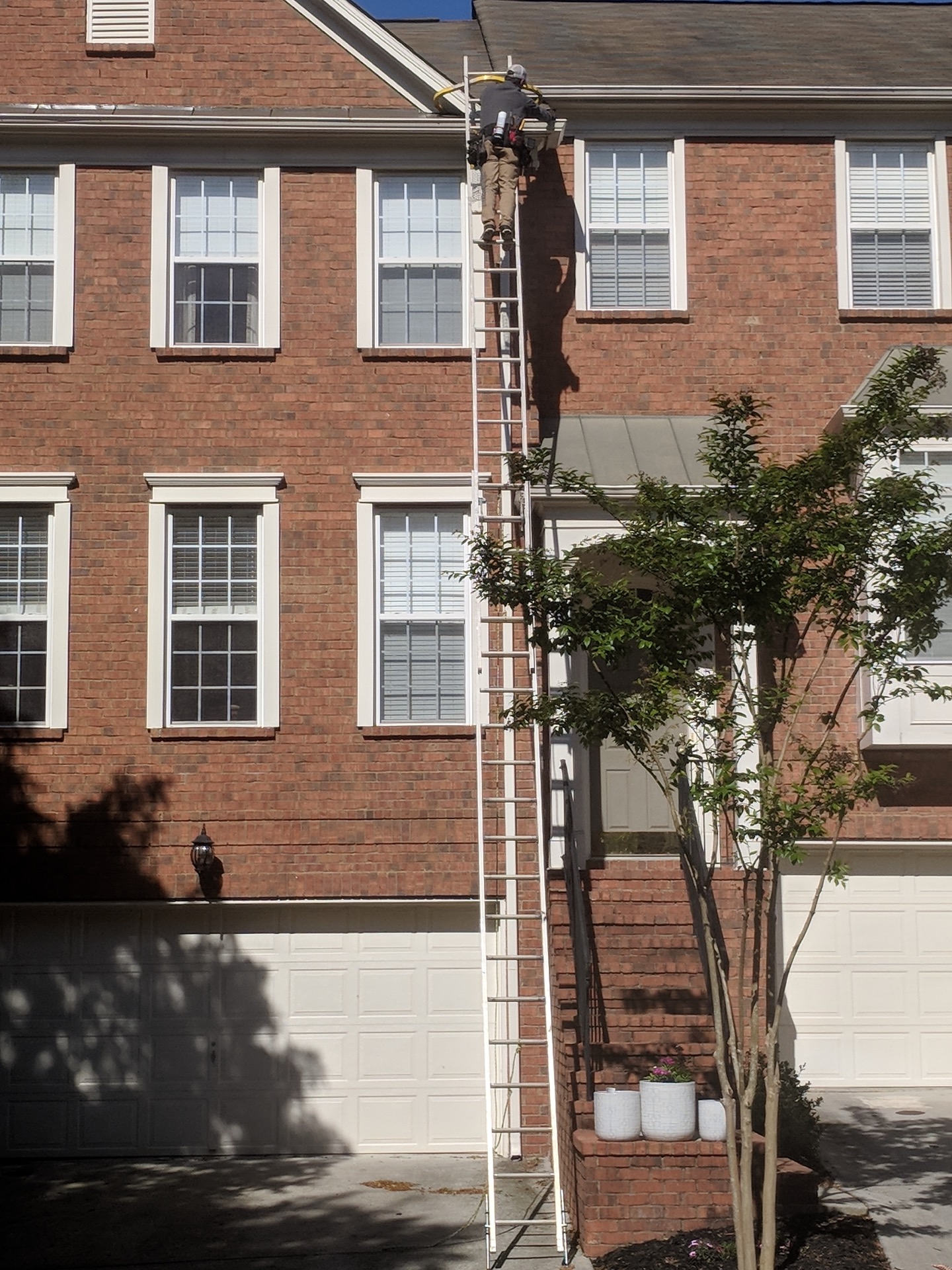 Core Service
Exclusion
Ensuring your home is properly sealed is the most important service we offer. We use only the highest quality materials and industry-best methods.
- Galvanized Steel Sealing
- Industry-Best Methods
- 1-Year Guarantee
- Permanent Prevention
Remediation
Whatever animal you had, they likely left waste and caused damage. Our team will deodorize, sanitize, and repair damaged material.
- Complete Waste Removal
- Deodorize & Sanitize
- Repair Damaged Materials
- Restore Home Value
Wildlife Removal by Animal in Bibb County
Find specific removal services in Bibb County
About Bibb County, Georgia
Bibb County sits in central Georgia at the geological Fall Line — the boundary where the rolling Piedmont meets the flatter Coastal Plain — about 85 miles south of Atlanta on I-75. The Ocmulgee River bisects the county, and Macon-Bibb's consolidated city-county government (consolidated in 2014, the largest such unified government in Georgia by population) operates as the regional hub for central Georgia rather than as a metro Atlanta suburb. With a population of 157,346, Bibb concentrates an unusually deep pre-1860 antebellum housing inventory across Macon's Vineville, In-Town, Beall's Hill, and Pleasant Hill historic districts, plus the campuses of Mercer University, Wesleyan College (founded 1836, one of the oldest women's colleges in the U.S.), and Middle Georgia State University. Established in 1822, Bibb's wildlife profile is shaped less by metro-Atlanta dispersal patterns than by the Fall Line ecological transition that sets central Georgia apart from north Georgia.
Wildlife Common to Bibb County
Bibb County's Fall Line position produces a transitional wildlife profile that mixes Piedmont species common across metro Atlanta with Coastal Plain species rarely seen north of the line. Fox squirrels (Sciurus niger) reach densities here unusual for Georgia counties further north and routinely appear in residential calls alongside the Eastern gray squirrels that dominate metro Atlanta. Brazilian free-tailed bats (Tadarida brasiliensis) form colonies in central Georgia commercial buildings and bridges that are rare in north Georgia, and they sometimes appear in Macon residential roosts in addition to the more common big brown and evening bats. Pre-1860 Vineville, In-Town, and Beall's Hill historic-district housing hosts long-established big-brown-bat colonies in original masonry chimneys — many spanning 50-100+ years of continuous occupation, putting Macon's antebellum-housing colony establishment ahead of any north Georgia metro county. Roof rats arrived in Bibb decades earlier than in metro Atlanta because central Georgia warmth supports year-round breeding cycles that sustain population growth. Norway rats are concentrated in the Mulberry Street and Cherry Street historic-downtown commercial corridors. The Ocmulgee River corridor and Ocmulgee Mounds National Historical Park sustain a continuous source population for raccoons, opossums, and Virginia rat snakes that disperses west and south into adjacent residential housing. Lake Tobesofkee shoreline forest and the Tobesofkee Creek tributary system reinforce wildlife travel habitat across western Bibb. Armadillos are firmly established countywide and have been for considerably longer than in metro-fringe counties further north — Macon-area armadillo establishment dates to at least the 1980s. Coyotes are routine across the county, particularly in the wooded subdivision edges of Shirley Hills and Ingleside. The 350,000-plus Yoshino cherry trees planted across Macon for the annual Cherry Blossom Festival create a distinctive late-March feeding ecology that produces a measurable spike in squirrel-and-bird residential pressure during bloom. Eastern gray squirrels share Bibb's residential canopy with notable populations of fox squirrels (Sciurus niger) — a Coastal Plain species that's far more visible in Macon residential calls than anywhere in metro Atlanta. Southern flying squirrels turn up in older Vineville Victorians and the pre-1900 Pleasant Hill stock. Brazilian free-tailed bat colonies form in central-Georgia commercial buildings, bridges, and occasionally in pre-1860 Macon residential roosts — a species rarely seen in pre-1860 housing further north. Norway rats are persistent in Macon's Mulberry Street and Cherry Street historic-downtown commercial corridors. White-tailed deer reach high densities throughout the wooded subdivision edges and along the Ocmulgee corridor, the federally proposed-for-listing tricolored bat (Perimyotis subflavus) is documented in central Georgia and may appear in pre-1860 antebellum Macon chimney colonies, American alligators occur in the lower Ocmulgee River and its slack-water reaches and any encounter over 4 feet should be referred to Georgia DNR rather than handled privately, and federally protected migratory bird species (hawks, owls, woodpeckers, chimney swifts) are present throughout the county under Migratory Bird Treaty Act protocols.
The Fall Line and Bibb County's Distinctive Wildlife Profile
Bibb sits directly on the geological Fall Line — the boundary where the rolling hardwood-forested Piedmont gives way to the flatter, sandier Coastal Plain. This boundary runs through Macon itself, with the older intown neighborhoods on the Piedmont side and parts of southern and eastern Bibb already in Coastal Plain ecology. The wildlife consequences are distinctive: Bibb residential calls regularly involve species rarely seen north of the Fall Line. Fox squirrels (Sciurus niger) — the larger, slower, more colorful cousin of the Eastern gray squirrel — are routine Bibb residential calls. Brazilian free-tailed bats (Tadarida brasiliensis) form colonies in central Georgia commercial buildings, highway bridges, and occasionally in pre-1860 Macon residential roosts in addition to the more typical big brown and evening bat species. Armadillos were established in Macon decades before they reached metro Atlanta — Bibb's Coastal Plain influence put it on the species's northward dispersal path well ahead of north Georgia counties.
Pre-1860 Macon Antebellum Housing and Bat Colony Establishment
Macon's antebellum housing density is among the highest in Georgia. The Hay House — a 19th-century Italian Renaissance Revival mansion now a National Historic Landmark — anchors a broader pre-1860 inventory across the Vineville Historic District, the In-Town Historic District, and Beall's Hill. The Cannonball House (still bearing damage from a Civil War shell) and the Sidney Lanier Cottage (birthplace of the poet) are part of the same pre-1860 fabric. Long-established big-brown-bat maternity colonies in these chimneys routinely span 50-100+ years of continuous occupation — putting Macon's antebellum colony establishment ahead of any north Georgia metro county. Bat-daughter natal-roost return is multigenerational, so the same chimney that hosted bats in 1920 is very likely hosting them in 2025.
The pre-1900 Pleasant Hill Historic District — one of the country's oldest African-American neighborhoods — adds another dense layer of pre-1900 housing with its own multi-decade colony establishment. Pleasant Hill construction predates modern chimney-cap, soffit-screen, and gable-louver standards, producing the same 4-6 entry-point profile typical of antebellum residential structures.
The Ocmulgee River, Mounds NHP, and Wildlife Source Pressure
The Ocmulgee River bisects Bibb County and the city of Macon, and the federally protected Ocmulgee Mounds National Historical Park on the eastern bank concentrates pre-Columbian Mississippian mounds within several hundred acres of protected wetland and bottomland hardwood forest. The protected habitat sustains a continuous year-round source population of raccoons, Virginia opossums, beavers, and Eastern rat snakes that disperses west across the river into adjacent Bibb residential neighborhoods. American alligators occur in the lower Ocmulgee and its slack-water reaches at densities below the Coastal Plain average but above any north Georgia waterway; alligator encounters of any animal over 4 feet should be referred directly to Georgia DNR rather than handled through commercial wildlife services.
Mercer, Wesleyan, and Middle Georgia State — Three-University Student-Housing Pressure
Mercer University (anchoring the Tattnall Square area), Wesleyan College (the world's oldest women's college, founded 1836), and the Macon campus of Middle Georgia State University together produce a year-round student-housing-district call volume that's distinctive even among Georgia's college towns. Aging dormitory and rental-housing stock with builder-grade attic-vent screening, dryer-vent housings, and dumpster ecology behind student apartment complexes drives recurring bat, squirrel, raccoon, and Norway rat calls at properties throughout the surrounding districts. Mercer-area landlord work and Wesleyan-adjacent sorority/fraternity housing rebuild scope are routine.
Cherry Blossom Festival Wildlife Ecology
Macon plants and maintains 350,000+ Yoshino cherry trees across the city — the largest concentration in any U.S. city — and the annual Cherry Blossom Festival in late March draws hundreds of thousands of visitors. From a wildlife perspective, the cherry tree concentration produces a measurable late-March feeding ecology: squirrels and birds (cedar waxwings, robins) feed heavily on the early-season blossoms and flower nectar, with Eastern gray squirrels in particular producing a noticeable spike in attic-and-gutter activity coinciding with peak bloom. The post-bloom period (early April) drives a residential-call uptick as the squirrels that fed in the cherry canopy seek interior denning sites for the spring breeding cycle.
Local Authorities and Regulations
Public-health authority for Macon-Bibb rabies-vector exposure runs through the North Central Health District based in Macon. Macon-Bibb County Animal Welfare handles domestic-animal complaints but does not respond to most nuisance wildlife. Commercial wildlife removal operates under Georgia DNR Wildlife Resources Division Region 5 (Fort Valley office). Federal protections apply to bats during maternity periods (May-August exclusion restrictions), all migratory birds, and American alligators in the lower Ocmulgee.
Service Coverage in Bibb County
Coverage spans the entire Macon-Bibb consolidated government footprint, including the Vineville, In-Town, Beall's Hill, Pleasant Hill, Shirley Hills, Ingleside, and Tattnall Square neighborhoods, the Mercer University and Wesleyan College campus districts, the Lake Tobesofkee shoreline, the Ocmulgee River corridor, and the unincorporated areas along with the Payne CDP. Macon-Bibb's mix of pre-1860 antebellum housing, pre-1900 Pleasant Hill mill-village stock, post-WWII Shirley Hills and Ingleside ranches, three university student-housing districts, and the Ocmulgee corridor's continuous wildlife-source pressure produces a job mix unlike any north Georgia county.
Seasonal Activity Patterns
Wildlife intrusion in Bibb County follows Georgia's main pressure windows: February through April for raccoon and squirrel denning, May through August for bat maternity colonies in attics, and a sustained year-round pressure across the southern half of the state where mild winters keep wildlife active and breeding cycles overlap. Georgia's long, humid subtropical summers and mild winters allow many nuisance species — raccoons, squirrels, opossums, rats, and armadillos — to breed multiple times per year and remain active twelve months a year, producing call volume that never fully drops off the way it does in northern states.
Georgia Wildlife Regulations
All commercial wildlife removal in Georgia is regulated by the Georgia Department of Natural Resources, Wildlife Resources Division. Georgia DNR requires commercial wildlife trappers to hold a Trapping License and, for properties using lethal control, a Nuisance Wildlife Control Permit; bats and migratory birds carry additional federal handling restrictions, and large game species including white-tailed deer, black bears, alligators, and feral hogs fall under direct Georgia DNR Wildlife Resources Division management rather than the private wildlife removal industry. Every contractor in our network holds the applicable Georgia DNR licensing and operates within Wildlife Resources Division guidelines on species-specific handling and relocation.
What to Do Before the Contractor Arrives
- Note where you've seen or heard the animal — attic, crawlspace, chimney, or yard
- Don't attempt to handle or block animals yourself — this can be dangerous
- Keep pets and children away from the affected area
- Take photos of any damage or entry points you've spotted
Bibb County, Georgia — Service Area Map
Coverage spans the full Bibb County footprint. Tap the map to open directions in Google Maps.
Frequently Asked Questions: Wildlife Removal in Bibb County
What wildlife is most common in Macon and Bibb County, Georgia?
Bibb's residential call profile is shaped by the Fall Line transition that mixes north Georgia Piedmont species with Coastal Plain species rarely seen further north. Eastern gray squirrels share residential canopy with notable fox squirrel populations. Pre-1860 Vineville, In-Town, and Beall's Hill historic-district housing hosts long-established big-brown-bat colonies — many spanning 50-100+ years. Macon-area armadillos have been established since the 1980s, decades before they reached metro Atlanta. Norway rats are concentrated in the Mulberry Street and Cherry Street historic-downtown commercial corridors; roof rats are firmly established countywide. Raccoons disperse heavily from the Ocmulgee corridor and the Ocmulgee Mounds National Historical Park.
Why does Bibb County have wildlife species not seen elsewhere in Georgia?
Bibb sits on the geological Fall Line — the boundary where Piedmont and Coastal Plain ecology meet. Several species reach densities here that are unusual in north Georgia: fox squirrels (the larger, slower cousin of Eastern gray squirrels) routinely appear in residential calls; Brazilian free-tailed bats form colonies in central Georgia commercial buildings and occasionally in pre-1860 Macon residential roosts; American alligators occur in the lower Ocmulgee and its slack-water reaches. Macon's armadillo establishment dates to the 1980s — well before north Georgia. The Fall Line position is the underlying geographical reason Bibb's wildlife profile differs from north Georgia counties.
How old are bat colonies in the antebellum historic homes of Macon?
Macon's pre-1860 antebellum colony establishment is among the deepest in Georgia. Vineville, In-Town, Beall's Hill, and Pleasant Hill historic-district chimney colonies routinely span 50-100+ years of continuous occupation, with multigenerational colony memory persisting across changes in property ownership. Big brown bat daughters return to their natal roosts to whelp every year. Properties like the Hay House and Cannonball House sit within a residential fabric where bat colony presence has been documented in some cases since before the 20th century. Pre-1860 chimney exclusion in Macon requires custom-fabricated stainless-steel caps engineered to fit antebellum chimney crowns.
Are raccoons more common along the Ocmulgee River corridor?
Yes, measurably. The Ocmulgee River bisects Bibb County, and the federally protected Ocmulgee Mounds National Historical Park on the eastern bank concentrates wildlife within several hundred acres of protected wetland and bottomland hardwood forest. The protected habitat sustains a continuous year-round source population of raccoons, Virginia opossums, and Eastern rat snakes that disperses west across the river into adjacent Bibb residential neighborhoods. Vineville-area properties and the older intown housing west of the river take continuous fall dispersal pressure during the September-November window.
When can I evict raccoons from my Macon attic?
Macon-area raccoon whelping runs late February through early May, with central Georgia's milder winters producing some early-season activity in late January in mild years. Kits are immobile and milk-dependent for roughly 8-10 weeks after birth. Sealing entry points during that window separates the female from her young and traps the kits inside the structure — a welfare problem and a near-certain decomposition cleanup. Macon contractors use staged one-way exits installed only after kits are confirmed mobile. Inspection, entry-point mapping, and chimney-cap pre-fabrication can proceed at any point in the year.
Do contractors handle wildlife at Mercer or Wesleyan student rentals?
Yes — Mercer University, Wesleyan College, and Middle Georgia State student-housing districts are routine work areas. Aging dormitory and rental-housing stock with builder-grade attic-vent screening, dryer-vent housings, and dumpster ecology behind student apartment complexes drives recurring bat, squirrel, raccoon, and Norway rat calls. Most jobs are coordinated with property managers, sorority/fraternity housing corporations, or absentee landlords. Same-day inspections are usually available.
How much does wildlife removal cost in Macon-Bibb?
Pricing varies by species and exclusion scope. Pre-1860 Vineville, In-Town, and Beall's Hill antebellum-housing raccoon jobs run $700-$2,000+ because of multi-entry-point profiles. Long-established Macon historic-district bat colonies — many of them 50-100+ years old — run $3,000-$6,000+ once full guano remediation is included. Pleasant Hill historic-district work runs similarly. Norway rat work in the Mulberry Street and Cherry Street historic-downtown commercial corridors runs $700-$1,800+. Suburban subdivision roof-rat exclusion runs $400-$900+. Armadillo trap-and-relocate (a heavy-volume Bibb call category) runs $250-$600+ per yard.
Are there protected species in Bibb County I should know about?
Yes. American alligators occur in the lower Ocmulgee River and its slack-water reaches — encounters of any animal over 4 feet should be referred directly to Georgia DNR, not handled through commercial wildlife services. The federally proposed-for-listing tricolored bat (Perimyotis subflavus) is documented in central Georgia and may appear in pre-1860 Macon antebellum chimney colonies; pre-removal evaluation for tricolored presence is required. Bald eagles occasionally appear along the Ocmulgee corridor and at Lake Tobesofkee. All migratory birds (chimney swifts, hawks, owls, woodpeckers) are federally protected under the Migratory Bird Treaty Act.
Neighboring Counties
Need wildlife removal in a county next to Bibb County? We cover those too.
- Jones County wildlife removal — directly to the north
- Twiggs County wildlife services — to the east, across the Ocmulgee
- Houston County animal removal — to the south
- Crawford County wildlife removal — to the west
- Wildlife removal in Monroe County — to the northwest
- Peach County wildlife services — to the southwest